
Common ABS Problems: Causes and Symptoms
Understanding Common ABS Brake Problems: Causes, Symptoms, and Solutions
Anti-lock Braking Systems prevent wheel lockup during sudden or hard braking, by allowing the driver to maintain steering control while braking, ABS enhances overall safety, particularly in slippery or emergency situations. However, like any complex system, ABS can experience issues that, if left unaddressed, may compromise its effectiveness. This article explores some of the most common ABS brake problems, their causes, symptoms, and potential solutions.
ABS Light is ON
An ABS light illumination is one of the most common ABS problems. When the ABS light comes on, the root cause is most often a faulty wheel speed sensor. Here are the most common causes of an ABS light on:
1) Faulty Wheel Speed Sensors: The ABS relies on wheel speed sensors to monitor each wheel’s rotation. If one of these sensors fails or gets damaged, the ABS system may malfunction and trigger the warning light.
2) Cracked tone ring, missing tooth on the tone ring, incorrect air gap or debris accumulation on the sensor or multipole encoder ring— This results in faulty data to the ABS module, causing ABS light and a stored trouble code
2) Damaged Wiring or Connectors: Wiring and connectors associated with the ABS system can become damaged due to corrosion, physical wear, or exposure to elements, leading to communication failures between the ABS module and other components.
3) Malfunctioning ABS Module: The ABS module is the brain of the system, interpreting data from the wheel seed sensors and controlling the hydraulic valves. If the module fails, it can cause the ABS light to illuminate.
4) Faulty solenoid valve in the hydraulic unit— The ABS module senses that a valve isn’t operating as commanded. The fault can be due to a clogged valve or a solenoid failure
Solutions: Diagnosing the cause of an ABS warning light often requires using an OBD-II scanner to retrieve error codes to identify which wheel or component is the cause. Once identified, the faulty component—whether a wheel speed sensor, wiring, or the ABS module—should be repaired or replaced.
False ABS Activation is a Common Problem.
A false ABS activation occurs when a wheel speed sensor mistakenly thinks a wheel is starting to lock up when it’s not. The driver sees the ABS light illuminate, and the ABS system kicks in to pulse the brake on the supposedly skidding wheel, when, in reality, that wheel is not skidding. The is second most common ABS problems we see.
What causes false ABS activation?
1) Rust buildup on the tone ring
2) An improper air gap between the wheel speed sensor and the tone ring
3) Debris accumulation on the wheel speed sensor
4) Cracks in the tone ring or a missing tooth on the tone ring
5) Metallic debris buildup on the multipole magnet
In each case, the wheel speed sensor is getting a faulty wheel speed reading due to the crack, missing tooth, incorrect air gap, debris accumulation, or rust buildup.
Fix for false ABS activation
• For passive wheel speed sensors with a metal tone ring— Use a wire brush to remove rust buildup from the tone ring. Blow off the rusty debris. Then, rotate the wheel and check for missing teeth or a cracked tone ring. If you have missing teeth or a crack, you must replace the tone ring.
• Wipe debris off the face of the wheel speed sensor— Use a clean rag and wipe off the face of the sensor.
• Clean an encoder ring system— Use a soft rag and gently wipe the rubber ring to remove any metallic debris that may have accumulated on the encoder ring.
Understanding How An ABS System Senses Wheel Rotation Speed
An ABS system includes wheel speed sensors, notched “tone” rings, a high-pressure pump, a valve body, and an electronic ABS module.
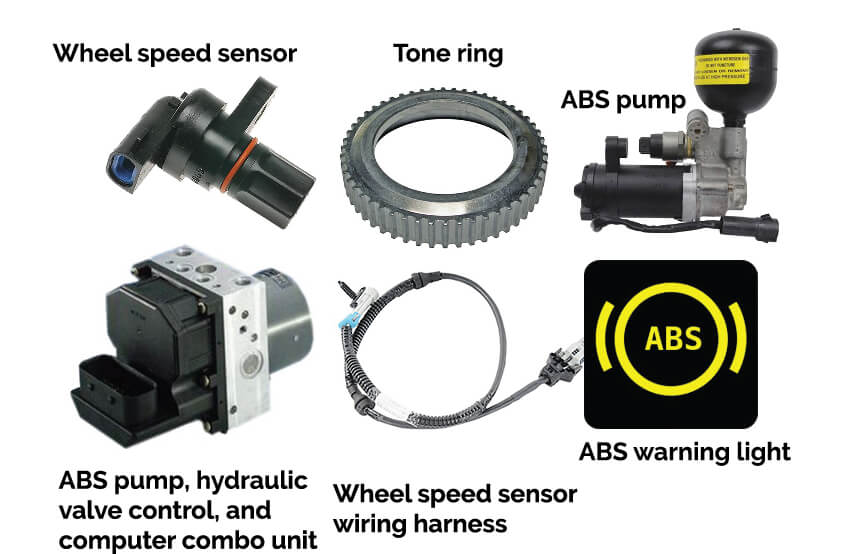
Wheel speed sensors
The wheel speed sensor detects the teeth on the rotating tone ring. The gap between the sensor and the tone ring is critical, as is the cleanliness of the tone ring itself. Rust buildup on the tone ring, a crack in the ring, or a chipped tooth can cause false ABS activation, which is ABS activation when it isn’t needed. In addition, since some sensors incorporate a magnet, any ferrous particle buildup on the face of the sensor can interfere with proper sensor operation.
In late model vehicles, car makers have moved away from notched steel tone rings and started using a rubber ring with embedded magnetic material (encoder ring), each section alternating between North and South poles. A Hall effect sensor detects the alternating North/South poles and generates a digital on/off signal to the ABS module.
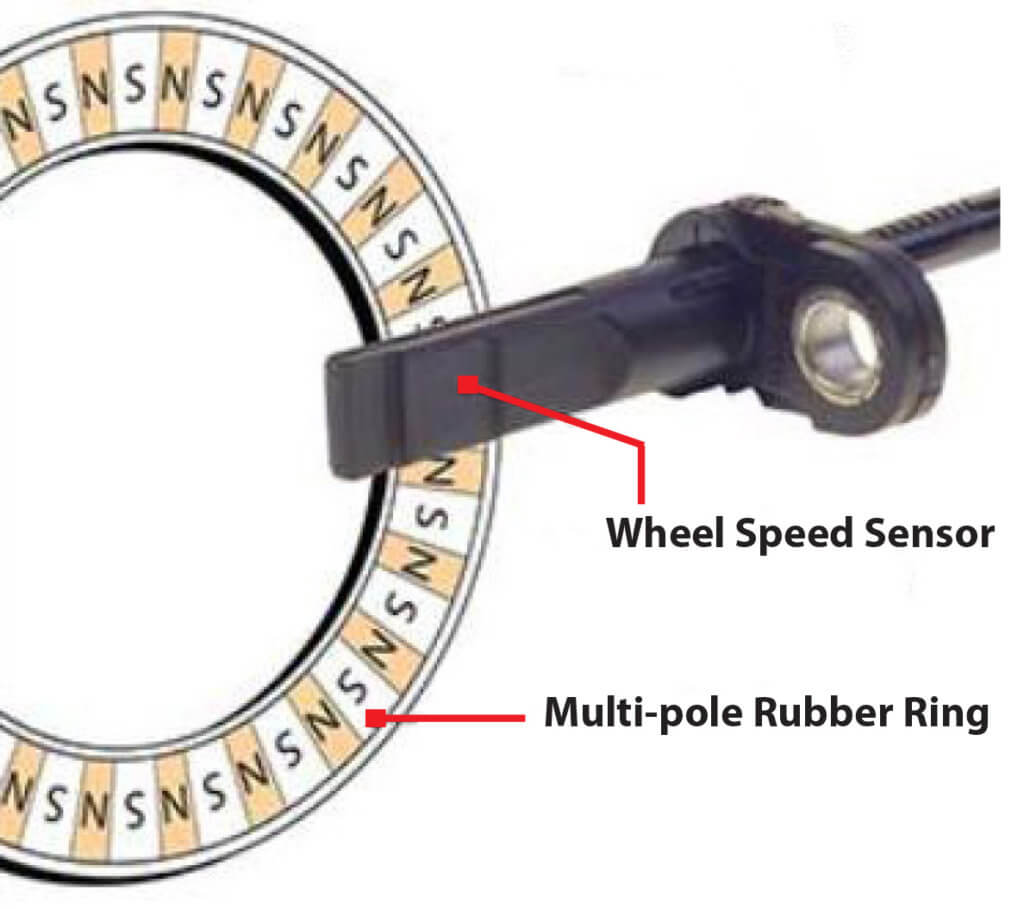
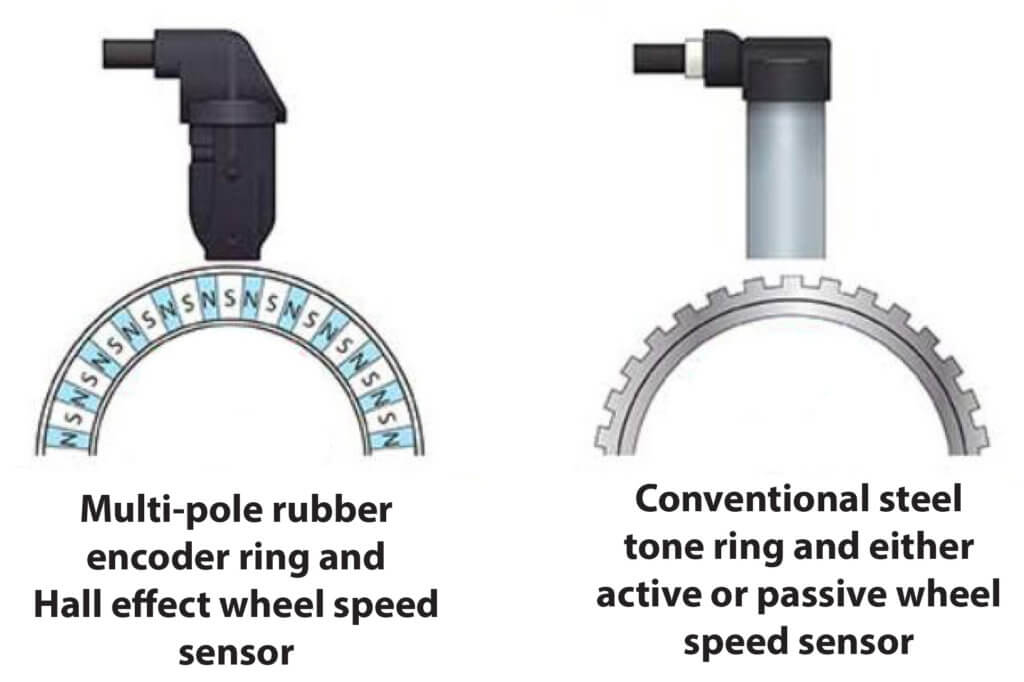
Both tone ring and encoder ring styles can create false ABS activation if metallic debris accumulates on either the magnetic encoder ring or the face of the magnetic ABS sensor. Rust buildup on the tone ring or a missing tooth or crack in the tone ring can also create false ABS operation.
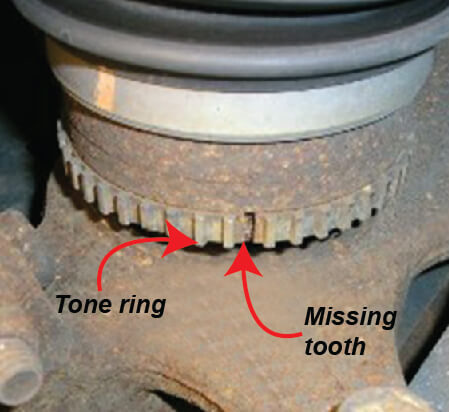
Missing tooth on tone ring
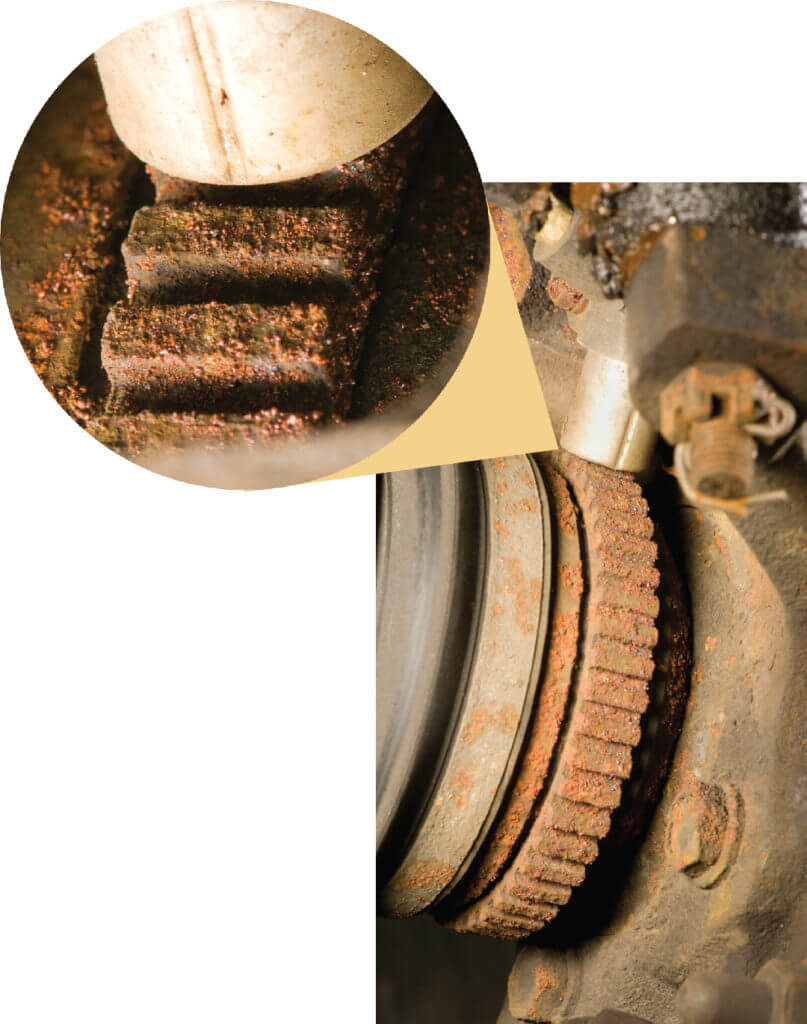
Rust accumulation causes false ABS activation
©, 2021 Rick Muscoplat
Posted on by Rick Muscoplat