
CV Boot Replacement Cost vs. Full Axle Replacement
How Much Does a CV Boot Replacement Cost in 2025
Over the years, I’ve been asked countless times whether it makes sense to replace just a torn CV boot or go for a full axle replacement. The truth is that the cost of replacing the CV boot versus the drive shaft can vary widely, and knowing the numbers upfront can save you both time and money. Let me break it down for you, using real-world examples and up-to-date pricing for 2025.
Front Axle Shaft Replacement Cost — What to Expect
When it comes to drive shaft replacement cost, several factors come into play — the make and model of your vehicle, the cost of quality replacement parts, and your local labor rates. According to industry data, the average cost of drive shaft replacement ranges from $400 to $1,000 or more. For high-end or luxury vehicles, the price can climb well past that range
This article from J.D. Power states, “On average, replacing an axle shaft can range from $400 to $1000 or more, but can be even higher for high-end or luxury vehicles.” Let’s dig a bit deeper to see if those numbers are accurate.
Front axle shaft replacement cost for a 2015 Subaru Forester
Flat rate labor guide for replacing one axle: 1.6 hours X $140/hr average shop rate = $224.00
Axle shaft parts cost
OE Genuine Subaru $435.71 plus $224.00 labor =$659.71
Cardone Brand NEW (Lifetime Warranty) $225 plus $224.00 labor = $449
Trakmotive Brand NEW (Lifetime Warranty)$253 plus $224.00 labor = $477
The Repair Pal estimating site shows an average labor rate of $174- $219 which is low, but an average parts cost of $714 and $725, which, as you can see, is very high. Based on this Subaru example, the J.D. Power estimate is closer
Why Shops Rarely Replace Just the CV Boot
Years ago, shops routinely performed CV boot replacements to save customers money. But times have changed. Today, aftermarket axles are less expensive, more reliable, and readily available.
Here’s why replacing only the boot isn’t common anymore:
• Once the boot tears, grease leaks out, and dirt, salt, and road grit get in.
• The axle has to be removed from the car to replace the boot.
• The technician must fully disassemble and clean the joint to inspect for wear.
• If any wear is missed and the joint fails after the boot repair, it results in a costly comeback. That risk, combined with the relatively low drive shaft replacement cost, makes full axle replacement the smarter choice in most cases.
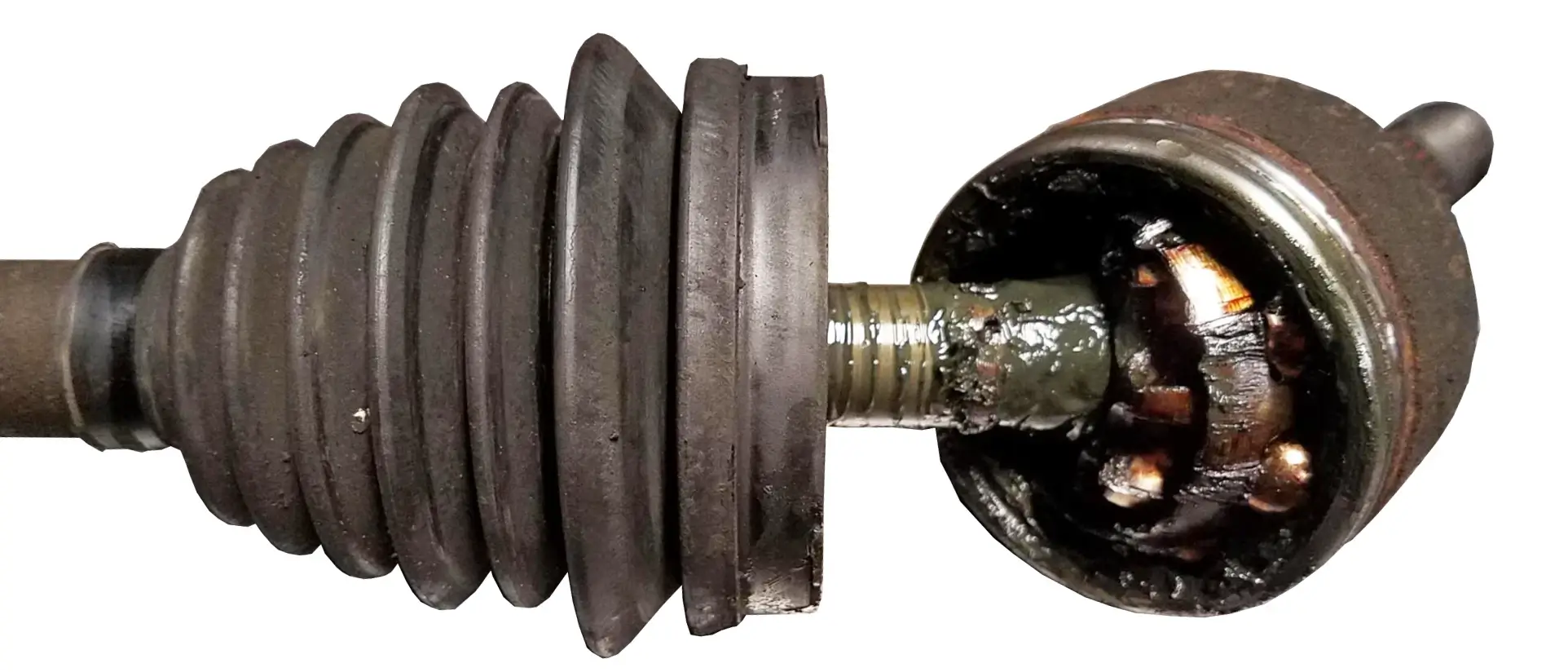
The tech has to clean all the old grease from the joint to inspect it for wear before considering a re-boot
So the shop has to balance the cost of a replacement axle shaft against the labor involved in replacing the boot, and in most cases, with the newer, lower-priced axle shafts, replacing the shaft is the best choice.
Why CV Boots Fail
From my experience, CV boots fail due to a combination of age, wear, and suspension issues. CV boots are a wear item. The accordion pleats open and close as the wheel moves up and down and turns left and right. That can also cause the rubber to crack over time. But another factor is at play: control arm bushing and strut wear. The accordion-style boot flexes every time the wheel moves up and down or turns left and right. Over time, the rubber cracks.
Worn struts or control arm bushings can exacerbate the issue. Excess wheel bounce and added in-and-out axle movement accelerate boot wear, making regular suspension maintenance critical to extending the life of your CV components.
 As the struts wear, the wheel bounces more after hitting a pothole or bump. That means more flex in the movement of the CV boot. Additionally, worn control arm bushings result in extra play and increased axle shaft in/out travel at the inboard joint.
In other words, a worn suspension wears out CV boots faster than a well-maintained one.
Split Boots: A Temporary DIY Option
I’ve tried split boots myself, and here’s my honest take: they’re a short-term fix at best. These kits enable you to install a replacement boot without removing the axle; however, sealing the seams cleanly and injecting grease without contamination can be challenging. Even if you get it perfect, the repair rarely lasts as long as a one-piece boot.
If you’re strapped for cash and handy with tools, it can buy you some time, but be prepared for another repair sooner rather than later. In most cases, the smart money is on a full axle replacement, given the relatively low drive shaft replacement cost today.
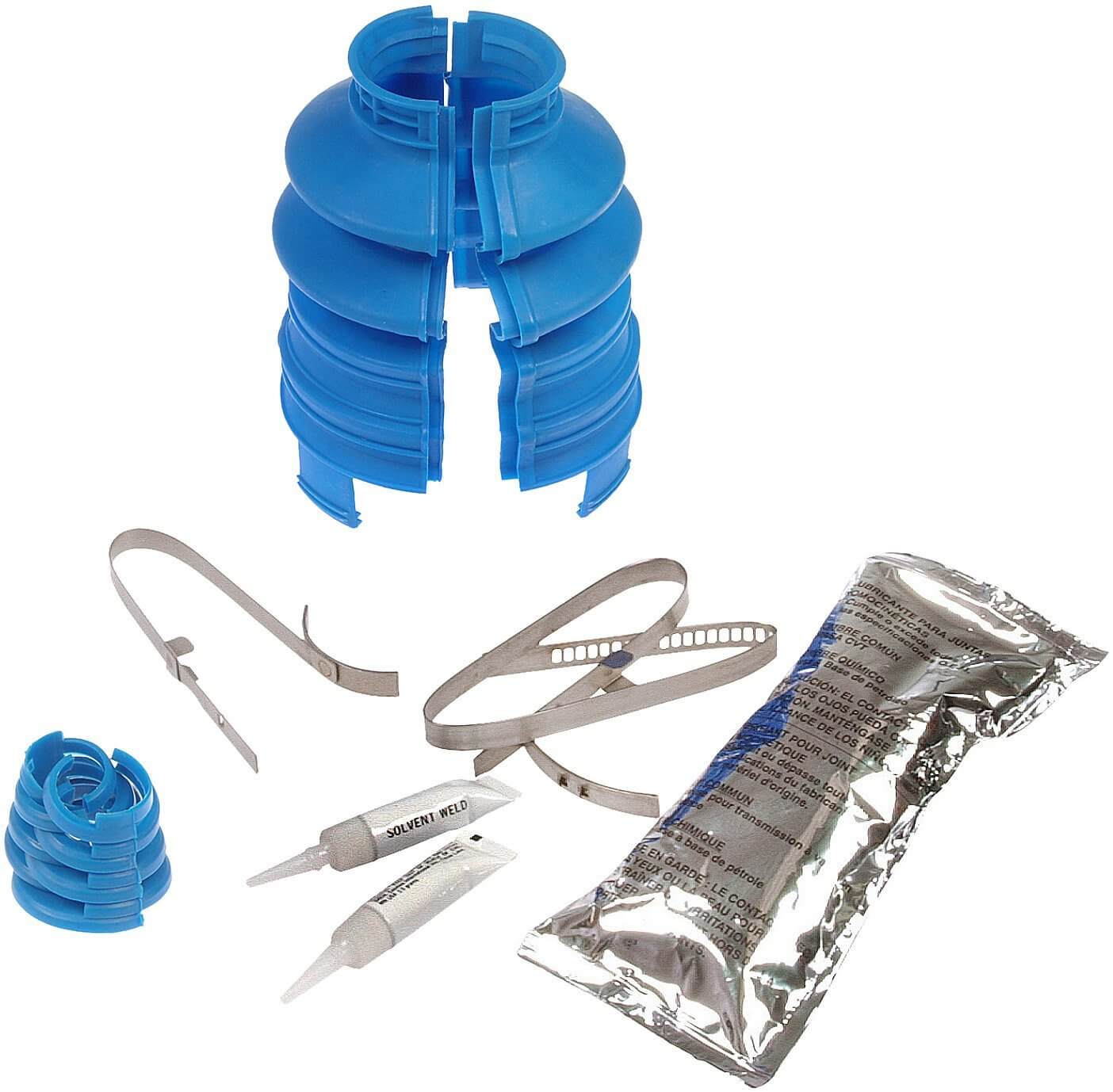
Remember, you have to glue that seam. I’ve tried it—it’s not easy. If there’s any grease on the seam, the repair won’t hold. Even if you get the boot seam squeaky clean, it won’t last nearly as long as a real one-piece boot. In other words, if you’re short on cash, have the time to do it right, and are willing to risk failure again, go ahead and install a split boot.
©, 2016 Rick Muscoplat
Posted on by Rick Muscoplat