
Diagnose Serpentine Belt Noise Like a Pro
The Top Causes of Serpentine Belt Noise
Quick summary
Serpentine belt noise is always caused by one of three things: 1) A weak tensioner that’s not applying the correct tension, 2) Pulley misalignment, or 3) A worn belt that still looks good to the naked eye. The trick is knowing how to diagnose the entire belt-drive system rather than blindly replacing parts. In this guide, I’ll walk you through exactly how I track down belt noise in the shop and fix it correctly the first time.
Article
Serpentine Belt Noise: How I Diagnose and Fix It Without Guesswork
After decades in the shop, I can tell you this with confidence: a properly operating serpentine belt system runs almost silently. When I hear serpentine belt noise—whether it’s a squeal on startup, a chirp at idle, or a grinding sound under load—I know the belt system is trying to tell me something.
Too many people chase belt noise by spraying chemicals, replacing belts repeatedly, or guessing at parts. That’s how money gets wasted. The key to fixing belt squeal is understanding how the belt, tensioner, and pulleys work together—and how they fail.
Let me show you how I approach it.
Why Belt Noise Happens in the First Place
A serpentine belt drives multiple accessories simultaneously: the alternator, power steering pump, A/C compressor, and, in some applications, the water pump. When everything is aligned and properly tensioned, the belt grips the pulleys without slipping.
But when tension drops, alignment shifts, or the belt ribs wear down, friction turns into heat—and heat turns into serpentine belt noise. That noise isn’t random. Each sound point to a specific failure mode, which is why diagnosis matters more than replacement.
The Number One Cause of Serpentine Belt Noise I See
If I had to pick a single most common cause of belt noise, it would be a weak or worn automatic belt tensioner. This surprises people because the tensioner often appears intact and still exerts pressure.
What most drivers don’t realize is that the internal spring weakens with age, and the pivot bushing wears out. Once that happens, the tensioner arm can tilt slightly. That tiny misalignment is enough to cause the belt to ride up on one side of the pulley, producing chirps and squeals.
This is why replacing only the belt rarely solves serpentine belt noise. A modern EPDM belt usually runs for a bout 100K miles. That’s also the lifespan of a typical automatic belt tensioner. When customers ask me how to fix a belt squeal, my answer is usually: replace the belt and the tensioner as a set.
How Misalignment Creates Belt Noise You Can’t Ignore
The second major cause of serpentine belt noise is pulley misalignment. I see this from cocked idler pulleys, worn alternator brackets, damaged A/C compressor mounts, or a tensioner pivot that’s no longer square.
When a belt is pulled sideways instead of straight, it chirps. That sharp, rhythmic chirp is classic misalignment-related belt noise.
This is where experience helps. I don’t guess—I confirm it using simple tests that tell me exactly how to fix the belt squeal instead of throwing parts at the problem.
The Worn Belt That “Looks Fine” but Isn’t
Modern EPDM belts don’t crack like older neoprene belts did, which fools many DIYers. I’ve seen countless cases where a customer swore the belt was good because it looked fine —no cracks—, but it was the root cause of serpentine belt noise.
Signs I look for:
• Rounded or shallow ribs
• Rubber deposits melted into pulley grooves
• Frayed belt edges
Even if a belt looks good to the naked eye, these subtle signs mean it’s already a bad belt, causing noise.
As belts wear, the ribs become rounded and shallow. That reduces surface contact with the pulley grooves, allowing slip even with good tension. Slip equals heat, and heat equals noise.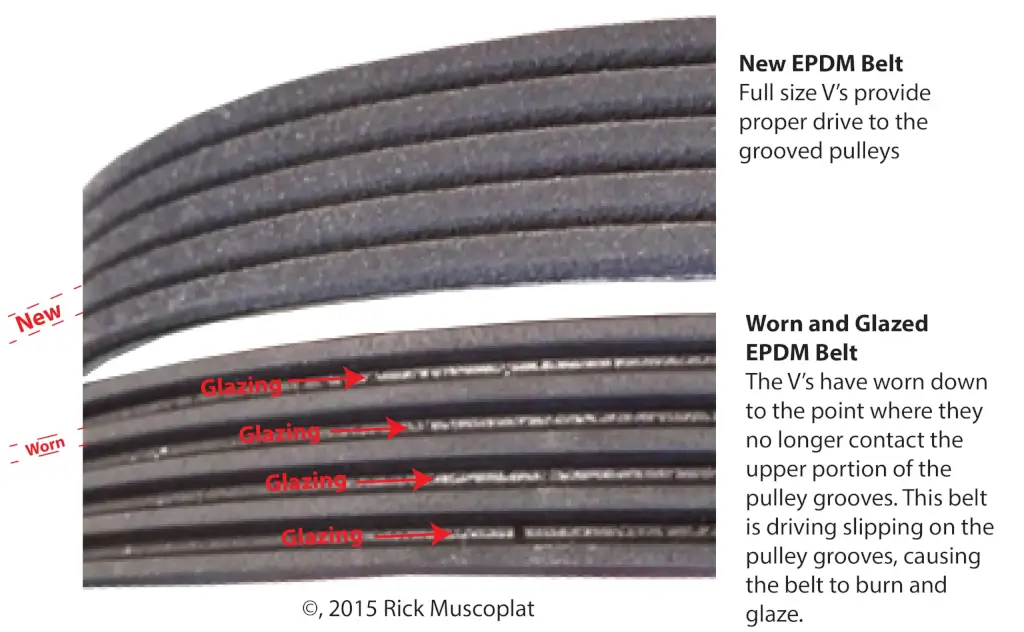
If you’re chasing belt noise and the belt has over 60,000–100,000 miles on it, replacement should already be on the table—even if it looks decent.
How to check for a worn tensioner
• Watch the tensioner while the engine is running. A tensioner
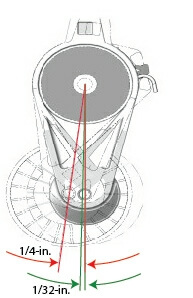
This image shows the maximum allowable movement of the serpentine belt tensioner arm
arm that vibrates more than 1/8 inch while running
• Rust on the tensioner spring or housing
• A belt that’s “walking” up on one side of the pulley
If you ignore a weak tensioner, you’ll continue to hear belt noise even after installing a new belt.
My Go-To Water Spray Test for Diagnosing Belt Noise
To diagnose belt noise caused by misalignment, I often use a spray test or probe the pulleys with a mechanic’s stethoscope. If the chirp changes when water hits the belt, it’s almost always an alignment issue.
My Go-To Water Spray Test for Diagnosing Belt Noise
How to Perform the Water Spray Test Safely
I always recreate the conditions where I normally hear the noise. If the car belt squealing only happens during a cold start, that’s when I run the test. You’ll need:
• A spray bottle filled with water
• A flashlight
• A helper (especially if testing at higher RPMs)
Safety note: Always remove loose clothing and jewelry before leaning into a running engine.
Here’s how I do it:
1) Start the engine.
2) Spray water on the ribbed side of the belt before it hits a pulley.
3) Listen carefully:
4) If the noise stops and comes back shortly, it’s likely a misalignment issue.
5) If the noise gets louder, there’s not enough tension on the belt.
This simple water trick has helped me diagnose more than a few tricky alternator belt noise complaints.
NOTE: Most belt chirps and belt squeals occur in the shortest spans between two driven components.
How I Check for Bad Pulleys and The Automatic Belt Tensioner
Once the belt is off, I manually spin every pulley—including the tensioner, idler, alternator, and power steering pump. Any sign of resistance, noise, or wobble means the part is suspect. I’ve traced countless car belt squealing problems to bad alternator bearings or a seized A/C clutch.
A stethoscope probe can help isolate the component causing the noise before removal. I listen carefully to each pulley while the engine is running to identify the problem area.
Check the belt tensioner
A worn automatic belt tensioner or improper tension from a manual belt tensioning system will cause the belt to squeal. Most people blame the belt and replace it only to find the belt noise returns. You may think the automatic belt tensioner is in good shape simply because it applies some tension to the belt—not true!
A worn belt tensioner can damage the bearings in your alternator, power steering pump, and AC compressor. I’ll show you several ways to diagnose a serpentine belt chirp or squeal using just a spray bottle and water.
Signs of a worn tensioner:
• It creaks as you rotate the tensioner. That means the spring inside is rusted
• You see brown rust on the tensioner
A worn automatic tensioner can cause an out-of-alignment condition.
The #1 cause of misalignment is pivot bushing wear
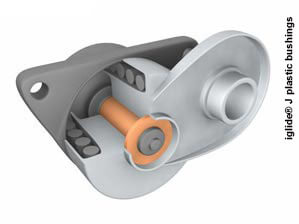
The tensioning arm rotates around the yellow plastic pivot arm bushing
inside the automatic tensioner. The tensioner is made in two pieces. One piece is bolted to the engine and has a slot to hold one end of the tensioning spring.
The second piece is the movable portion. It rotates around a brass or plastic bushing. When that bushing wears out, the tension arm gets cocked, making the belt ride to the high side of the tensioning roller/pulley. That sends the belt onto the other pulleys via a side pull, causing chirping and squealing.
In addition to tensioner pivot arm bushing wear, you can also get worn idler roller bearings that cock the pulley slightly off parallel. That’s the 2nd most common cause of misalignment. The water test I will describe will identify a misalignment problem, and the link I’ve provided will help you determine which component is at fault.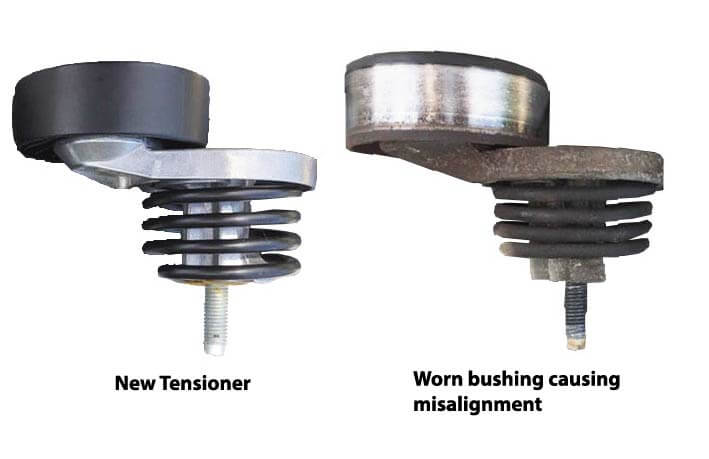
You may need a long wrench to move the serpentine belt tensioner. Find them here
© 2012 Rick Muscoplat
Posted on by Rick Muscoplat