
Disc versus drum brakes: The pros and cons
Disc Versus Drum Brakes: Which Offers Better Performance and Safety?
When it comes to vehicle braking systems, disc brakes and drum brakes represent the two primary technologies used. Both systems have unique advantages and disadvantages that can influence their suitability for different vehicles and driving conditions. Understanding the pros and cons of disc versus drum brakes can help you make informed decisions about vehicle maintenance, performance, and safety. This article explores the strengths and weaknesses of both braking systems to give you a comprehensive view.
Comparing disc brakes versus drum brakes
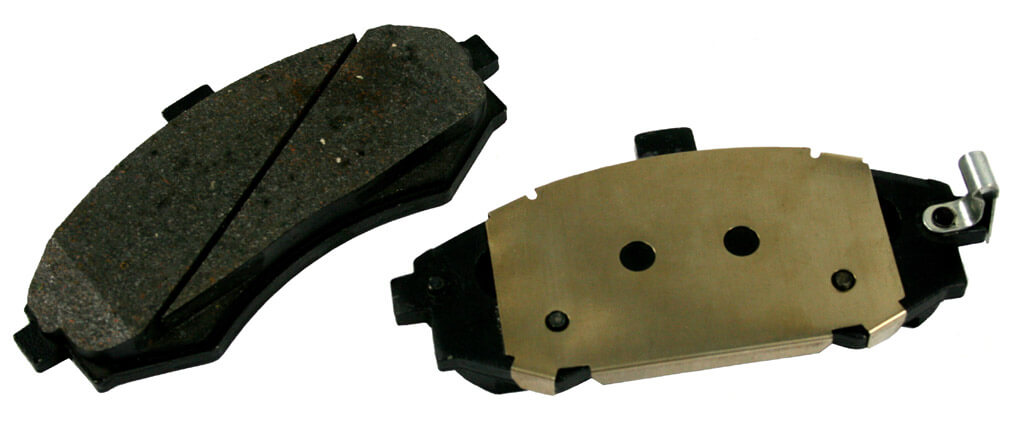
A disc brake system uses a disc brake pad, caliper, and a 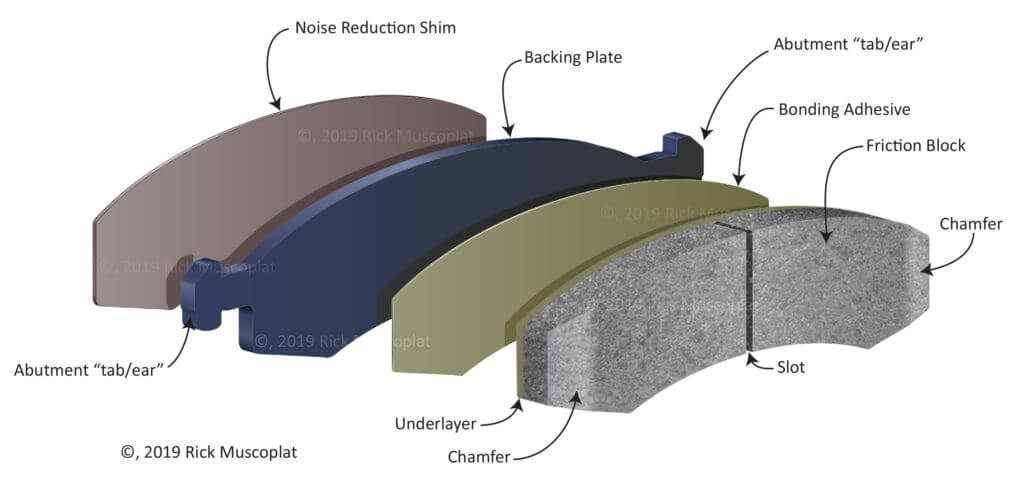 rotor. The disc brake pad consists of a steel backing plate and friction material. In use, hydraulic fluid extends the caliper piston to apply pressure to the brake pads, which clamp against the rotor to stop the vehicle. Disc brake systems contain fewer parts than drum brake systems, are self-adjusting and self-retracting, and are more reliable. They do, however, require more braking force to stop the vehicle because they are not servo-actuated like drum brakes.
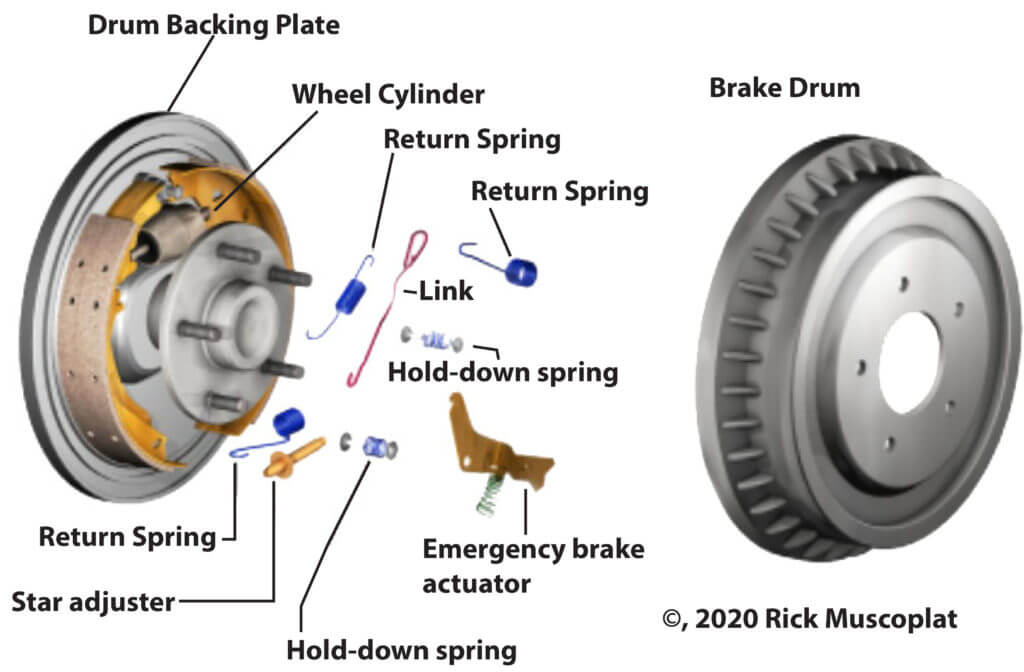
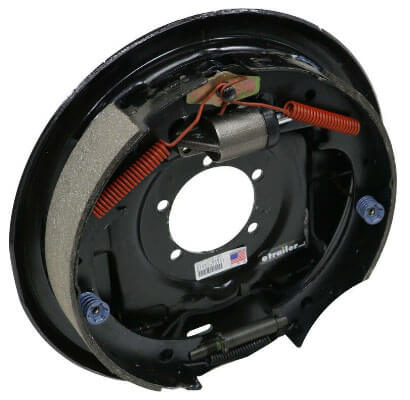
Drum brakes, on the other hand, have many more parts, including return springs, links, hold-down springs, and a self-adjuster mechanism
Here’s where things get confusing
Disc brakes were originally used only on the front wheels, with drum brakes in the rear. The reason for retaining the drum brake in the rear was to provide emergency/parking brake operation using the brake shoes.
Over time, car makers shifted to disc brakes on all four wheels with a cable-operated feature on the rear calipers that would apply the brake pads to the rotor when the driver actuated the parking brake.
Unfortunately, that combination hydraulic/cable operated caliper was fairly complicated and prone to leaks and early failure. So carmakers abandoned the combination caliper and developed a hybrid disc brake/parking brake system that uses disc brake pads for stopping power with small brake shoes that apply to the rotor hat area for parking brakes.
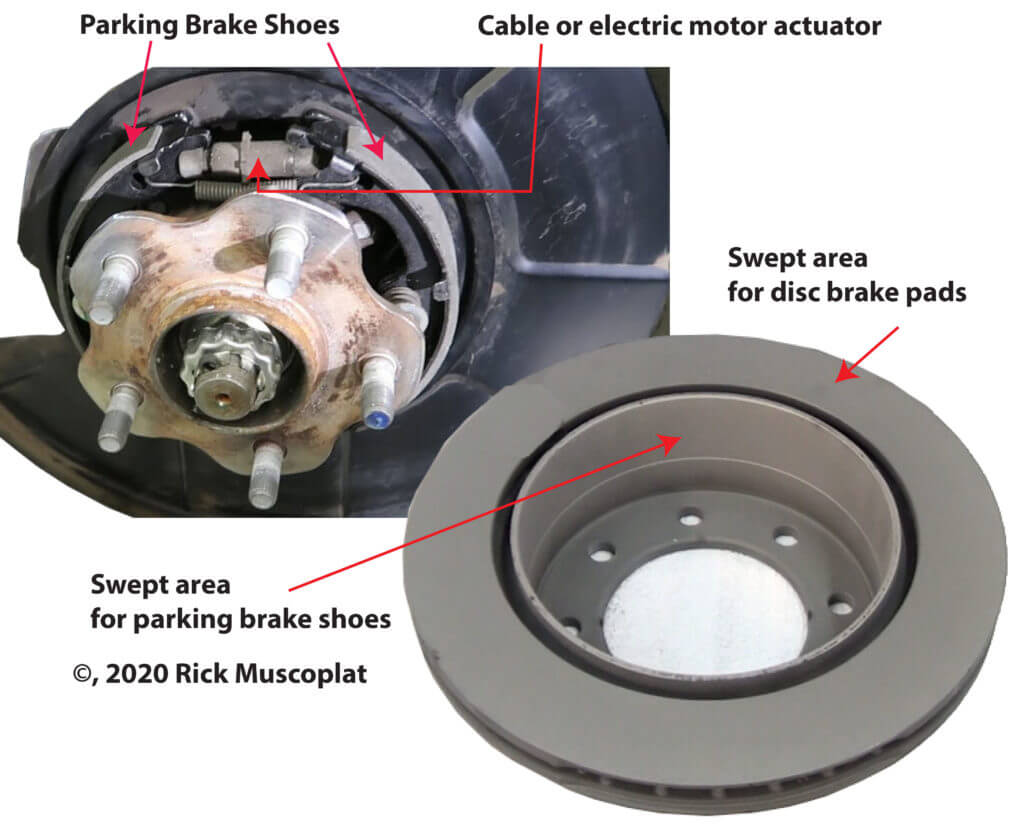
A normal caliper applies pressure to the disc brake pads against the brake pad swept area on the rotor. When the parking brake is applied, the actuator extends the top of the brake shoes against the swept area shown in the image above. The pressure of the brake shoes against the inner area of the rotor hat serves to lock the rear wheels of the vehicle for parking.
Disc Brakes: Pros and Cons
Pros of Disc Brakes
Superior Stopping Power— The larger surface area of the disc and the effectiveness of the clamping mechanism allow for better braking force compared to drum brakes. This results in shorter stopping distances and more reliable braking performance.
Enhanced Heat Dissipation— As the disc rotates, it exposes a larger surface area to air, which helps to cool the brakes and reduce the risk of brake fade. This makes disc brakes particularly effective in high-speed or high-load driving conditions where heat buildup can compromise braking performance.
Consistent Performance— Disc brakes offer consistent braking performance, regardless of driving conditions. The open design of disc brakes allows for better ventilation, which helps maintain consistent performance even in wet or muddy conditions. This reliability enhances overall safety and driver confidence.
Reduced Brake Fade— Disc brakes are less prone to brake fade because they are designed to handle higher temperatures and dissipate heat more effectively. This makes them a preferred choice for vehicles that experience heavy braking or high-speed driving.
Easier Maintenance— Disc brakes are generally easier to maintain and inspect compared to drum brakes.
Cons of Disc Brakes
Higher Initial Cost— Disc brakes can be more expensive to manufacture and install compared to drum brakes.
Increased Noise— Disc brakes are sometimes associated with increased noise, such as squealing or grinding sounds.
Potential for Brake Pedal Pulsation— Disc thickness variation caused by lateral runout is a common and annoying problem with disc brakes.
Drum Brakes: Pros and Cons
Pros of Drum Brakes
Lower Initial Cost— Drum brakes are typically less expensive to manufacture and install compared to disc brakes.
Durability—The enclosed drum design protects the brake shoes and components from dirt, moisture, and debris, which can contribute to longer-lasting performance in certain conditions.
Good Parking Brake Performance— Drum brakes are particularly effective for parking brake systems.
Cons of Drum Brakes
Heat Retention— Drum brakes are less efficient at dissipating heat compared to disc brakes. As a result, they are more susceptible to brake fade during extended or heavy braking.
Complex Maintenance— Maintaining and servicing drum brakes can be more complex compared to disc brakes. The enclosed design makes it more challenging to access and inspect the brake shoes and drum. Additionally, drum brakes may require periodic adjustments to ensure proper operation.
Less Consistent Performance—Drum brakes can perform less consistently, particularly in wet or muddy conditions. The enclosed drum design can trap moisture and debris, affecting braking efficiency and leading to reduced performance.
Uneven Wear— Drum brakes are prone to uneven wear of the brake shoes and drum. This can lead to performance issues such as noise, vibration, and reduced braking effectiveness.
©, 2020 Rick Muscoplat
Posted on by Rick Muscoplat