
Complete Guide to Automotive Sensors
What Automotive Sensors Do in Modern Engines
Quick Summary
Automotive sensors are the eyes and ears of your engine control system. They measure temperature, pressure, position, airflow, and combustion conditions, then send that data to the computer to control fuel, spark, and emissions. When automotive sensors fail, the engine loses critical feedback—leading to poor performance, no-start conditions, or increased emissions. The key to diagnosing them isn’t guessing—it’s understanding how they operate, what signals they produce, and how those signals change under real conditions.
Automotive Sensors Explained: How They Work, What They Do, and Why They Fail
I’ve spent decades diagnosing engine problems, and if there’s one thing I can tell you, it’s this: modern engines don’t run on parts—they run on data. And that data comes from automotive sensors.
Every time you turn the key, dozens of sensors start feeding information to the engine computer. If even one of those signals is wrong, the entire system can fall apart.
Let me walk you through how these sensors really work—and how I diagnose them in the real world.
What Automotive Sensors Actually Do
At their core, automotive sensors convert physical conditions into electrical signals. That’s it. Temperature becomes voltage. Pressure becomes frequency. Position becomes a digital waveform.
The engine computer—commonly called the PCM—uses those signals to make decisions in real time:
• How much fuel to inject
• When to fire the spark plugs
• How far to open the throttle
• When to adjust valve timing
Without accurate sensor data, the PCM is essentially blind.
Every major system—from fuel pressure regulation to throttle control—relies on sensor input to operate correctly.
The Most Important Automotive Sensors (And What They Measure)
Let’s talk about the ones that matter most in real diagnostics.
Crankshaft and Camshaft Position Sensors — These are the
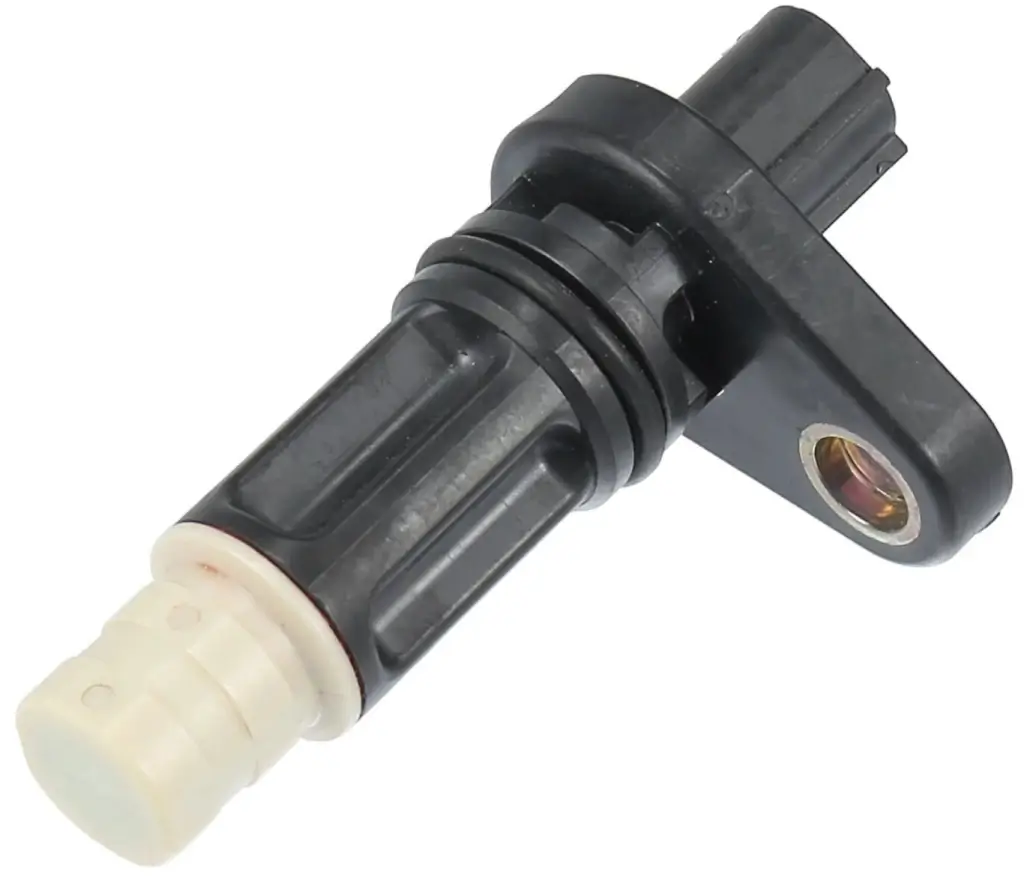
The crankshaft position sensor
backbone of engine timing. If the crank sensor fails, the engine often won’t start—period.
These sensors generate either a digital square wave or an AC signal that tells the PCM exactly where the pistons are.
• Oxygen Sensors (Air-Fuel Sensors) — Oxygen sensors monitor exhaust gases to determine if the engine is running rich or lean.
• Upstream sensors control fuel trim.
• Downstream sensors monitor catalytic converter efficiency.
If these sensors fail, you’ll see poor fuel economy, high emissions, and check engine lights.
Mass Airflow (MAF) and MAP Sensors — These sensors determine how much air is entering the engine.
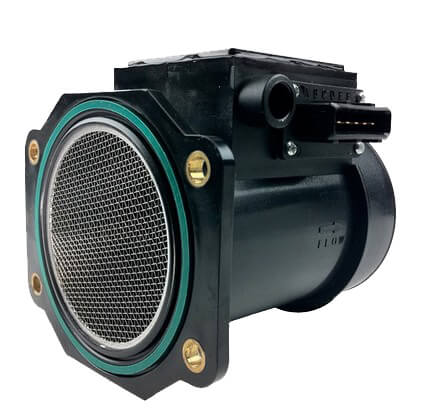
A mass airflow sensor detects the amount and density of air coming into the engine
• MAF measures actual airflow and air density
• MAP measures intake pressure
The PCM uses this data to calculate fuel delivery. A faulty reading throws off the entire air-fuel ratio.
Throttle Position and Pedal Position Sensors — Modern vehicles use electronic throttle control. That means no direct cable.
Instead, sensors measure:
• Pedal input
• Throttle plate position
If these signals don’t agree, the system can go into limp mode—or shut down entirely.
Engine Coolant Temperature Sensor — This simple sensor has a huge impact. It tells the PCM whether the engine is cold, warming up, or fully hot. It’s typically a thermistor (NTC type), meaning its resistance drops as temperature increases.
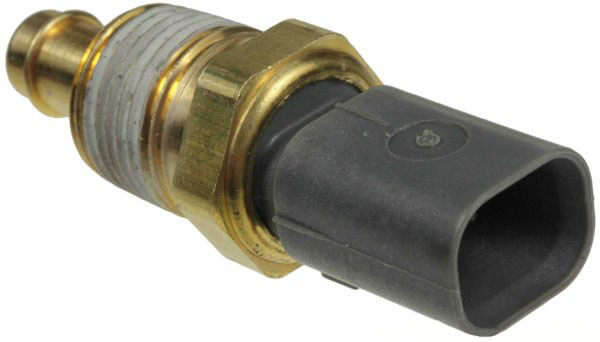
coolant temp sensor
A faulty reading can cause:
• Hard starts
• Poor fuel economy
• Cooling fan issues
• Fuel Pressure Sensor
In direct-injection engines, this sensor is critical. It monitors fuel rail pressure—sometimes exceeding 2,000 psi. The PCM uses this data to control the high-pressure fuel pump. If the signal is incorrect, the engine may run rough or fail to start.
How Automotive Sensors Actually Work (The Technical Side)
Most automotive sensors fall into a few categories:
1. Voltage-Generating Sensors — These produce their own signal (like inductive crank sensors).
2. Voltage-Reference Sensors (5V Sensors) — These use a 5-volt reference from the PCM and vary the return signal.
Examples include:
• MAP sensors
• TPS sensors
• Pressure transducers
3. Resistance-Based Sensors — These change resistance based on conditions. A perfect example is the coolant temperature sensor:
• Cold engine → high resistance
• Hot engine → low resistance
4. Frequency or Digital Sensors — These produce square wave signals. Hall-effect sensors fall into this category and are widely used for position sensing.
Why Automotive Sensors Fail
• Heat and Vibration — Sensors live in brutal environments. Engine heat and vibration slowly degrade internal components.
• Contamination — Oil, carbon, coolant, or fuel contamination can interfere with sensor readings—especially MAF and oxygen sensors.
• Electrical Failures — Broken wires, poor grounds, or corrosion often mimic a bad sensor.
In fact, I’ve fixed more “bad sensors” by repairing wiring than by replacing parts.
Internal Sensor Failure — Over time, internal circuits simply wear out. For example:
• Oxygen sensors lose responsiveness
• Thermistors drift out of calibration
• Pressure sensors lose accuracy
How I Diagnose Automotive Sensors (Professional Strategy)
When diagnosing automotive sensors, I don’t replace parts—I verify signals.
First, I check:
• Power (usually 5V reference)
• Ground integrity
• Signal output
Then I compare the signal to expected values under real conditions.
For example:
• Coolant temp should match ambient when cold
• MAP readings should change with throttle input
• Crank sensor should produce a consistent waveform
If the signal doesn’t make sense, I trace it back through the circuit—often using a wiring diagram to identify the exact pin and connector location.
Final Thoughts: Sensors Are Data, Not Just Parts
If you remember one thing, remember this:
• Automotive sensors don’t fail randomly—they fail in predictable ways.
• When you understand how they work, diagnosing them becomes straightforward.
• When you don’t, you end up throwing parts at the problem.
©, 2026 Rick Muscoplat
Posted on by Rick Muscoplat