
When to Change You Oil: The Truth Most Drivers Miss
Severe vs Normal Service Oil Change Intervals
Quick Summary
If you want the straight answer to when to change your oil, here it is:
1) Most modern engines can safely go 5,000–10,000 miles when driven under NORMAL driving conditions, but
2) Driving under SEVERE SERVICE conditions, cut that interval in half.
What is considered severe service:
• Short trips — primarily short trips of 5 miles or less (or under 10 miles in freezing temperatures), because the engine doesn’t fully warm up, which can cause moisture buildup and oil contamination
• Long idling,
• Towing or hauling heavy loads
• Stop-and-go traffic — sustained stop-and-go driving, low-speed operation
• Extreme temperatures — extremely hot weather (over 90°F), freezing cold, or very humid conditions Honda
• Towing or heavy loads — regularly towing a trailer, hauling cargo, or carrying a full vehicle of passengers
• Rough or dirty roads — driving on muddy, dusty, or de-iced roads, or in mountainous terrain
• Commercial or high-use driving — vehicles used for commercial purposes, such as patrol cars, taxis, and delivery trucks.
All owners’ manuals list a more frequent service schedule for this type of driving, usually changing oil closer to 3,000–5,000 miles or every 6 months—whichever comes first. Ignore that, and you’re accelerating engine wear, sludge buildup, and eventually catastrophic failure.
In my experience, short-trip driving is the biggest oil killer. The oil never gets hot enough to burn off moisture and fuel contamination, which leads directly to sludge.
Mileage vs. Time: The Most Overlooked Factor
A mistake I see constantly is ignoring time.
Even if you don’t drive much, you still need to think about when to change your oil based on time, not just miles.
Oil degrades simply from:
• Heat cycles
• Oxygen exposure
• Moisture accumulation
That’s why manufacturers specify “miles OR time—whichever comes first.”
If you only drive 3,000 miles a year, you still need an oil change at least once a year—and often every 6 months for severe conditions.
What Happens If You Don’t Change Oil On Time
This is where things get expensive—and fast.
1. Additive Depletion — Motor oil isn’t just oil—approximatley 25% of modern oil is the additive package. The additives are:
• Anti-wear additives
• Anti-oxidants
• Detergents
• Corrosion inhibitors
• Viscosity stabilizers
These additives are sacrificial, meaning they get used up over time.
Once they’re gone, the oil can’t protect your engine.
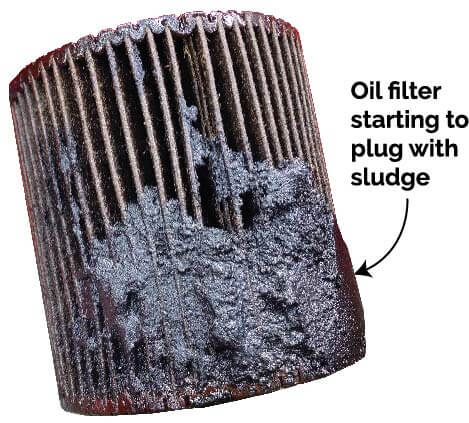
2. Sludge Formation — As oil oxidizes and mixes with unburned fuel, moisture, and soot, it thickens into sludge.
When Sludge Forms in Your Engine, it:
• Blocks oil passages
• Starves bearings of lubrication
• Causes timing chain wear
• Leads to catastrophic engine failure
I’ve torn down engines with less than 100,000 miles that were completely destroyed from sludge—and it almost always traced back to extended oil intervals.
3. Loss of Viscosity Control — Oil is designed to maintain proper thickness across temperatures. But the additives that control viscosity break down under stress.
When that happens:
• Oil gets too thin at operating temp
• Metal-to-metal contact increases
• Bearing and cam wear accelerate
4. Increased Engine Wear — Without proper lubrication and anti-wear additives:
• Camshafts score
• Lifters collapse
• Rings wear prematurely
• Turbochargers fail
• Turbo engines are especially sensitive. In many cases, they require oil changes as often as 3,000–5,000 miles.
Maintaining the Proper Oil Level Matters More Than You Think
Here’s something most drivers overlook: oil level. If you’re running even 1 quart low, you can reduce oil life by about 25%.
Less oil means:
• Higher temperatures
• Faster additive depletion
• Accelerated breakdown.
 That’s why I always tell people: checking oil level is just as important as knowing when to change your oil.
My Expert Recommendation for When to Change Your Oil
After years in the shop, here’s the interval I recommend for most drivers:
3,000–5,000 miles: Severe service (most drivers)
5,000–7,500 miles: Moderate driving with synthetic oil
7,500–10,000 miles: Ideal highway driving only
Every 6–12 months: Regardless of mileage
If you want your engine to last beyond 200,000 miles, err on the conservative side.
Why the time between oil changes is a factor
When it comes to fluid service, most maintenance guides list both a time and mileage interval. Why is time in service so important? Because engine operation exposes the oil to oxidation and heat, and that starts wearing out the anti-corrosion and pH-balancing additives in motor oil. Carmakers know how long these critical additives last, even if you haven’t racked up enough miles to justify changing the fluid. That’s why fluids must be changed based on mileage or time, whichever comes first.
Additional considerations for determining oil change intervals
Using the recommended oil and topping it off when it’s low
The carmaker assumes you’ve used the recommended oil type and viscosity. 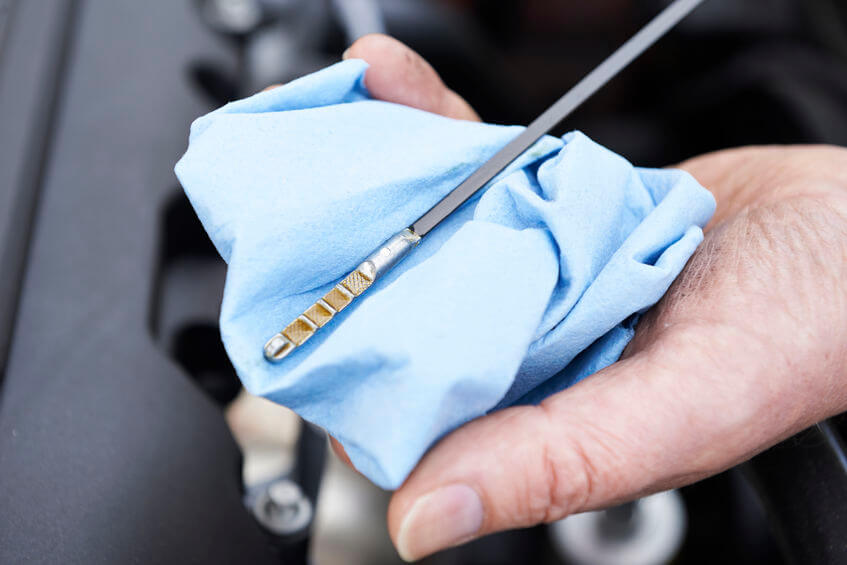 If you’ve used anything else, you can no longer follow the carmaker’s oil change interval recommendations.
Also, the carmaker assumes you check your oil level and top it off when you’re a half-quart or more below the full mark. If you don’t check your oil and top off, all bets are off. Driving when you’re 1 quart or more below the full mark can reduce your oil life by at least 25%. The longer you drive on a reduced oil level, the more you wear out the oil in your engine.
©, 2020 Rick Muscoplat
Posted on by Rick Muscoplat