
Why You Should Change Oil Even If You Don’t Drive Much
When to Change Oil If You Don’t Drive Much
Changing the oil in your vehicle is one of the most important maintenance tasks to ensure a long engine life and optimal performance. However, if you don’t drive much, you might wonder if the standard guidelines for oil changes apply to your situation. While mileage is one of the factors in determining when to change oil, low-mileage vehicles have different needs that are equally important to consider. In this article, we’ll explore when to change your oil if you don’t drive much, the factors that influence oil degradation over time, and how to maintain your vehicle’s health with minimal driving.
All carmakers list oil change intervals based on time and mileage, whichever comes first. The time limit is usually six months. Do you still have to change your oil in six months even if you’ve only driven 1,000 miles? YES! Here’s why.
The short answer to why you need to change your oil, even if you don’t drive much
Cold starts and short trips are really hard on your oil. Cold starts add fuel, water and soot to your oil. Short trips don’t allow your engine oil to get hot enough to evaporate off the fuel and water or run long enough to filter out the soot.
• When you mix water, fuel, and motor oil, you get sludge.
• When you mix water, fuel, soot, and motor oil, you get gritty sludge.
• When you let water, fuel, soot, and oil sit in your crankcase for long periods, you degrade the oil’s anti-corrosion additives. So you get corrosion and acids.
What worn motor oil does to your engine
Clogs variable valve timing solenoids— Most late model engines have variable valve timing (VVT) mechanisms that pulse oil to advance and retard valve timing. Soot and sludge can clog the screens in the VVT solenoid and wear the tightly machined passages in the solenoids that operate the VVT mechanisms. The result? Check engine lights that require VVT solenoid replacement. When you take it into the shop, the first thing they’ll check is your oil.
Wears the high pressure fuel pump camshaft lobes— Gasoline direct injection engine high pressure fuel pumps (up to 2,000-psi) run off of a triangular lobe on the camshaft. Worn-out oil can cause accelerated camshaft wear on the triangular lob.
Causes excessive carbon buildup on the intake valves in direct injection engines— Carmakers have discovered that one of the downsides of direct injection (DI) is carbon buildup on the intake valves. All DI engines can experience this. However, the latest studies show that worn out motor oil causes motor carbon buildup than oil that’s in good shape. Worse yet, that’s kind of carbon buildup is harder to remove and far less responsive to chemical removal treatments.
The longer answer: once you start driving on fresh oil, the clock starts ticking
Cold starts push fuel, water, and soot into the crankcase
All internal combustion engines, even brand new ones, create blow-by; air, fuel, water, soot, and exhaust gasses that seeps around the piston rings, through the ring gaps and into the crankcase where it’s mixed with the motor oil.
A cold engine needs a richer fuel mixture than 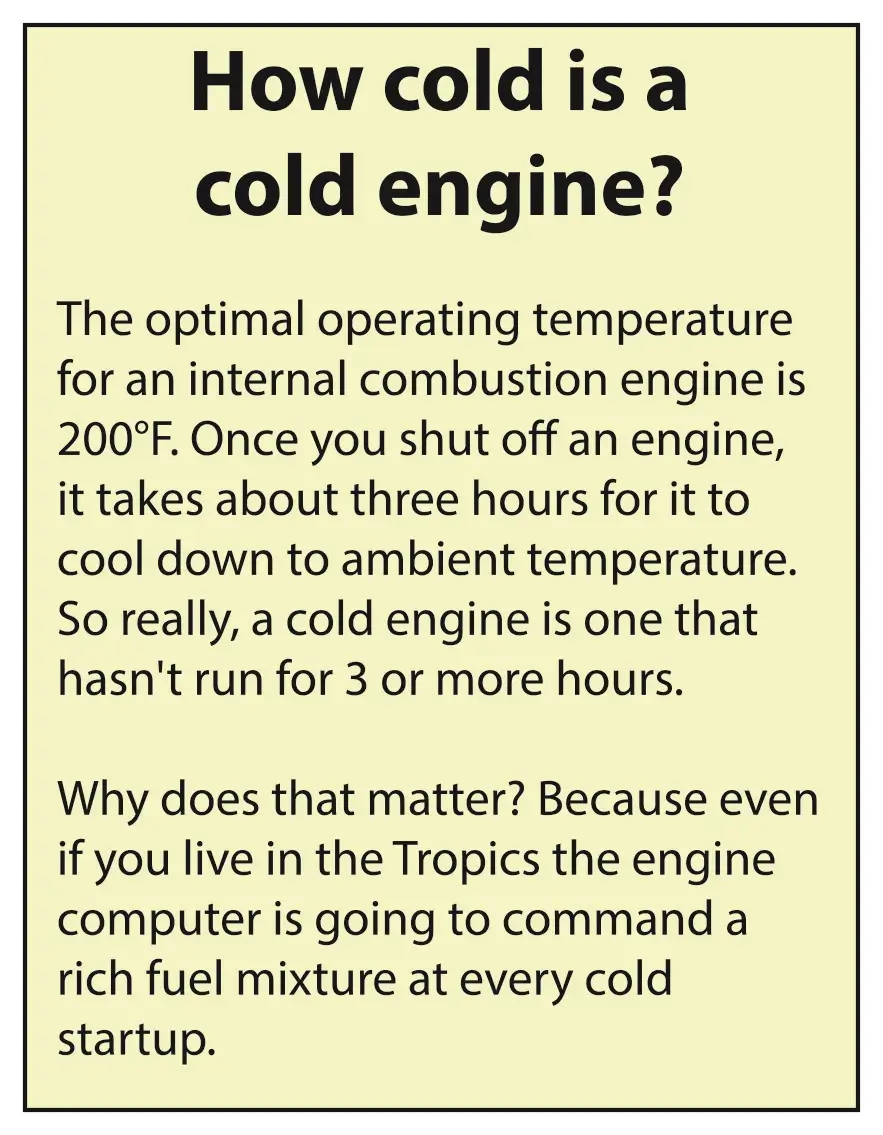 when it’s at full operating temperature. Because all engines have blow-by, some of that fuel gets pushed past the piston rings during the compression stroke and winds up in the crankcase oil.
Water is a byproduct of combustion and some of it gets pushed past the piston rings and into the crankcase during the power stroke.
Rich fuel mixtures in a cold engine produce soot (like the black powder in your tailpipe) and it also gets pushed past the piston rings and into the crankcase oil.
Here’s why oil goes bad from sitting in your engine.
1) Oxidation: Engine oil is subject to oxidation when exposed to air. Over time, oxygen in the air reacts with the oil, causing it to break down. This process happens regardless of how much you drive. Oxidized oil becomes thicker and less effective at lubricating engine parts, which can lead to increased wear and potential engine damage.
2) Moisture Contamination: Short trips and infrequent driving can cause moisture to build up in the engine oil. When the engine doesn’t reach its optimal operating temperature for an extended period, moisture that naturally accumulates in the engine (from condensation) doesn’t evaporate. This moisture can mix with the oil, leading to the formation of sludge, which can harm your engine.
3) Acid Formation: Combustion byproducts, such as unburned fuel and exhaust gases, can mix with engine oil and form acids. These acids can corrode engine components over time. Frequent oil changes help remove these contaminants, but in low-mileage vehicles, they can accumulate and cause damage if the oil isn’t changed regularly.
4) Viscosity Changes: Over time, oil can thicken or thin out depending on its exposure to heat, contaminants, and oxidation. If oil becomes too thick, it won’t flow properly through the engine, leading to poor lubrication. Conversely, if it becomes too thin, it may not provide adequate protection for the engine’s moving parts.
5) Oil dilution: When you start a cold engine, the computer provides a rich air/fuel mixture to overcome the “quenching” effect of the cold engine block. Remember, you’re trying to start a fire in a cold engine and that cold metal tries to put out the fire. Fuel is a solvent. So, the instant you inject cold fuel into the combustion chamber, you wash a certain amount of oil off the cylinder walls, piston head, and rings. At startup, some of the gas/oil mix gets blown past the piston ring gaps and into the crankcase where it mixes with the oil in the sump.
Oil oxidation short trips, and stop and go driving
You’ve started your cold engine, and now you take a short trip or you drive to work in stop-and-go traffic. As you drive, the oil heats up, and that helps evaporate off some of the raw fuel and water. That’s a good thing. But adding heat to the oil, fuel, and water combination also increases the rate of oxidation. That’s a bad thing. If you drive short trips or drive in stop-and-go traffic, you accelerate the oxidation rate of your oil. Remember that for later. Longer trips at highway speeds, on the other hand, help remove the fuel and water from the crankcase oil. But the longer driving still oxidizes the oil.
Oil contains additives to combat oxidation and fight off corrosion
Fresh oil contains anti-oxidants to reduce oxidation and anti-corrosion additives to protect the metals in your crankcase from corrosion caused by water and acids.
Carmakers recommend checking your oil level on a regular basis
All engines burn some oil, even new engines from the factory. As an engine burns oil, the reduced oil volume stresses the remaining oil. In other words, if you drive your car when it’s 1 qt low on oil, you wear out the anti-oxidation, anti-corrosion, detergent, and suspension additives in the remaining oil.
This is an important point to remember because every time online forum members start the fight over whether it’s ok to go beyond the carmaker’s oil change time limits, no one talks about whether the driver has checked and topped off the oil level. And, in reality, nobody checks their oil level these days. Ask any oil change outlet and they’ll tell you horror stories of how little oil drains from engines during a routine oil change.
Here’s where the change oil based on time or mileage recommendation comes into play
Whether you drive short distances, drive in stop and go traffic or drive long distances at highway speeds, if you let your oil sit for long periods, any fuel, acid, or water that’s left in the oil will continue to degrade the anti-oxidation and anti-corrosion additives in your oil.
This is no different than letting a bowl of soup sit exposed to open air on your kitchen counter for months. The air will react with the soup. I’m not suggesting that the oil in your car develops microbial growth like the soup on your counter. But the oil will continue to oxidize and corrode the metals in your engine. That degradation will be even worse if you haven’t checked the oil level and topped off as recommended because you’ll have accelerated the depletion of the anti-oxidation and anti-corrosive additives in the remaining oil.
The longer you let used oil sit in your crankcase, the more it degrades the oil’s additives and the more it oxidizes and corrodes the metals in your engine. That’s why carmakers want you to change oil based on time and mileage.
©, 2021 Rick Muscoplat
Posted on by Rick Muscoplat