
Factors Influencing the Lifespan of Car Alternators
The Average Life of a Car Alternator: What to Expect and How to Prolong Its Lifespan
Your car’s alternator is responsible for keeping your car’s electrical system running smoothly. Yet, like all mechanical parts, alternators don’t last forever. In this article, we’ll explore the average life of a car alternator, what factors influence its lifespan, and how you can maximize its longevity.
The Average Life of a Car Alternator
On average, a car alternator lasts between 80,000 to 150,000 miles, or about seven to ten years, depending on various factors. However, this is a general estimate, and the actual lifespan can vary significantly.
Several factors influence the average life of a car alternator
1) Your Driving Habits— Frequent short trips can shorten the lifespan of an alternator. If you regularly drive short distances, your alternator won’t have enough running time to fully recharge the battery, which puts extra strain on the battery and your alternator over time.
2) The Electrical Loads You Place On It— Modern cars have numerous electronic gadgets and systems, from heated seats to advanced infotainment systems. The more electronic features your car has, the harder the alternator has to work. This increased demand can reduce the average life of a car alternator.
3) Environmental Factors— Extreme temperatures, whether hot or cold, can affect the alternator’s performance. In hot climates, the alternator is more likely to overheat, while in cold climates, it has to work harder to produce electricity, which can reduce its lifespan.
4) Maintenance— Regular maintenance of your vehicle’s electrical system can help extend the life of the alternator. This includes checking and replacing worn-out belts and ensuring that the battery terminals and posts are clean and the charging system is functioning correctly.
5) Quality of the Alternator— Not all alternators are created equal. The quality of the alternator, especially a rebuilt alternator, can have a significant impact on its longevity. Higher-quality alternators, such as those made by reputable manufacturers, tend to last longer than cheaper alternatives.
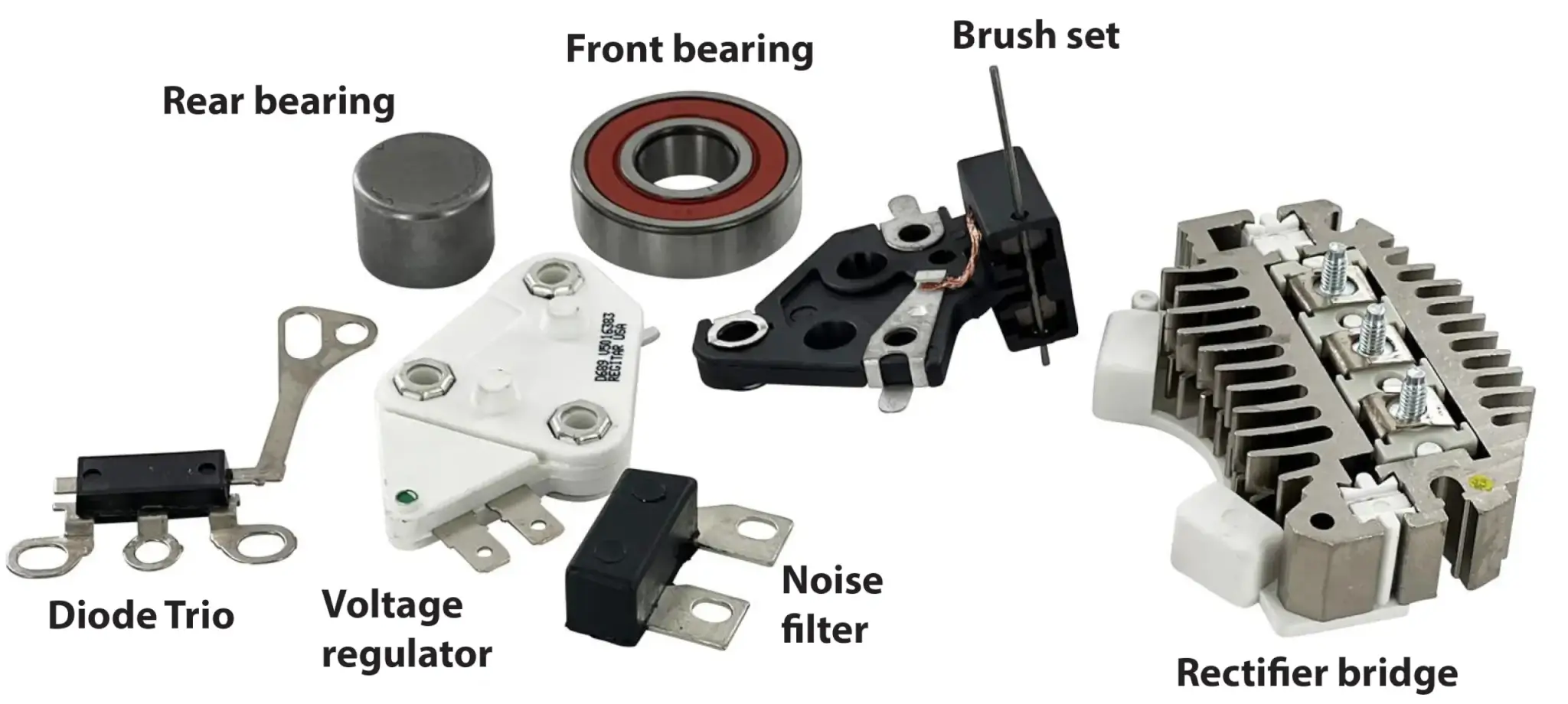
The voltage regulator, diode trio and rectifier are all solid state electronics that can fail to due to overheating and constant charging
Here’s what kills an alternator
These electrical issues can affect how long an alternator lasts
• A bad battery with a shorted cell can cause an alternator to fail early. A shorted cell in your battery can force your alternator to output constantly the entire time your engine is running. In fact, a shorted battery cell is the #1 cause of repeat alternator failures.
• High resistance at the battery terminals dramatically
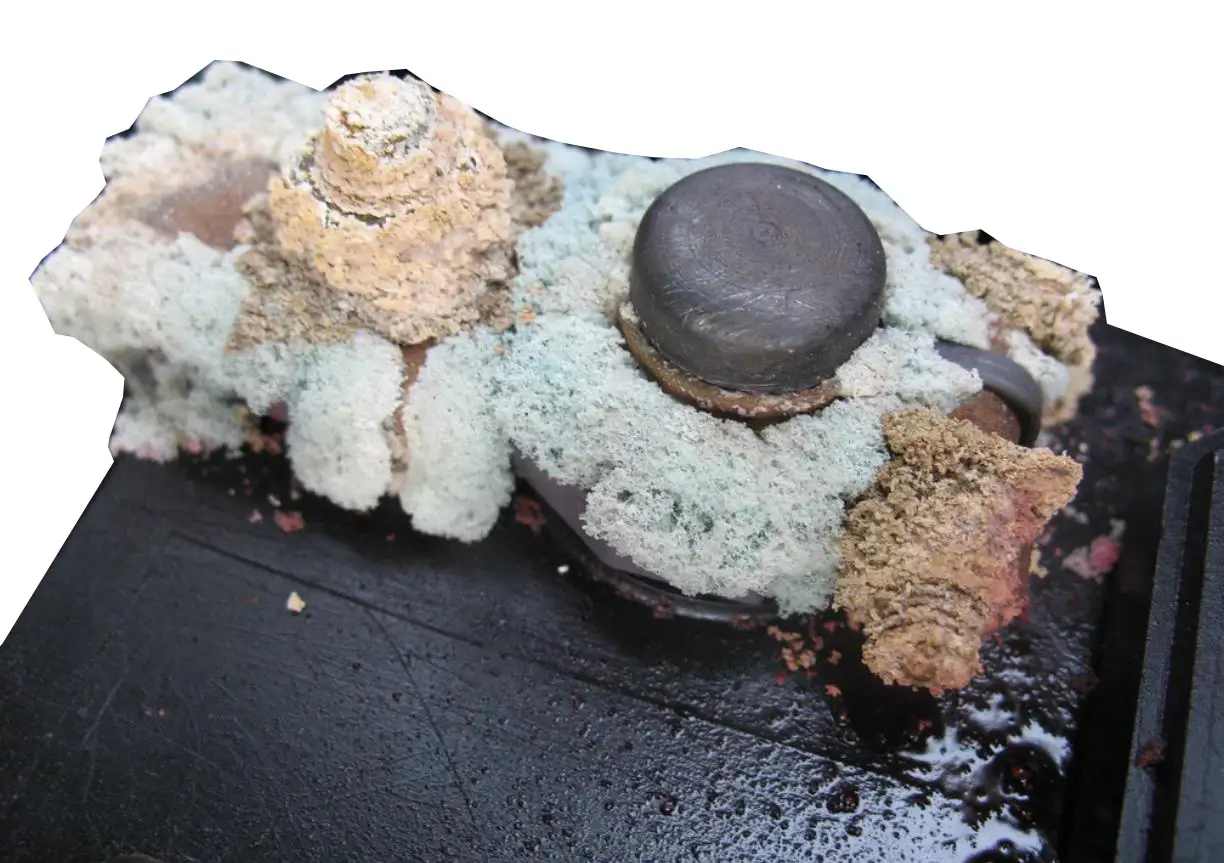
Notice the corrosion and the wetness on the top of the battery. This car battery is leaking between the case and the post
reduces average alternator life. Just like a shorted cell in your battery, high resistance due to terminal corrosion can cause your alternator to run full-time and fail early.
• Improper jump starting can damage an alternator. Reverse polarity can blow the diodes, rectifier, and voltage regulator in your alternator. Make sure you connect jumper cables to the right places
• Using your alternator to recharge a dead battery can cause it to overheat and fail early. An alternator is not designed to charge a dead battery. If you think you can jump-start your car and then let it sit idle to recharge the battery, don’t be surprised that your alternator doesn’t come close to the average alternator life. Charging a dead battery using your alternator causes it to output at maximum, which causes the rectifier and diodes to overheat and fail.
• Drive belt issues can cause early alternator failure. The front and rear bearings fail early if you don’t replace your automatic belt tensioner when it’s worn. Engines don’t produce smooth power; they come in pulses, and an automatic belt tensioner has a dampening mechanism to smooth out the pulses. When that wears out, the vibration pulses are transmitted from the drive belt to the bearings on all the driven components, causing them to fail early.
See this post for more information on testing an alternator.
©, 2021 Rick Muscoplat
Posted on by Rick Muscoplat