
Grinding noise while driving: The most common causes
Learn the most common causes of a grinding noise while driving
One of the most concerning noises you might encounter is a grinding noise while driving. Grinding noises can indicate various issues, some requiring immediate attention to prevent further damage or ensure safety. This guide explores the common causes of grinding noises and offers solutions to address them.
A brake issue is the most common cause of a grinding noise while driving
All brakes vibrate when the brake pad contacts the rotor, but most of the time you never hear the vibration. However, when brake pads wear out, they can make a grinding sound. If the noise you hear happens only when you’re braking, get your brakes checked out ASAP.
• Worn-out brake pads make a grinding sound— As the pad

The friction material on the left pad is almost gone and it’s partially missing on the right pad. Notice that the pad is contacting the rotor. It’s the metal-on-metal contact that’s creating the grinding noise
wears down below 2-3mm, the noise becomes more and more pronounced. Check for worn-out brake pads.
• Cracked brake pad friction material makes noise when braking— This image shows cracked friction material. Brake friction cracks for one of three reasons:
• Rust jacking— The steel backing plate rusts and the expanding rust pushes the friction material off the backing plate, causing it to crack.
• Backing plate flex— Cheap brake pads use thinner steel for the backing plate. If the pad ears are binding in the abutment areas, the backing plate can flex, causing the friction material to detach and crack.
• Overheating— Severe overheating can cause the friction material to degrade and crack.
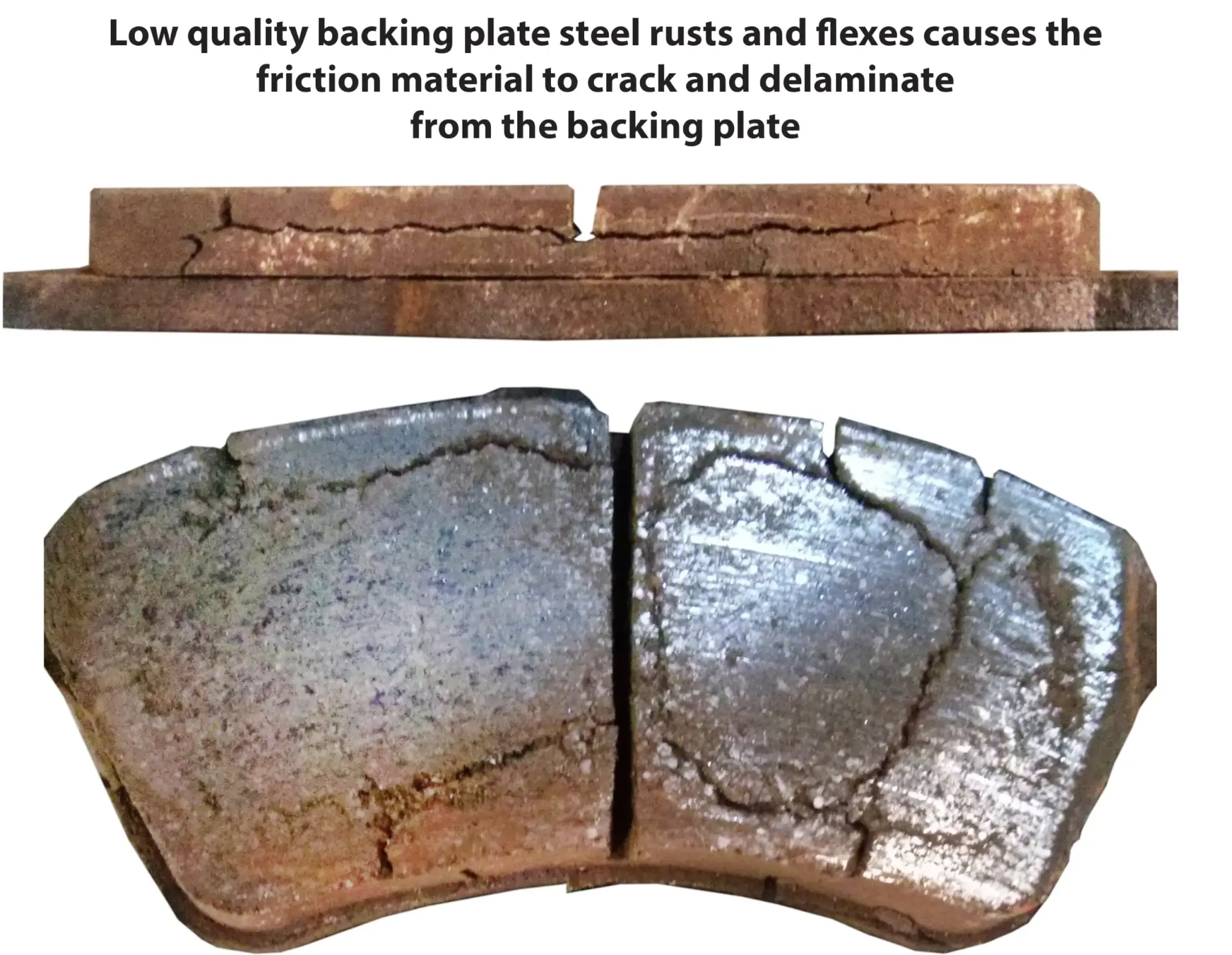
Notice the cracking on the face and edge of the brake pad. This is caused by delamination; detachment of the friction material from the backing plate.

This is what the rotor surface looks like when you’ve worn off all the friction material from your brake pads
A Rough rotor surface can cause grinding noise
Once all the friction material has worn off your brake pads,
you’re braking with metal-=on-metal. That destroys the rotor surface and creates a horrible grinding noise
A bent brake dust shield can cause a grinding noise while driving
The dust shield is a thin piece of metal mounted behind the brake rotor. It can be bent easily, and if bent too far toward the rotor, it can touch and make a grinding sound, even when you’re not applying the brakes. You can check this visually and if it’s touching, just bend it out of the way.
A worn wheel bearing can make a grinding noise while driving
If you hear the grinding noise when you’re not braking, and the noise changes pitch or frequency when you change lanes, you might have a severely worn wheel bearing. Get it checked out ASAP.
A worn axle support bearing can make a grinding noise
This type of noise will vary with speed

This axle shaft support bearing made a LOT of noise before it left the building. If you hear grinding noise, check out the support bearing
Worn differential bearings or gears can make a grinding sound

Worn differential gears
©, 2016 Rick Muscoplat
Posted on by Rick Muscoplat