
Understanding The Cause of a Brake Clunk Noise and How to Solve It
Learn what causes a brake clunk noise when applying the brakes
All brake noises should be a cause for concern and checked out before they can turn into a major problem. One common issue that some drivers experience is a “clunk” noise when applying the brakes. This article delves into the potential causes of brake clunk noise and provides insights into how to address these issues effectively.
A brake clunk noise can be caused by
• A worn caliper bracket abutment.
• Loose caliper bolts
• Loose caliper bracket bolts
• Missing or worn abutment clips
• Worn suspension components
Here’s how to check and correct brake clunk noise.
A worn caliper bracket abutment can cause a brake clunk noise when applying the brakes
When you apply your brakes, the brake caliper squeezes the pads to clamp the rotor and slow you down. However, as they begin clamping, the spinning motion of the rotor drags the pads up or down (depending on whether you’re backing up or moving forward) until the pad backing plate hits the abutment area of the caliper bracket. Most carmakers install stainless steel abutment clips (anti-rattle clips) in the abutment groove. The clips dampen brake pad vibration, reduce abutment wear, and, most importantly, eliminate the “clunk” sound as the pad backing plate hits the abutment.
But even with routine clip replacement, the abutment area can still develop wear spots. Those wear spots allow the brake pad to move too much during brake application, causing a brake clunk sound.
The abutment stops the brake pad from moving. The abutment clip prevents vibration transmission to the vehicle and abutment wear. The abutment is prone to rust and wear.
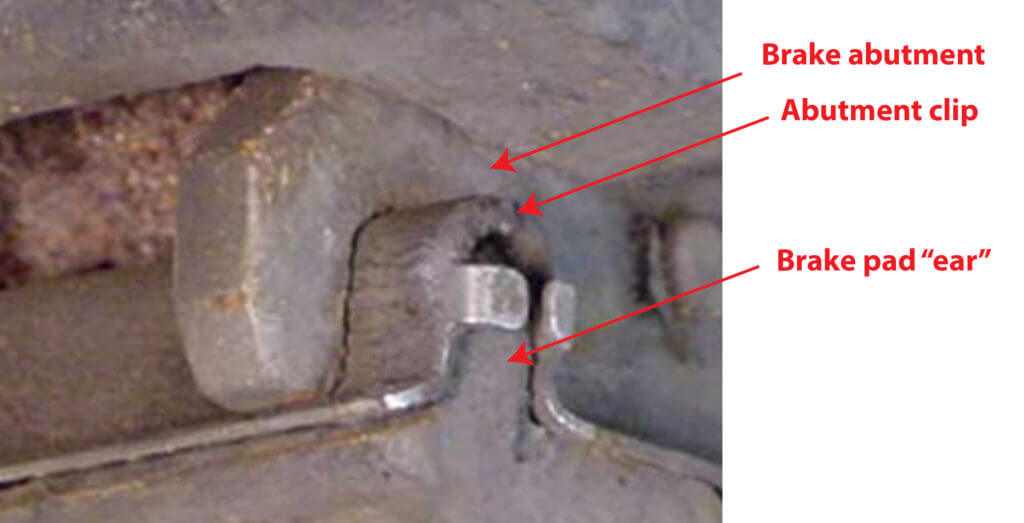
Carmakers often use an abutment clip to reduce noise and prevent wear in the land area of the abutment
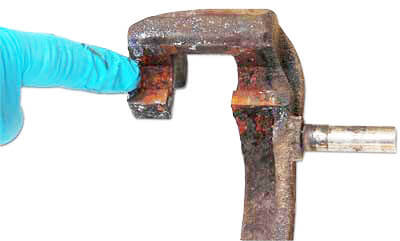
Clean the rust off of the abutment area and apply a light film of brake grease to reduce noise and prevent abutment wear
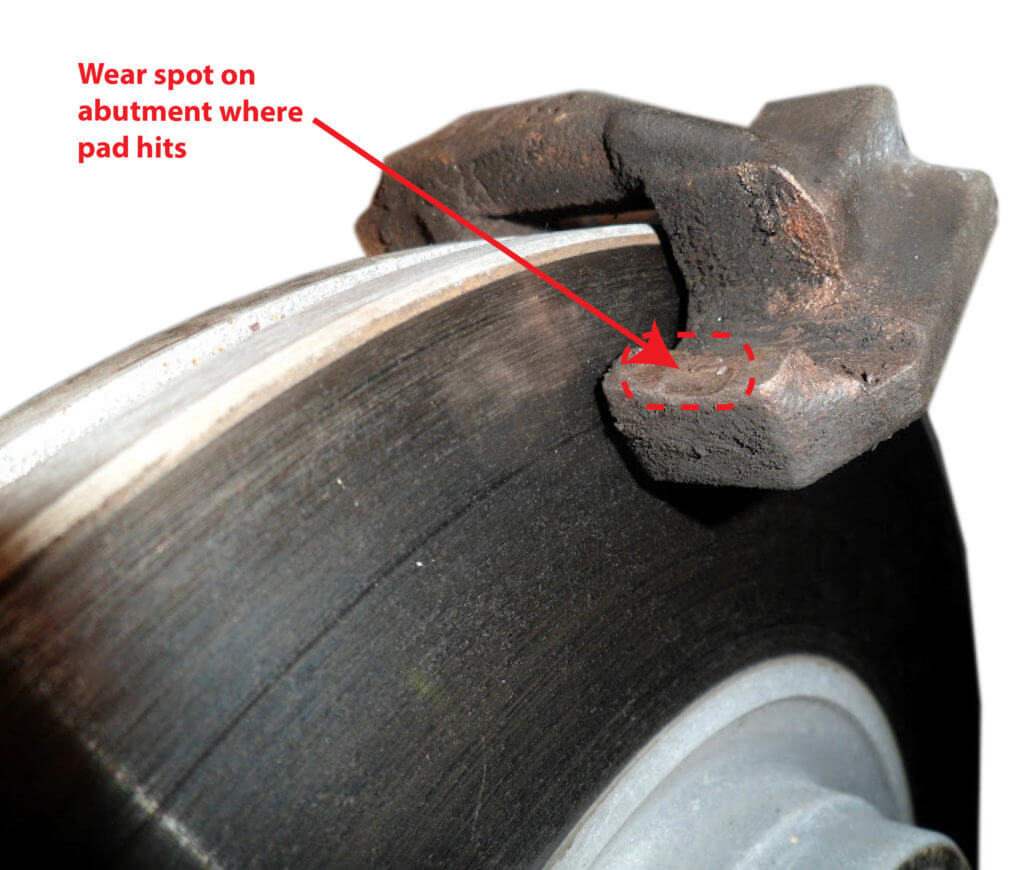
This is an example of abutment wear that can cause a brake clunk. This worn “dimple” area allows extra pad movement during braking, resulting in a brake clunk or thunk sound. Replace the abutment
Missing or worn abutment (anti-rattle clips) can cause brake clunk
High-quality brake pads come with a hardware kit that includes new abutment clips. The clips reduce brake noise but also protect the abutment from wear.
Old worn-out clips thin out, causing excess clearance that allows the brake pad backing plate to slam into the abutment, causing brake clunk when you first apply the brakes.

High heat degrades the spring tension of the anti-rattle clips, and rust can cause the brake pad “ears” to bind. Always replace anti-rattle clips when you replace brake pads
Replace worn caliper brackets/abutment. Lubricate the “land” area under the clips to reduce corrosion and wear. Install new anti-rattle clips. Lubricate the top portion of the clip to allow the pad ears to slide easily.
Use a torque wrench on caliper bolts
Most DIYers over-torque the caliper-to-bracket bolts. Over-torquing the bolts causes them to stretch and loosen, resulting in caliper movement and noise.
Use a torque wrench to tighten caliper bracket-to-knuckle bolts
Tightening these bolts correctly is critical to maintaining the proper alignment of the caliper to the knuckle.
Also, use the recommended thread-locker product when reinstalling the bolts.
Worn suspension components can cause a clunk when applying the brakes
Any time you apply the brakes you generate forward or backward force on the control arm bushings. Any play in the bushings can cause a clunk noise.
Check the bushings for signs of play, severe cracking or rubber separation from the bushing collar.
©, 2020 Rick Muscoplat
Posted on by Rick Muscoplat