
Why Wheel Alignment Is Important
Why Wheel Alignment Is Important: Extending Tire Longevity, Safety, and Performance
Wheel alignment is a critical yet often overlooked aspect of vehicle maintenance. It refers to the precise adjustment of the angles of the wheels so they steer properly and wear evenly. Despite its importance, many drivers only consider wheel alignment when they notice a problem, such as uneven tire wear or the vehicle pulling to one side. This article will explore why wheel alignment is so crucial and the benefits it offers to both your vehicle and your driving experience.
Understanding Wheel Alignment Terms
To fully appreciate the importance of wheel alignment, it’s essential to understand what it involves. Wheel alignment refers to the adjustment of three primary angles:
Camber: This is the angle of the wheel when viewed from the front of the vehicle. If the top of the wheel tilts inward (negative camber) or outward (positive camber), it can affect tire wear and vehicle handling.
Toe: This is the angle at which the wheels turn inward or outward when viewed from above. If the wheels are angled inward, it’s called toe-in; if they are angled outward, it’s called toe-out. Incorrect toe alignment can lead to uneven tire wear and poor handling.
Caster: This is the angle of the steering axis when viewed from the side of the vehicle. It affects the vehicle’s steering stability and cornering performance. Proper caster alignment helps ensure that the vehicle tracks straight and provides a stable ride.
A four-wheel alignment aligns multiple angles of your tires to ensure the vehicle drives straight ahead with minimal tire wear. If you drive with your wheels out of alignment, you’ll wear out your tires. So improper wheel alignment and tire damage go hand-in-hand. You actually save money by driving with your wheels alignment.
Why Wheel Alignment Is Important: Improper Alignment Is Costly
Improper Alignment Wears Out Your Tires Prematurely
One of the most expensive costs of improper alignments is excessive tire wear. When your wheels are correctly aligned, the tires make optimal contact with the road surface, which helps distribute the weight of the vehicle evenly across all four tires. However, when your vehicle is out of alignment, your tires can literally erase themselves in as little as several thousand miles. The cost of an alignment is a fraction of the cost of replacement tires. That’s why wheel alignment is important to extend the life of your tires.
Here are the most common wheel alignment problems that cause accelerated tire wear and vehicle control issues
Camber is out of specification
When the camber angle of a vehicle is out of spec, it can lead to several issues that affect the vehicle’s handling, tire wear, and overall performance. Here’s what can happen when camber is out of specification:
1. Uneven Tire Wear— Negative Camber: If the camber is too negative (the top of the tires tilts inward), the inner edge of the tires will wear faster than the outer edge. This can lead to premature tire wear and the need for early replacement.
2) Positive Camber— If the camber is too positive (the top of the tires tilting outward), the outer edge of the tires will wear faster than the inner edge. Like negative camber, this also results in uneven tire wear and shortened tire life.
3) Poor Cornering Stability— Incorrect camber can affect the vehicle’s cornering ability. Excessive negative camber, while sometimes beneficial in high-performance or racing scenarios, can reduce the tire’s contact patch during straight-line driving, leading to reduced stability and handling in everyday driving conditions.
4) Vehicle Pull— If camber is uneven between the wheels (for example, one wheel has more negative camber than the other), the vehicle may pull to one side. This pulling effect can make the vehicle harder to control and increase driver fatigue.
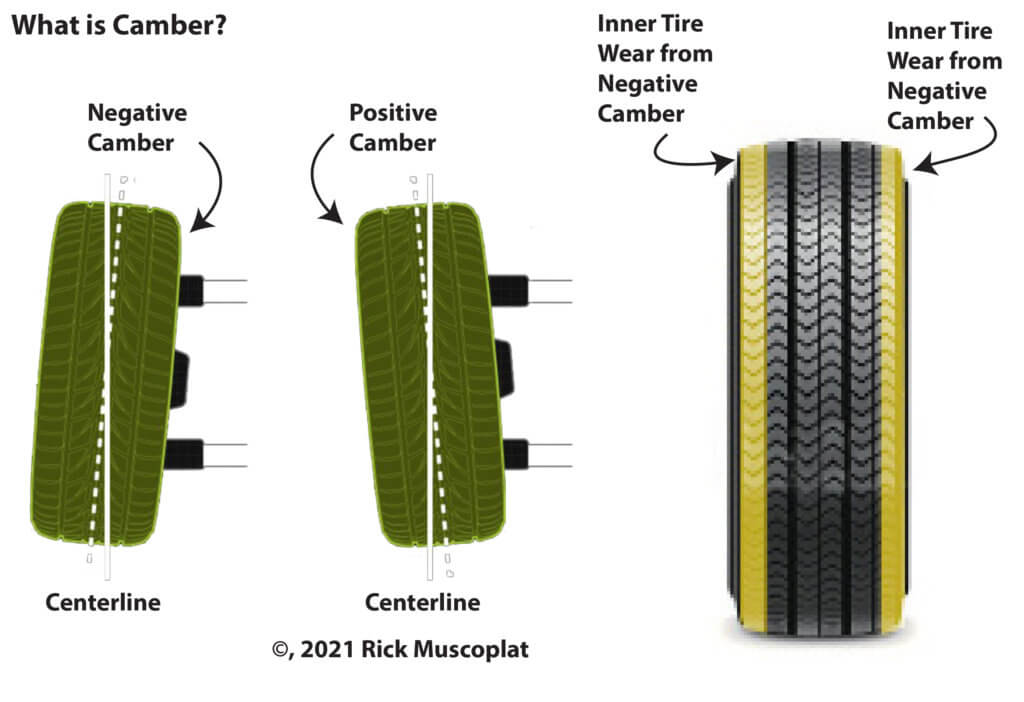
The Camber alignment angle refers to the inward or outward angle of the tire when viewed from the front of the vehicle. Too much inward (negative) camber will cause accelerated wear on the inside shoulder area of the tire. Too much outward (positive) camber will cause accelerated wear on the outside shoulder of the tire. Improper camber is often caused by worn wheel bearings, worn ball joints, worn strut mounts, bent control arm, or worn control bushings.
What happens when Toe is out of spec
When the toe angle of a vehicle is out of spec, it can lead to several negative consequences affecting tire wear, vehicle handling, and overall safety.
The toe angle refers to the direction the wheels are pointed relative to each other when viewed from above. It can either be “toe-in” (where the front of the tires are closer together than the rear) or “toe-out” (where the front of the tires is farther apart than the rear). Here’s what can happen when toe is out of specification:
1) Feathering— One of the most common signs of incorrect toe alignment is feathering, where the tread ribs develop a sawtooth pattern. This occurs because the tires are being dragged slightly sideways as they roll, causing uneven wear across the tread.
2) Excessive Wear— Incorrect toe alignment can lead to accelerated tire wear, particularly on the inner or outer edges of the tires, depending on whether the vehicle has too much toe-in or toe-out. This can significantly reduce tire lifespan, leading to premature replacement and increased costs.
3) Unstable Steering—When the toe is out of spec, it can cause the vehicle to feel unstable or “wander,” especially at higher speeds. The car may not track straight, requiring constant correction by the driver, which can be tiring and potentially dangerous.
4) Reduced Responsiveness— Incorrect toe settings can lead to sluggish steering response, making the vehicle less responsive to driver inputs. This can be particularly noticeable during cornering, where the vehicle may not turn as sharply or predictably as expected.
5) Side Pulling— If the toe angles are uneven between the front wheels, the vehicle may pull to one side. This pulling effect can make driving more difficult and increase the risk of accidents, especially in emergency situations where precise steering control is needed.
6) Reduced Fuel Efficiency— When toe is out of spec, the wheels are not rolling straight, which increases rolling resistance. The engine has to work harder to move the vehicle forward, leading to decreased fuel efficiency. Over time, this can result in higher fuel consumption and increased costs at the pump.
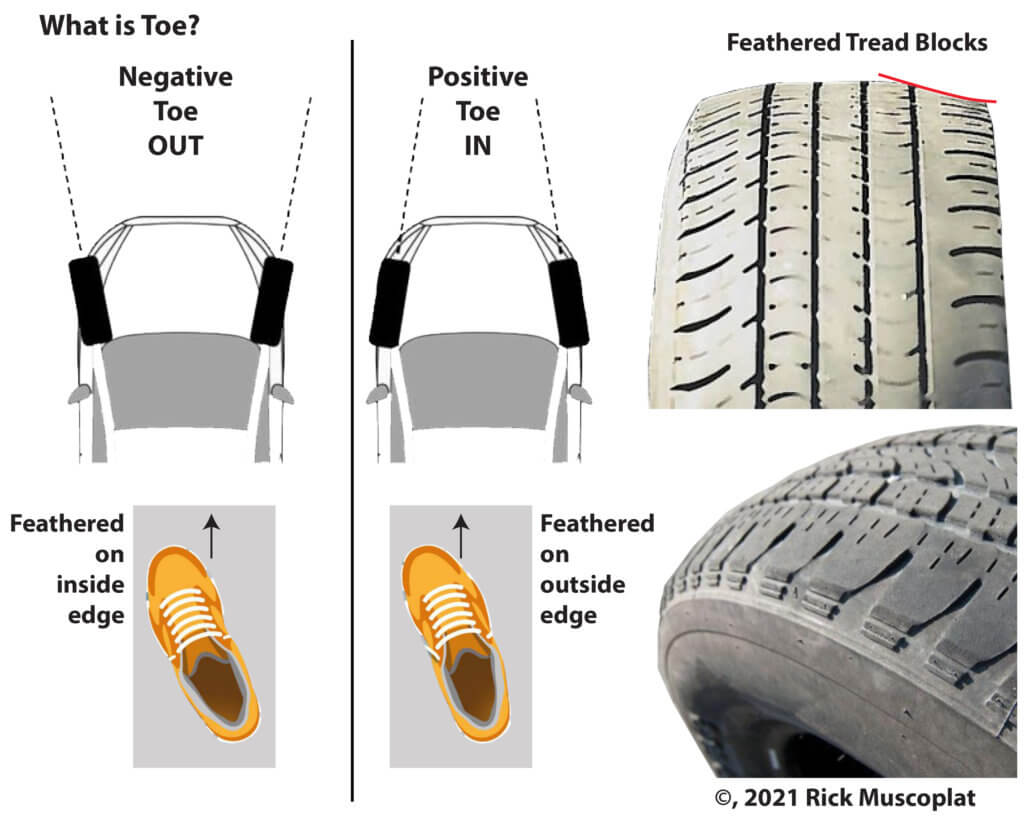
When the tires don’t point straight ahead, the outer or inner edge of the tread blocks is being “erased” by scuffing along the road surface. The result is a feathered tread block where the outer edge of each block is thinner than the inner edge. In severe cases, you can actually see the feathering, while in less severe cases you can detect it by running your hand across the tread. A feathered edge on the inside of the tread is a sign of excess toe-in, while a feathered edge on the outside of the tread bar indicates toe-out.
Both Camber and toe are out of spec
The toe setting is affected by the camber and caster. Because camber is affected by suspension height, worn springs, worn ball joints, and worn control arm bushings can cause both camber and toe wear.
When the camber and toe are out of spec, the outer tread
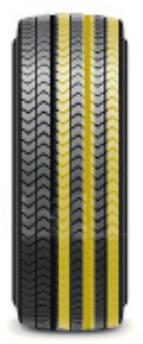
Tire wear from camber and toe problems
blocks will be almost or completely worn away, while the inner tread blocks will be feathered.
Regular Wheel Alignment is Important Because Extends Tire Life and Prevents Costly Repairs
Neglecting wheel alignment can lead to a domino effect of problems that result in costly repairs. For example, misaligned wheels can cause uneven tire wear, which may lead to a tire blowout or the need for premature tire replacement. Additionally, the added stress on the suspension system can result in expensive repairs if components wear out prematurely.
By investing in regular wheel alignment, you can avoid these issues and save money in the long run. The cost of an alignment service is relatively low compared to the potential expenses of replacing tires or suspension components.
When Should You Get a Wheel Alignment?
Now that we’ve established why wheel alignment is important, it’s essential to know when to get it checked. Here are some common signs that your vehicle may need a wheel alignment:
Uneven Tire Wear— If you notice that your tires are wearing unevenly, it’s a clear sign that your wheels are misaligned. My advice is to check the tread depth on your tires regularly using a tread depth gauge. If you notice 1/32″ or more difference between the inside/outside and center tread depths, something is wrong with your alignment and the sooner you have it aligned, the sooner you’ll stop the uneven tread wear. For more information on how to check tire tread depth, see this post
• Vehicle Pulling to One Side— If your vehicle consistently pulls to one side while driving, even on a flat road, it’s likely due to misaligned wheels.
• Off-Center Steering Wheel— If your steering wheel is not centered when driving straight, it’s an indication that your alignment is off.
• Vibrations in the Steering Wheel— Misaligned wheels can cause the steering wheel to vibrate, especially at higher speeds.
• Recent Suspension Work— If you’ve recently had suspension components replaced or adjusted, it’s a good idea to have your alignment checked to ensure everything is properly aligned.
In Summary
Wheel alignment is a critical aspect of vehicle maintenance that should not be overlooked. It ensures even tire wear, improves handling and safety, enhances fuel efficiency, prolongs the life of suspension components, and prevents costly repairs. By maintaining proper wheel alignment, you can enjoy a smoother, safer, and more efficient driving experience. Regular alignment checks, especially after encountering potholes, curbs, or rough roads, are essential to keep your vehicle in top condition and to extend the life of your tires and suspension system.
Posted on by Rick Muscoplat