
How to Buy the Right Car Battery Charger For Your Car
The Complete Guide to Choosing the Best Car Battery Charger for Your Vehicle
Quick Summary
If you’re shopping for a car battery charger, here are the essentials:
1) Don’t buy used, old chargers from Marketplace, eBay, or Craigslist. Older chargers charge at too high a voltage for today’s cars, and that high voltage can damage the computer in modern vehicles.
2) Understand the different battery charger types and what each one can safely charge.
3) Learn how big a battery charger you need to charge your battery.
4) Look for models that will charge flooded, enhanced flooded (EFB), and Absorbed Glass Mat (AGM) with automatic multi-stage charging and a reconditioning feature to restore weak batteries.
5) Buy a reputable brand like Clore Solar ProLogix, which handles standard, AGM, and Gel batteries with smart charging logic, or CTEK chargers.
Article
When it comes to buying a car battery charger, most people underestimate how advanced modern chargers have become. I’ve tested and owned nearly every major brand over the years, and I can tell you firsthand: today’s smart chargers are nothing like the heavy, transformer-based units your grandfather used.
The best models are designed to do more than just recharge a dead battery—they monitor voltage, charge based on the battery chemistry, perform multi-phase charging, and can even recondition a sulfated battery that refuses to hold a charge.
Rule #1: Never Buy a Used Charger
The first thing I tell anyone looking for a car battery charger is simple—don’t buy an old used battery charger. Many of the old chargers sold on eBay or Craigslist are obsolete and potentially dangerous to your vehicle’s electronics.
Here’s why: older chargers can spike to over 18 volts when charging a deeply discharged battery. Modern vehicles with computers, sensors, and networked control modules can’t tolerate anything above 16.5 volts without risking permanent damage.
Those older units were designed for standard flooded “SLI” batteries, not the newer
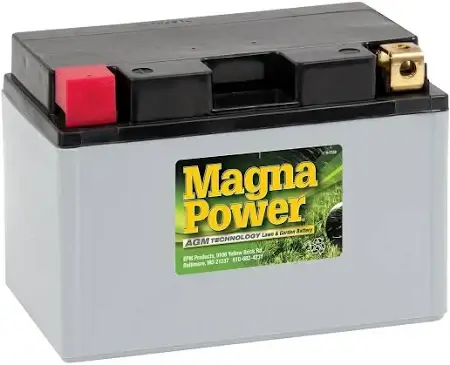
Gel cell batteries require a different charging voltage
Enhanced Flooded (EFB), Absorbed Glass Mat (AGM), or Gel cell batteries are found in modern vehicles and outdoor power equipment. Each of these battery charger types requires a specific voltage and current profile to charge safely.
Some chargers also offer a GEL cell setting. Gel-cell batteries are often used in electric-start lawn mowers. If you have electric start yard equipment with Gel cell batteries, look for a charger with that setting as well
Understanding Battery Charger Types
There are three main battery charger types you’ll encounter:
Battery Maintainer—These are low-amp (1-5 amps) chargers used to keep a battery fully charged when the vehicle or outdoor power equipment is in storage. Unlike old-fashioned float or trickle chargers, battery maintainers constantly monitor the battery’s state of charge and charge the battery only when it needs topping off.
You can use a battery maintainer to charge a starting or deep-discharge battery, but it will take a very long time due to its low amperage output.
Smart Battery Charger and Reconditioner—The best battery chargers feature at least 3 charging phases to recharge a modern battery fully. If the battery is severely discharged, it’s likely to have developed some sulfation. The best chargers can handle this, and some top-of-the-line models support up to 7 charging phases (more on that below). For basic chargers, the first phase is Reconditioning.
Reconditioning phase—The reconditioning phase is designed to break down the sulfate crystals that formed during discharge and return them to the electrolyte solution. If you skip the reconditioning phase and try to recharge the battery by jamming in high amperage, the high resistance from the sulfate crystals will generate high heat that can warp the plates and damage the battery. Once the reconditioning phase is complete, the charger enters the bulk mode phase
Next, the charger changes to Bulk mode, charging at high amps but low volts to replace as much energy as possible
Bulk mode phase— In the bulk mode phase, the charger outputs high amps at low voltage. Recharging a dead battery in bulk mode takes between 5 and 8 hours. The bulk mode accounts for about 80% of the battery charge. The rest is accomplished through the absorption mode.
Finally, the charger will change to the absorption mode to ensure that the charge penetrates deep into the sponge lead plates.
Battery absorption phase— During the absorption mode, the charger lowers the current (amps), while raising the voltage. A complete absorption mode for a dead battery can take 7 to 10 hours to saturate the lead plates fully. If you cut short the absorption mode, the plates will sulfate, reducing the battery’s lifespan.
How Big a Battery Charger do you need to Charge Your Battery
The ideal charger size depends on your battery’s amp-hour (Ah) rating. As a rule of thumb:
• Choose a charger that delivers 10% to 20% of the battery’s Ah capacity.
• Never exceed 30% of that capacity.
For example:
A 60Ah battery → 6A to 12A charger
A 100Ah battery → 10A to 20A charger
Do you need multiple voltages?
You’ll find very few 6-volt batteries these days. So this feature isn’t all that necessary
Why You Want a Battery Charger With a 7-Step Reconditioning Feature
Modern battery charger types often include a reconditioning mode, and it’s worth paying extra for it. When a battery has been deeply discharged, sulfur crystals form on the lead plates. These crystals block the flow of electricity, reducing capacity.
The reconditioning phase breaks down that sulfation gradually before bulk charging begins. If you skip this step and just hit the battery with high amperage, it’ll overheat and warp the plates. A good car battery charger cycles through reconditioning, bulk, and absorption modes automatically to protect your investment.
Understanding Multi-Phase Charging
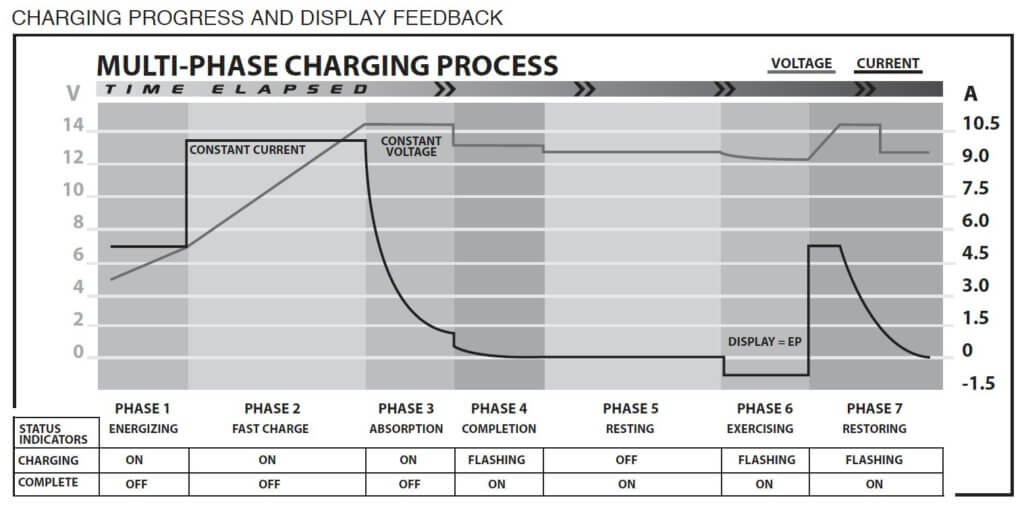
Top-tier chargers, like those from Clore Manufacturing’s Solar ProLogix series, follow a 7-phase algorithm:
Desulfation/Reconditioning – Gently dissolves sulfate buildup.
Soft Start – Tests the battery and applies low current safely.
Bulk Mode – Restores 70–80% of the charge using higher amps.
Absorption Mode – Raises voltage and lowers current for deep charging.
Analysis Phase – Tests retention capability.
Float/Monitor Mode – Maintains charge without overcharging.
Maintenance Mode – Keeps the battery topped off indefinitely.
This kind of logic is exactly what distinguishes modern battery chargers from the crude chargers of decades past.
What a 7-phase charge looks like
The Clore Solar ProLogix series of automotive battery chargers use this multi-phase charging protocol. Notice the differences in voltage and amperage between the different phases
My Recommended Smart Chargers
After years in the industry, I’ve found Clore Solar ProLogix chargers to be consistently reliable. They’re durable, accurate, and smart enough to handle virtually every battery chemistry on the market.
Solar ProLogix PL2310 6V/12V 2A–10A— This model charger charges at the rate of 10, 6, or 2-amps. It charges 6-volt and 12-volt batteries. You can use it as a battery maintainer at 2-amps, or a battery charger at 10-amps to recharge your battery faster.
Solar ProLogix PL2320 6V/12V2A–20A— This model charger charges at the rate of 20,
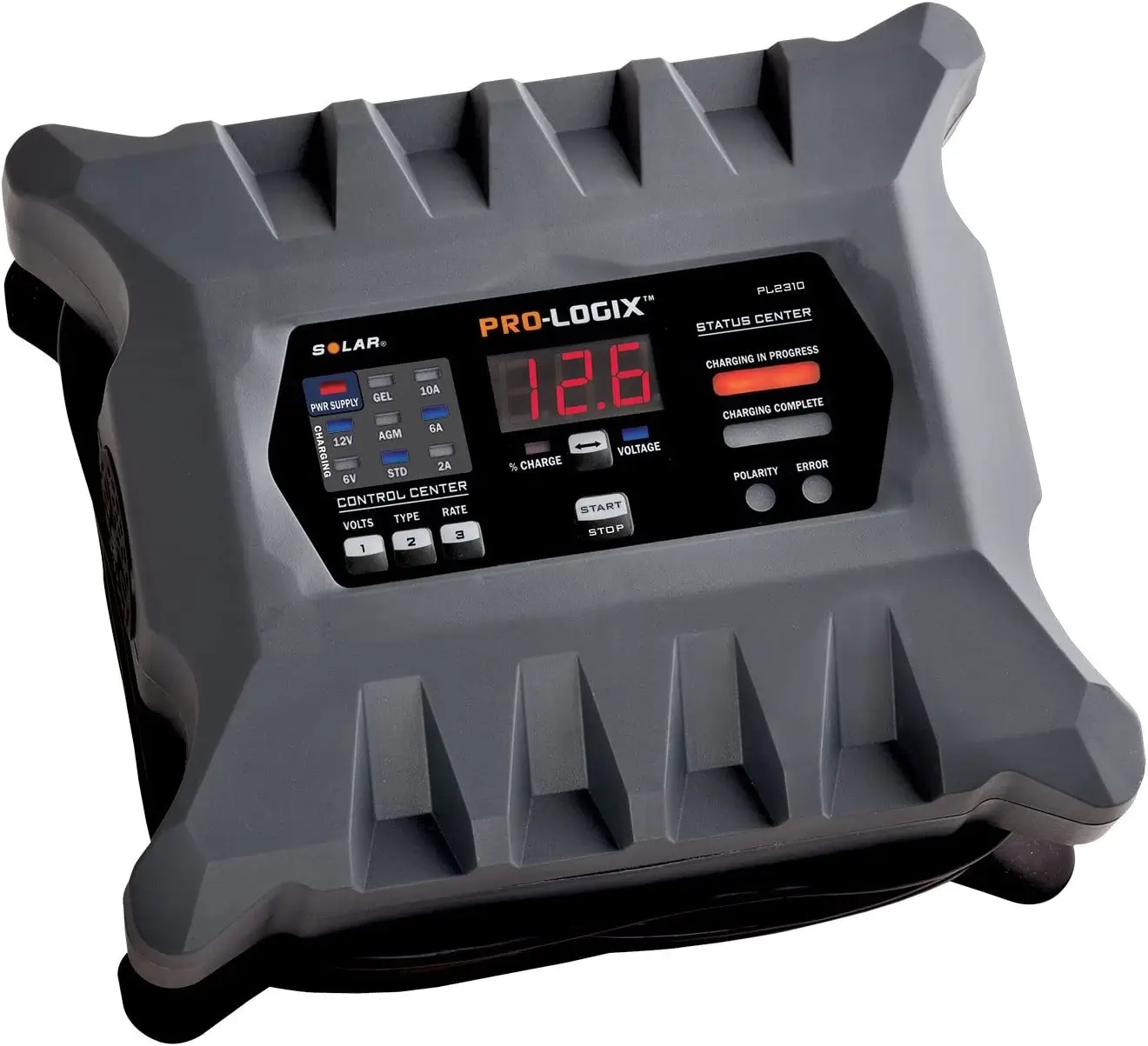
The Solar ProLOGIX PL2320 battery charger charges at 20-amps or 10-amps and works as a 2-amp battery maintainer
10, or 2-amps. It charges 6-volt and 12-volt batteries. You can use it as a battery maintainer at 2-amps, or a battery charger at 20-amps to recharge your battery faster7-phase charging, reconditioning mode.
Solar ProLogix PL2410 12V/24V2A–10A— This model charger charges at the rate of 10, 6, or 2-amps. It charges 12-volt and 24-volt batteries. You can use it as a battery maintainer at 2-amps, or a battery charger at 10-amps to recharge your battery fasterIdeal for trucks and equipment, smart float mode
Clore has been building professional-grade chargers and booster packs for decades, and their car battery chargers are used in service bays across the country.lore Manufacturing has been making battery chargers and jumper packs forever. They’re the brand professionals use. The Solar ProLogix models are very smart chargers that can recondition a battery and fully charge it without any intervention from you. They charge standard lighting ignition batteries (SLI), absorbed glass mar (AGM), and Gel cell batteries (the kind you find on lawn mowers).
Other Brands Worth Considering
If the Solar line isn’t available, look for smart chargers from:
CTEK— Maker of High quality battery
Battery Tender—
Need more help? Check out this article from Interstate Batteries
©, 2021 Rick Muscoplat
Posted on by Rick Muscoplat