
How to Diagnose a Bad Catalytic Converter the Right Way
How to Diagnose a Bad Catalytic Converter: What Experienced Mechanics Actually Look For
Quick Summary
There are no wear parts inside a Catalytic Converter, so they don’t die on their own; they’re murdered. If they’re fed too much fuel, oil, or coolant, they can overheat and melt. Misfires, internal leaks, cold-water shock, and impacts are the most common causes of catalytic converter failure. In other words, a bad catalytic converter isn’t the cause; it’s the result of another problem.
When diagnosing a bad catalytic converter, I never rely on a trouble code alone. Instead, I look at oxygen sensor data, fuel trims, exhaust flow, and underlying engine conditions before recommending replacement. Many vehicles trigger catalyst efficiency codes even though the converter itself is still good. Understanding the proper diagnostic process helps prevent the unnecessary replacement of an expensive converter. A bad catalytic converter should always be confirmed with real diagnostic data before replacement.
Article
The Top Warning Signs of a Failing Catalytic Converter
1. Rotten Egg or Sulfur Smell from the Exhaust — One of the earliest and most unmistakable indicators of a bad catalytic converter is a persistent sulfur or rotten-egg odor from the exhaust. Gasoline contains small amounts of sulfur compounds. A healthy converter processes these into odorless sulfur dioxide. When the catalyst degrades, unprocessed hydrogen sulfide passes through and produces that distinctive smell — especially noticeable during cold starts or when the engine is under load.
2. Rattling Noise Underneath the Vehicle — A loose or broken ceramic substrate inside the converter housing produces a distinctive metallic rattle, particularly on cold starts. As the engine warms and the housing expands, the noise may diminish, which makes it easy to dismiss. Don’t. Fragments of broken substrate can migrate downstream and damage the engine or other exhaust components.
3. Dramatic Loss of Engine Power — A severely clogged converter restricts exhaust flow, which creates back-pressure that the engine  must fight against. This manifests as sluggish acceleration, hesitation under load, and a general feeling that the vehicle has lost its edge. In extreme cases, the engine may stall at idle as exhaust gases have nowhere to go.
4. Sharply Reduced Fuel Economy — When exhaust flow is restricted, the engine works harder, burns more fuel, and produces less power. If your fuel economy has dropped noticeably without any other explanation, a failing converter is a serious candidate.
5. Check Engine Light with O2 Sensor Codes — Modern vehicles monitor converter efficiency through upstream and downstream oxygen sensors. Fault codes P0420 (Catalyst System Efficiency Below Threshold, Bank 1) and P0430 (Bank 2) are the diagnostic community’s primary data points for assessing a bad catalytic converter from a code-based perspective. These codes indicate that the downstream sensor is reading a signal too similar to the upstream sensor, meaning the catalyst is no longer processing combustion byproducts effectively.
DIY Diagnostic Tests You Can Do in Your Driveway
The Tap Test — With the engine cold and the vehicle safely lifted, use a rubber mallet to gently tap the converter housing. A healthy converter produces a dull thud. A hollow or sharp metallic sound — particularly one accompanied by rattling inside the housing — indicates substrate fragmentation. This is a fast, free, and surprisingly reliable preliminary test.
The Vacuum Test — Connect a vacuum gauge to a manifold vacuum port. At idle, a healthy engine produces 17–21 inches of mercury. Gradually rev the engine to approximately 2,500 RPM and hold it steady. If the vacuum reading drops sharply and doesn’t recover, a clogged converter is likely restricting exhaust flow. This test is accessible to any DIY mechanic with a basic set of gauges.
The Temperature Differential Test — Using an infrared thermometer, measure the converter’s inlet and outlet temperatures after a 15-minute highway drive. A functioning converter is exothermic — it generates heat as it oxidizes pollutants. The outlet should read 50–100°F hotter than the inlet. An outlet that reads cooler than or equal to the inlet strongly suggests the catalyst is not reacting, indicating failure.
How a Mechanic Confirms a Bad Catalytic Converter with Shop Equipment
Back-Pressure Testing — A professional exhaust back-pressure test involves removing the upstream oxygen sensor and threading a pressure gauge into its location. At idle, a healthy system produces less than 1.5 PSI of back-pressure. Values above 3 PSI confirm a restriction — almost certainly a clogged converter. This is the gold-standard method for definitively diagnosing a bad catalytic converter in a shop environment.
Live O2 Sensor Data Analysis — Using a scan tool capable of reading live data streams, a technician compares the waveform patterns of the upstream and downstream oxygen sensors. The upstream sensor should toggle rapidly between rich and lean as the engine management system adjusts fueling. The downstream sensor, by contrast, should read a comparatively stable voltage as the converter buffers those fluctuations. When both sensors show similar, rapidly-switching waveforms, the converter is no longer buffering — and the diagnosis is confirmed.
Fuel Trim Analysis — Another diagnostic tool I rely on heavily when evaluating a bad catalytic converter is fuel trim data. Fuel trims indicate how much the engine computer is adjusting the air-fuel mixture to maintain proper combustion. Ideally, short-term fuel trims remain within about five to ten percent of zero.
If fuel trims are excessively positive or negative, it means the engine is compensating for an underlying problem. Long-term fuel trims that drift far from normal often indicate issues such as intake leaks, failing sensors, or fuel delivery problems.
These conditions can easily trigger a catalyst efficiency code even though the converter itself is still healthy.
Engine-Related Issues
Oil consumption — burning oil coats the catalyst with ash, reducing efficiency
Coolant leaks — coolant entering the exhaust system poisons the catalyst
Rich fuel mixture — excess unburned fuel overheats and melts the substrate
Misfires — unburned fuel ignites inside the converter, causing extreme heat damage
Physical Damage
Road debris impact — rocks or debris 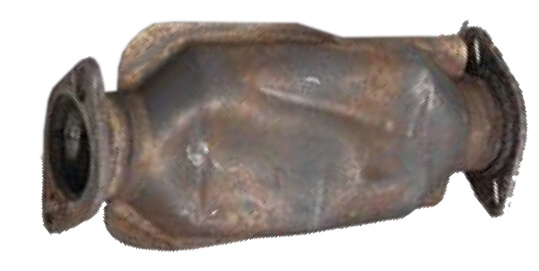 cracking the fragile ceramic substrate
Thermal shock — driving through deep water while the converter is hot
Age/wear — the catalyst material simply depletes over time (~100,000–150,000 miles)
Contamination
Leaded fuel (legacy issue) — permanently poisons the platinum/palladium catalyst
Silicone from sealants — using the wrong RTV sealant sends silicone into the exhaust
Phosphorus from oil additives — certain oil formulations degrade the catalyst
Symptoms of Failure
Rattling noise (broken substrate)
Sulfur/rotten egg smell
Failed emissions test
Reduced engine power / sluggish acceleration
Check engine light (O2 sensor codes)
The most preventable cause by far is ignoring misfires — a single prolonged misfire can destroy a converter in minutes by dumping raw fuel into it. Keeping up with spark plugs and ignition system maintenance goes a long way toward protecting it.
Sometimes diagnosing a bad catalytic converter is straightforward. One of the easiest clues is excessive exhaust noise when a converter has been physically removed or stolen. Unfortunately, catalytic converter theft has become extremely common, and a missing converter makes diagnosis simple.
Another classic symptom of a bad catalytic converter is the unmistakable rotten egg smell coming from the exhaust. This odor is caused by sulfur compounds that the converter normally breaks down. When the converter stops processing these gases properly, the smell becomes noticeable.
Mechanical failure inside the converter can also create a rattling sound. When the ceramic substrate breaks apart, pieces can rotate inside the housing and partially block the exhaust flow. When that happens, the engine may struggle to breathe, causing severe power loss.
Why Engine Problems Often Trigger Converter Codes
In real-world diagnostics, I often find that catalyst efficiency codes are caused by upstream engine issues rather than a bad catalytic converter.
Misfires are one of the most common causes. When an engine misfires, unburned fuel enters the exhaust system. That extra fuel overheats the converter, damaging the internal substrate.
Fuel trim problems can also trigger catalyst codes. If the engine runs too rich or too lean for long periods, it alters the oxygen sensor signals and can make the computer believe there is a bad catalytic converter.
Common causes include:
• Vacuum leaks
• Dirty or faulty mass airflow sensors
• Weak fuel pumps
• Leaking fuel injectors
These issues must always be addressed before condemning the converter.
Final Thoughts on Diagnosing a Bad Catalytic Converter
Catalytic converters are extremely durable components, often lasting well over 150,000 miles when the engine is running properly. Because they are expensive to replace, diagnosing a bad catalytic converter requires careful analysis rather than simply reacting to a trouble code.
In my experience, the smartest diagnostic approach involves examining oxygen sensor signals, reviewing fuel trims, checking for misfires, and looking for other engine issues before condemning the converter.
When technicians follow this process, they avoid replacing perfectly good converters and ensure the real problem is fixed.
A bad catalytic converter is often the final victim of another engine problem. Finding that root cause is what separates guesswork from professional diagnosis.
Posted on by Rick Muscoplat