
How to Diagnose an Engine Misfire Like a Pro
7 Most Common Causes of Engine Misfires — and How to Fix Each One
Quick Summary
When you notice engine misfire symptoms like rough idling, shaking under acceleration, flashing check-engine light, or poor fuel economy, you must act quickly. An engine misfire happens when a cylinder fails to ignite fuel correctly. The most common causes of engine misfires include:
1) Worn spark plugs
2) Bad ignition coil
3) Wrong air/fuel mixture
4) Faulty/clogged fuel injector
5) Vacuum leak
6) Mass airflow issue/carboned throttle body
7) Mechanical problem
Article
A Misfiring Engine is Trying to Warn You
I’ve diagnosed thousands of engine problems, and a persistent engine misfire is one issue I never ignore. One cylinder out of sync throws the entire engine off balance. That’s why engine misfire symptoms often feel dramatic—shaking steering wheel, harsh vibration at idle, stumbling during acceleration. The engine is literally running on fewer cylinders than it was designed for.
If you don’t respond quickly, excess fuel is dumped into the exhaust and burns in the catalytic converter. Trust me—melted converters cost far more than fixing the root cause of an engine misfire.
Spark Plugs: The #1 Cause of Engine Misfires
I always start here. Spark plugs take incredible abuse—temperature swings from below freezing to over 1,800°F every time you drive. Over time, the gap widens, and the electrode becomes rounded. When that happens, the spark becomes weak, and the cylinder may misfire—especially when cold.
One of the most overlooked engine misfire symptoms is trouble starting in the morning or stumbling when you accelerate. That’s often a plug barely firing.
Oil-soaked spark plug tubes? Another common culprit. When oil leaks from hardened tube seals, the coil boot swims in oil, shorting the spark.
Fix the plugs first… or you’ll destroy the expensive ignition coil sitting right above them
How to check the spark plug condition
Check for oil in the spark plug tube
Overhead cam engines have a spark plug tube seal at the top of each 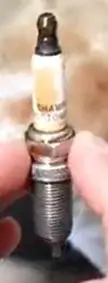 spark plug tube. Over time, the seals can harden/crack, allowing oil to splash into the tube and fill it. That coil can cause the spark plug to misfire.
To check for oil in the spark plug tube
1) Remove the engine cover
2) Remove the ignition coil
3) Shine a flashlight down the spark plug tube. If you see oil pooled at the bottom, the tube seals are bad
How to fix leaking spark plug tube seals.
1) Spray brake cleaner into the spark plug tube.
2) Place a rag over the tube and inject compressed air. Repeat until you’ve flushed out all the oil
3) Replace the valve cover gasket and spark plug tube seals
4) Replace the spark plugs
5) Clean the ignition coil boots with brake cleaner to remove all oil.
6) Apply a small dab of dielectric grease inside each ignition coil boot
7) Install ignition coil
Check spark plug gap
Use a wire style gap gauge to check the gap. If the gap exceeds the carmaker’s specs, install new plugs. Never close the gap on used plugs with excessive gaps to save money.
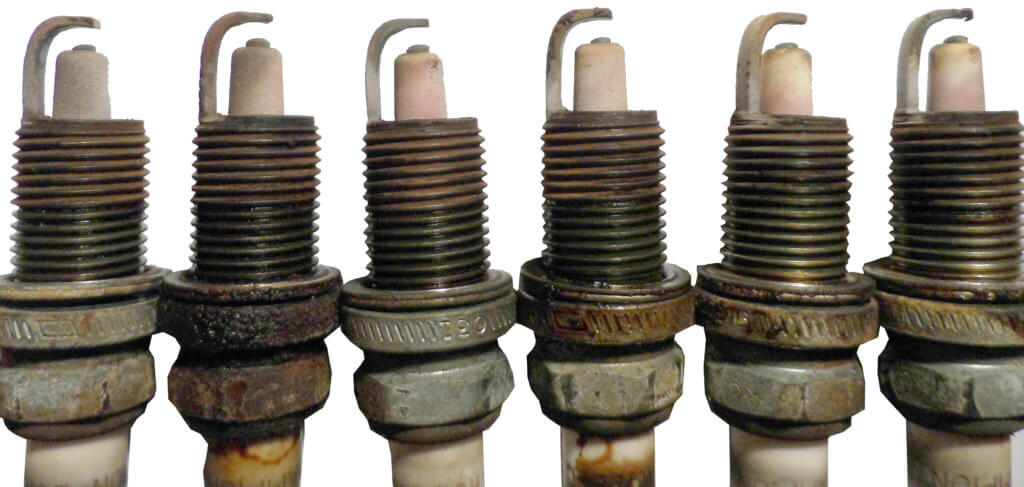
These spark plugs have excessive gaps.
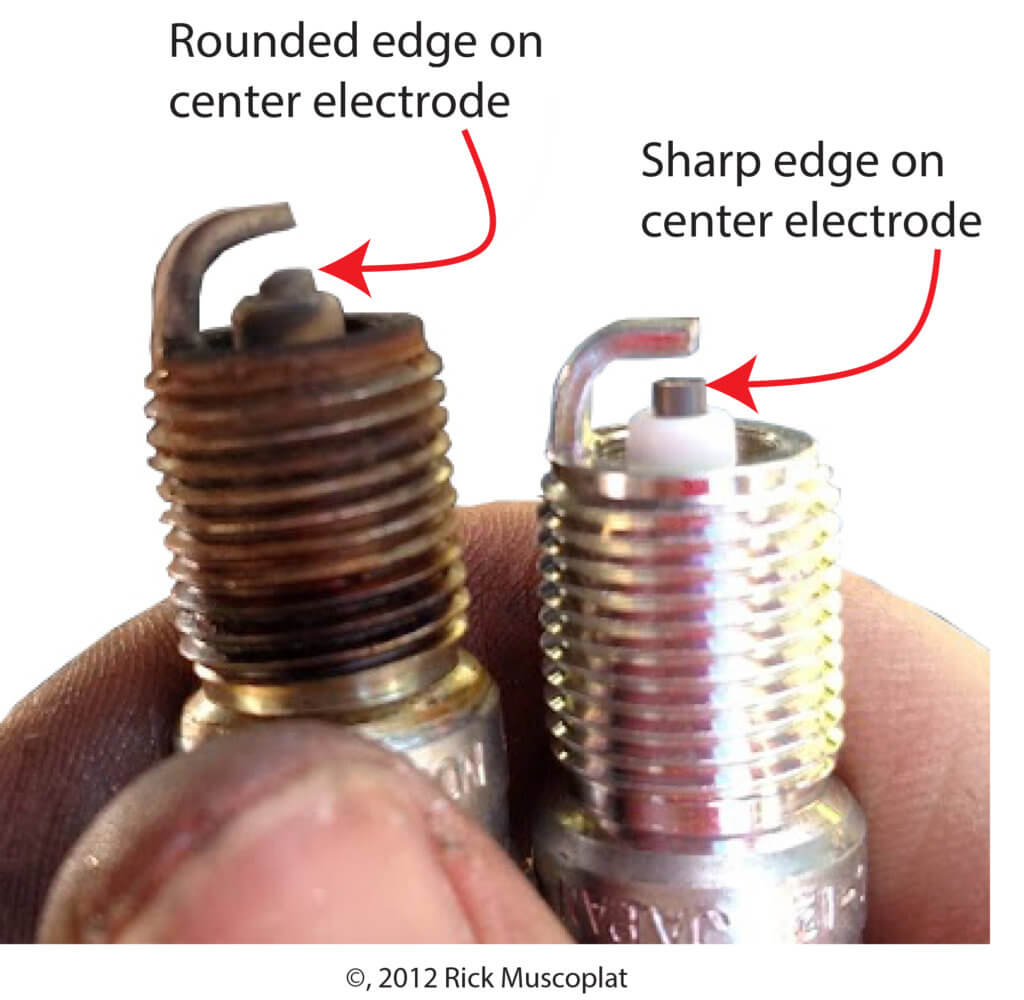
Check the center and side electrode condition
The spark always jumps from a sharp edge on the center electrode to a sharp edge on the side electrode. If the center electrode has rounded edges, it automatically requires a much higher firing voltage. Replace it.
Check the spark plug color
Compare your spark plugs to the conditions shown on this chart from Autolite Spark Plugs.
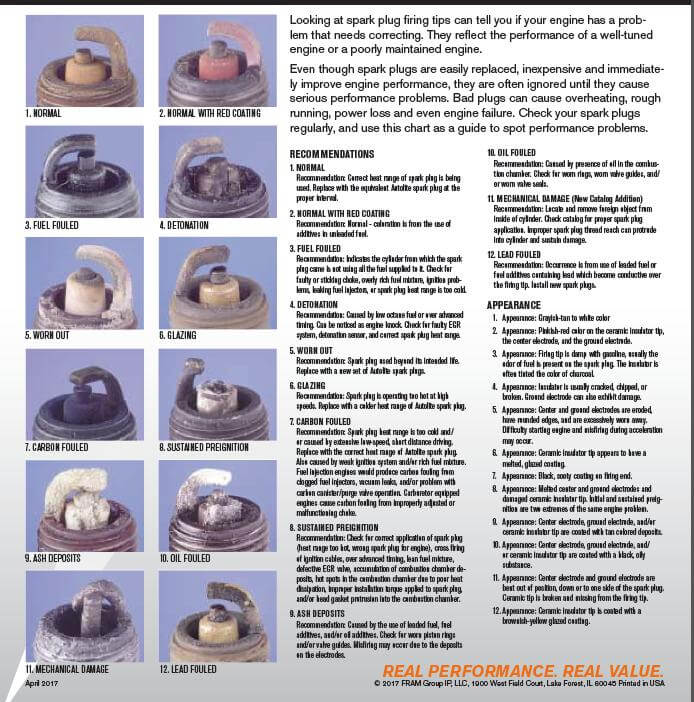
Click on the image to open a PDF of the Autolite Spark Plug Color Chart
Diagnose misfires caused by the ignition coil
Ignition coil factoid: Coil packs and coil-on-plug ignition coils usually don’t go bad on their own unless they’re sprayed with water when hot. The best way to fry a coil pack is to run the engine with worn or damaged spark plugs or worn spark plug wires. Here’s why.
#1 Cause of ignition coil failure — worn spark plugs and/or spark plug wires
Excessive firing voltage caused by worn spark plugs (the excessive spark plug gap), excessive resistance, or an open in the spark plug wires. The higher-than-normal firing voltages raise coil temperatures and degrade coil windings.
#2 Cause of ignition coil failure — air/fuel-related problems creating a lean mixture
Lean air/fuel ratios are caused by clogged fuel injectors or vacuum leaks that require much higher firing voltages to establish the spark. The higher-than-normal firing voltages raise coil temperatures and degrade coil windings.
#3 Cause of ignition coil failure — winter temperatures and worn spark plugs
It takes a much higher firing voltage to ignite cold fuel and cold air. If the spark plugs are worn, it takes an even higher voltage, and that damages the ignition coil.
How an ignition coil is damaged
In cases where the ignition coil must constantly generate a higher-than-normal firing voltage due to worn plugs, spark plug wires, or a lean air/fuel condition, the higher voltage causes excess heat, which degrades the coil winding insulation, causing coil failure over time.
If the spark plugs and ignition coils check out, check fuel trims
A scan tool helps here—fuel trims above +10% scream “lean,” and trims below –10% suggest “rich.”
Using a scan tool with live data, check the long-term fuel trims for values above or below ±10 %. That’s an indication of an air/fuel mixture problem.
If the computer is adding fuel in excess of 10%, check for a vacuum leak or an exhaust system leak.
If the computer is subtracting fuel by more than -10%, check for a leaking fuel injector, a faulty mass airflow sensor, or a carboned throttle body.
If the air/fuel mixture checks out, it’s time to check for a mechanical problem.
Buy or rent a compression gauge and a cylinder leak-down tester. Follow the instructions with the tools to check compression wet and dry. Then use the cylinder leak-down tester to check for mechanical problems.
© 2012 Rick Muscoplat
Posted on by Rick Muscoplat