
Troubleshooting a P0300 Code Like a Pro
Top Causes of a P0300 Code and How to Fix Them
Quick Summary
A P0300 code means the engine is experiencing random misfiring that’s occurring across multiple cylinders — not just one. The most common causes of a P0300 code usually fall into one of three major systems:
• Ignition issue that isn’t limited to one cylinder: All the spark plugs are worn, power or ground connection issue to a single coil pack, a failing single coil pack, etc.
• Fuel delivery: Random weak fuel pressure due to a worn fuel pump, fuel pressure regulator, clogged fuel filter, etc.
• Intake air problem: Vacuum, induction, or manifold leak, or engine mechanical issue.
Finding the root cause means testing, not guessing. With a scan tool and a methodical approach, you can quickly narrow down the issue and fix it right the first time.
Article
Unlike a code such as P0302 (misfire on cylinder #2), a P0300 doesn’t give me a clear suspect. Instead, it tells me the misfires are bouncing around among multiple cylinders. And that means whatever’s failing is affecting the whole engine, not a single combustion chamber. Diagnosing and fixing a P0300 trouble code is something I’ve done many times over the years. This specific trouble code indicates that the engine control module (ECM) has detected random or multiple-cylinder misfires, and it can be one of the more complex codes to troubleshoot. However, with a methodical approach and the right tools, you can pinpoint the problem and fix it effectively. In this article, I’ll walk you through what a P0300 code means, the most common causes, and how to determine if the issue lies with your spark plugs, fuel system, or mechanical components.
A misfire is simply combustion gone wrong — the air-fuel mixture isn’t firing at the right time or with enough intensity. When the ECM catches enough of these events in a random pattern, it logs a P0300 and probably makes your engine feel like it’s had one too many cups of bad coffee: shaking, stumbling, idling rough, and sometimes stalling.
The Most Common Causes of a P0300 Code — And Why They Matter
Let me walk you through the top causes of a P0300 code, in the same order I troubleshoot them in my shop. I’ve learned to trust the statistics — some fixes are just more common than others.
The #1 Cause of a P0300 Code: Ignition System Problems
• Worn spark plug gap— The gap has become too large on all the plugs, preventing proper ignition.
• Rounded center electrode— A rounded electro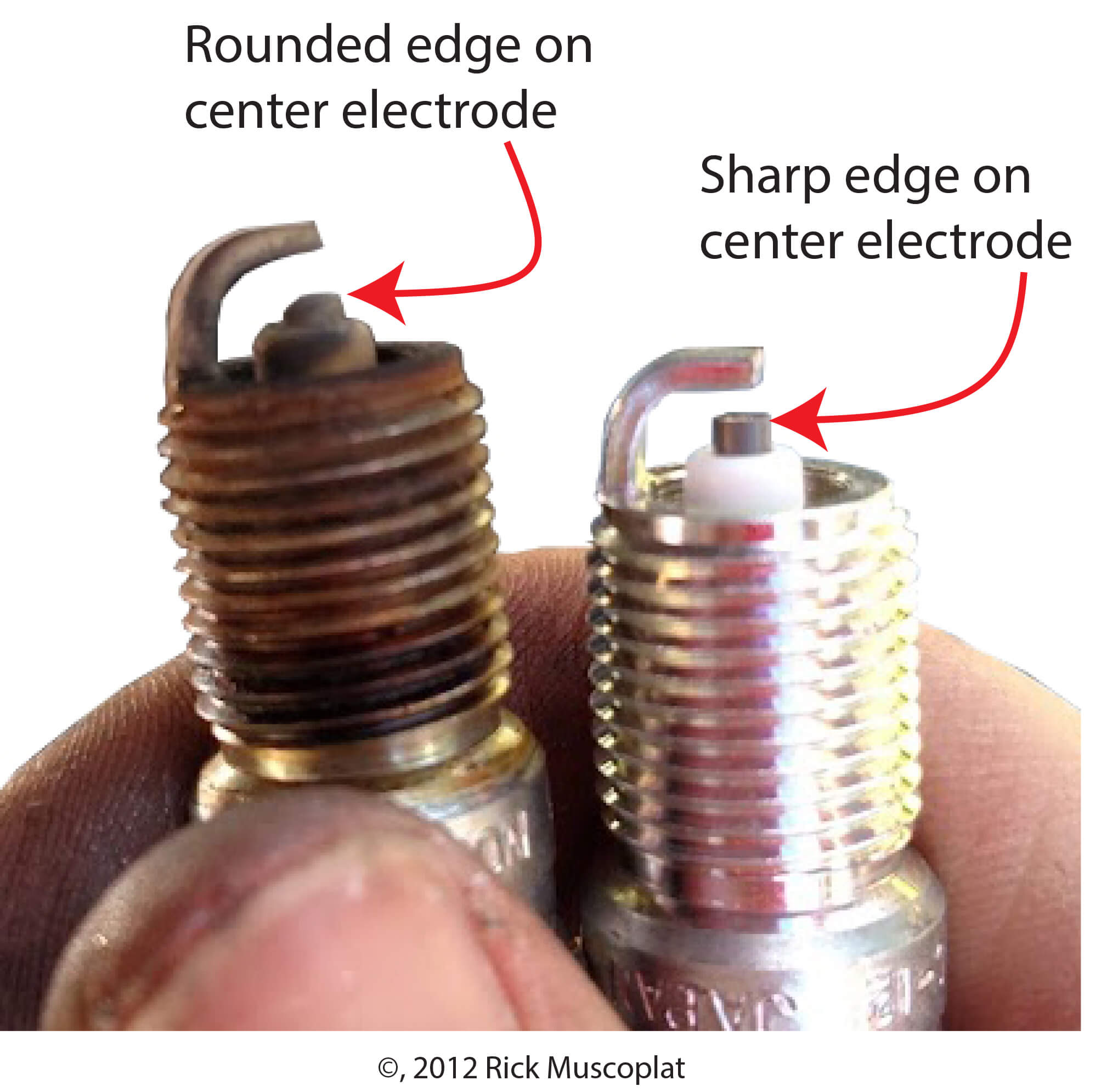 de requires a higher firing voltage, leading to a weak spark.
• Oil in the spark plug tubes— Many overhead cam engines locate the spark plugs in spark plug tubes. The valve cover gasket or individual spark plug tube seals prevent oil splash inside the valve cover from seeping into the spark plug tubes. However, as the seals age, they can allow oil to seep in. Motor oil, and especially used motor oil, can conduct high-voltage electricity. In that situation, the high voltage can fire through the oil to ground, causing misfires.

Spark plugs soaked in motor oil
If you find oil in the spark plug tubes, remove the oil, install new spark plug tube seals, and install new spark plugs. Clear the codes and see if it returns.
• Ignition Coils— Faulty ignition coils can cause a weak or intermittent spark. However, it’s extremely rare for all COP ignition coils to fail in a way that would cause a P0300 trouble code.
But most COP ignition systems use a common power feed to all the coils. The ECM energizes the coils by proving ground to the primary circuit. It fires each coil by opening the ground circuit.
Since all the coils use a common power feed, an intermittent fault in the power feed wire could cause a random misfire code. Use a voltmeter to check the power on the feed, and wiggle the wiring harness to detect an intermittent open connection.
•Spark Plug Wires— If your vehicle uses individual spark plug wires, inspect them for cracks or visible damage. Damaged wires can cause misfires by preventing the spark from reaching the spark plug.
One thing I always remind DIYers: COP ignition coils rarely all fail at once. But the shared power supply feeding them can fail intermittently, triggering a P0300 code. A wiggle test on that circuit has saved me hours. And, check for rodent damage.
The #2 Cause of a P0300 Code: Fuel Pressure/Volume Issues
• Fuel Delivery Issues— Fuel delivery problems starve all cylinders — a textbook setup for a P0300. Check for Low fuel pressure, low fuel volume, a clogged fuel filter, a bad fuel pressure regulator, or malfunctioning fuel injectors.
In addition, check for water in the fuel supply, stale fuel, of summer fuel in winter/vice versa.
How about clogged injectors? Sure — but all injectors clogging at once is as likely as winning the lotto without buying a ticket.
The #3 Cause of a P0300 Code: Air Leaks
An air, vacuum, or exhaust leak can skew the air/fuel ratio and disrupt combustion in all cylinders. If an intake air duct is torn or a vacuum hose is cracked, the leak can introduce unmetered air into the system, leading to random misfires.
• Check short-term and long-term fuel trim readings on your scan tool’s live data— An air leak will cause the ECM to add fuel to correct the lean condition caused by unmetered air in the engine. An LTFT reading above 10% is suspect.
• Check for air leaks— An air, vacuum, or exhaust leak that causes an improper
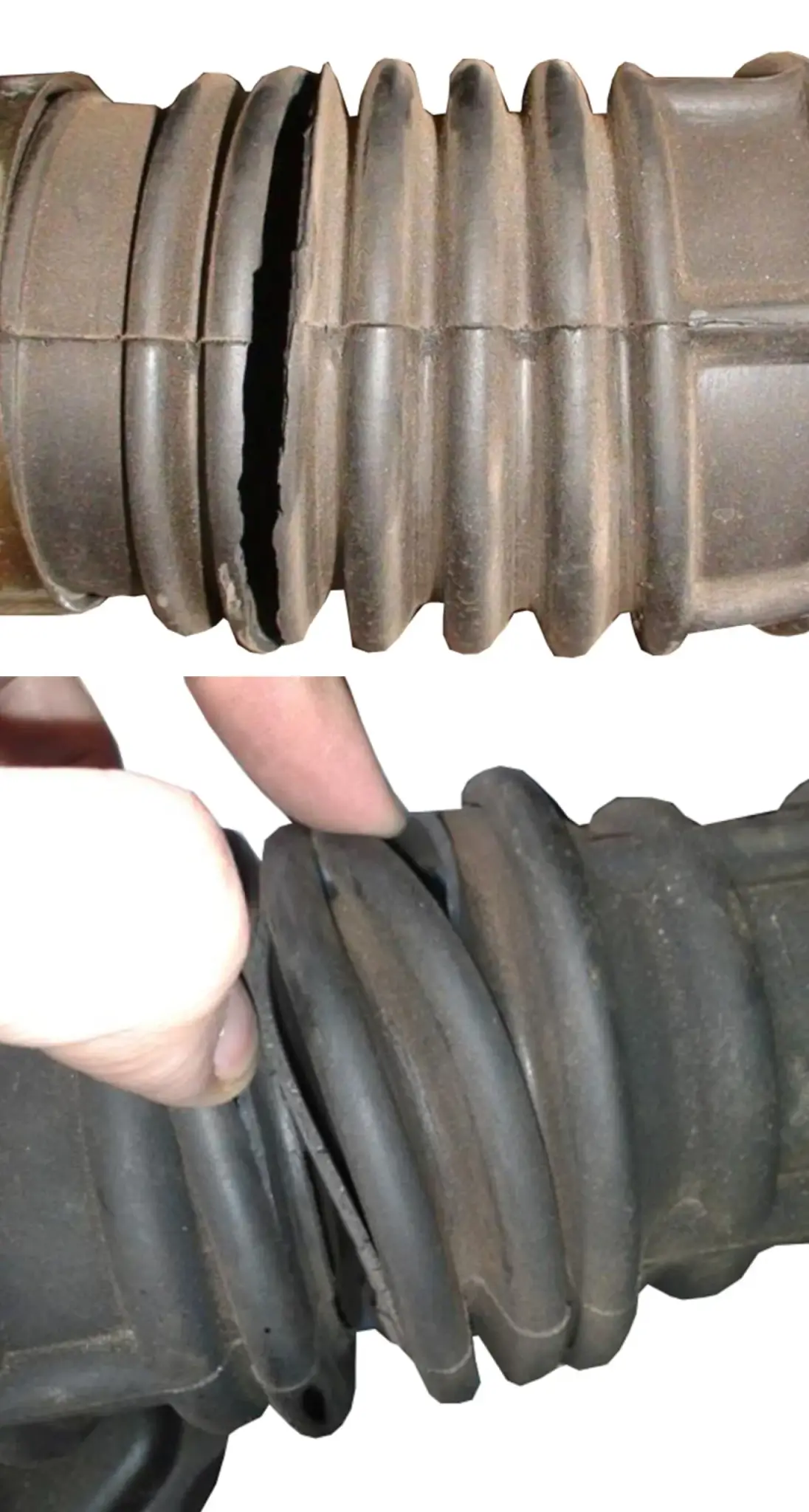
Torn intake air duct
air/fuel ratio or skewed oxygen sensor readings will affect all cylinders and cause random misfires. A P0300 caused by an air leak will likely have other sensor-related or fuel-trim-related trouble codes listed.
• Torn air intake duct boot
• Disconnected vacuum lines
• Exhaust system leaks upstream from the oxygen sensor.
Dirty MAF Sensor
A dirty Mass Airflow sensor can cause the ECM to command an improper air/fuel mixture, causing misfires.
Clean the MAF sensor to eliminate it as a cause.
The #4 cause of random misfires — mechanical issues
• Worn Piston Rings
• Worn Valve Seats or Guides
• Engine Mechanical Problems— Worn-out components like piston rings, valves, or camshaft timing can lead to improper compression, contributing to misfires. Check the following:
• Compression test: If compression is uneven across cylinders.
• Cylinder leak down test:
• Burnt valves / worn valve seats
• Worn piston rings
• Head gasket leaks (affecting multiple cylinders)
The #5 cause of random misfires: Stuck Open EGR Valve
A stuck-open or malfunctioning EGR valve can allow exhaust gas into the intake when there should be no flow, causing misfires.
Symptoms: Rough idle, stalling, loss of power.
Solution: Inspect the EGR valve and passages for clogging or malfunction.
#6 High cylinder pressure can cause misfires
As cylinder pressure increases, the voltage required to fire the spark plug increases as well. What causes cylinder pressure to increase? Putting the engine under load: climbing a hill, hauling a heavy load, putting the “pedal to the metal” from a stop.
If your spark plugs are worn, placing the engine under a heavy load will increase cylinder pressure, increase resistance across the spark plug gap, and increase the needed firing voltage to jump the gap. That’s why a spark plug may perform fine during cruising but misfire when you accelerate harder.
This phenomenon is also why testing a spark plug outside the engine is not a valid test. A spark plug and ignition coil combination can fire perfectly fine when grounded to the engine in the open air, but fail when installed in the engine.
#7 Cold temperatures increase the firing voltage needs
Cold air and cold fuel are harder to ignite. When you combine cold air and fuel with a worn spark plug, you get misfires and failure to start. That is why worn spark plugs may perform fine in early Fall but misfire or fail to start the engine in winter.
#8: High heat and humidity increase the firing voltage needs
Hot, humid air is less dense and is harder to ignite, requiring higher-than-normal firing voltage. If the spark plugs are worn or the coil windings are degraded, you’ll get poor performance and misfires in hot, humid conditions.
These items would NOT cause the P0300 random misfire code
A Bad fuel injector— A bad fuel injector would only affect a single cylinder. The likelihood of having all or multiple bad fuel injectors is almost zero.
A Bad ignition coil— A bad ignition coil would only affect a single cylinder. The likelihood of having all or multiple bad ignition coils is almost zero.
A Bad head gasket— A bad head gasket would affect combustion in just the affected cylinder or two adjacent cylinders, not all the cylinders
A Bad camshaft, push rods or lifters— A bad camshaft, push rods, or lifters would affect combustion in just the affected cylinders, not all the cylinders
©, 2021 Rick Muscoplat
Posted on by Rick Muscoplat