
Why You Should Use Dielectric Grease on Spark Plugs
The Importance of Using Dielectric Grease on Spark Plugs and Electrical Connectors
DIYers often wonder when and how much dielectric grease to use on spark plugs and if it should be used in electrical connectors. Although this may seem like a small detail, using dielectric grease is an essential practice that can significantly improve the longevity and performance of your vehicle’s electrical system. This article will explore why dielectric grease is important, how it works, and its benefits on spark plugs and electrical connectors.
What is Dielectric Grease?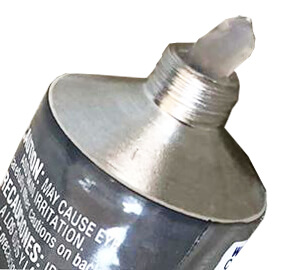
Dielectric grease, also known as tune-up grease, is made from a polydimethylsiloxane silicone oil base (as opposed to a petroleum base) with a thickener and silicone dioxide. It is non-conductive and water-resistant. Its primary function is to insulate and protect electrical connections by preventing moisture and contaminants from infiltrating the connection points. Because it is non-conductive, it does not allow electricity to pass through it, making it an ideal substance for use on electrical components.
It lubricates without harming rubber materials. It prevents oxidation on electrical connections. It is NOT an electrical insulator (more on that later).
Why Use Dielectric Grease on Spark Plugs?
1) Eases Installation and Removal— Spark plug boots can sometimes become stuck (welded) to the porcelain insulator, making it difficult to remove the boot, especially after prolonged use. Applying a thin layer of dielectric grease to the inside of the spark plug boot makes it easier to install and remove the boot without damaging it or the spark plug. This not only makes maintenance easierbut also helps to extend the life of both the spark plug and the boot.
2) Prevents Corrosion— Over time, spark plugs and the boots that cover them can become corroded due to exposure to moisture, dirt, and other contaminants. Corrosion can lead to poor electrical connections, which can result in misfires or difficulty starting the engine. Applying dielectric grease to the spark plug boots creates a pr
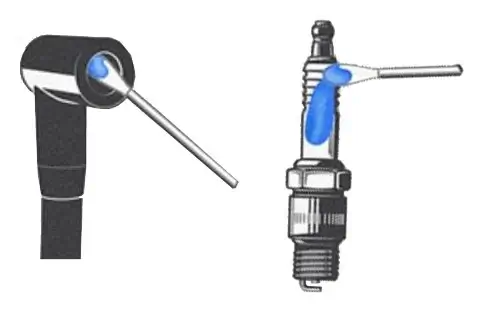
Apply a small amount of dielectric grease inside the spark plug boot and wipe a small amount down the side of the spark plug porcelain
otective barrier that prevents moisture from reaching the metal components, thereby reducing the risk of corrosion.
3) Improves Electrical Insulation— While dielectric grease is non-conductive, it still plays a vital role in ensuring a good electrical connection. When applied to the spark plug boots, it helps to seal the connection, ensuring that the electrical current flows directly to the spark plug without interference. This can improve the consistency and reliability of the spark, leading to better engine performance.
4) Reduces Misfires— Misfires can occur when the spark plug fails to generate a strong, consistent spark. By ensuring a clean, secure connection between the spark plug and the ignition coil, dielectric grease helps to reduce the likelihood of misfires, resulting in smoother engine operation and better fuel efficiency.
Why Use Dielectric Grease on Electrical Connectors?
1) Prevents Moisture Intrusion— One of the most common causes of electrical issues in vehicles is moisture intrusion. Water can easily seep into electrical connectors, leading to corrosion, short circuits, and electrical failures. Dielectric grease creates a waterproof barrier that seals the connection points, preventing moisture from reaching the metal contacts. This is especially important in areas of the vehicle that are exposed to the elements, such as the engine bay.
2) Protects Against Contaminants— In addition to moisture, electrical connectors can also be exposed to dirt, dust, and other contaminants. These particles can interfere with the connection, leading to poor performance or even failure of the electrical component. Applying dielectric grease to the connectors helps to keep contaminants out, ensuring a clean, secure connection.
3) Improves Electrical Performance— Over time, electrical connectors can becomeloose or develop poor contact points, leading to intermittent electrical issues. Dielectric grease helps to maintain a consistent connection by reducing the effects of vibration and thermal expansion, which can cause connectors to loosen over time. This results in more reliable electrical performance and reduces the risk of component failure.
4) Prevents Voltage Leakage— Voltage leakage can occur when electricity escapes from the intended path, leading to electrical inefficiency or malfunction. Dielectric grease helps to insulate electrical connections, reducing the risk of voltage leakage and ensuring that the electrical current flows where it’s supposed to.
Dielectric grease is not thermal grease
Some ignition and radiator fan modules require a thin coating of thermal grease to dissipate heat away from the module to a heat sink metal area. Thermal grease is also made from a silicone base but includes heat-conducting metal powders to transfer heat away from the module. If an automotive application calls for thermal grease, you can’t use dielectric grease in its place.
Where do you use this special grease used in automotive applications?
• It’s applied to the inside of spark plug boots to prevent the rubber from welding to the spark plug and to prevent tracking down the side of the plug.
• Lubrication for O-rings and water-sealing silicone seals
• Electrical connectors to reduce terminal oxidation and fretting
• Bulb sockets to keep out water and prevent corrosion
• Trailer connectors
• General electrical connections
• General plastic or rubber lubrication
What about the myth that dielectric grease increases resistance in an electrical connection?
This myth is based on a misunderstanding of how dielectric grease works in an electrical connector. When electrical connectors are mated, they establish a metal-to-metal contact. In other words, the grease gets wiped away due to the spring tension of the connectors. The grease still surrounds the connection, preventing oxidation. But it does not add resistance to the circuit.
©, 2021 Rick Muscoplat
Posted on by Rick Muscoplat