
How to Properly Measure Bolt Size: Tips and Techniques
How to Measure Bolt Size: A Step-by-Step Guide
Measuring bolts accurately is crucial for ensuring they fit properly and function as intended in various mechanical assemblies and constructions. Whether you’re a DIY enthusiast, a professional mechanic, or an engineer, understanding how to measure a bolt size correctly is essential for both safety and performance. This article will guide you through the steps and tools required to measure a bolt, explaining key dimensions and considerations.
Learning The Key Dimensions of a Bolt
To measure a bolt accurately, you need to understand the key dimensions that define its size and specifications. These dimensions include:
Diameter: The diameter of a bolt is the measurement of the thickness of the bolt shaft. It is typically referred to as the “nominal diameter” and is crucial for determining the correct size of the bolt hole or nut.
Length: The length of a bolt is the distance from the bottom of the head to the end of the threaded portion. This measurement helps in determining how deep the bolt needs to be inserted into a material or how much of the threaded section is available for engagement.
Thread Pitch: The thread pitch is the distance between threads, measured in millimeters or threads per inch (TPI). It determines how tightly the threads fit together and affects the bolt’s ability to hold and secure components.
Head Style: The head style of a bolt (e.g., hex, square, or round) affects how the bolt is driven or fastened. While not a dimension per se, knowing the head style is important for compatibility with tools and fittings.
Thread Type: Bolts come with different thread types, including coarse and fine threads. Coarse threads have larger spacing between threads, while fine threads have smaller spacing. The thread type affects the bolt’s grip and strength.
A warning about measuring bolt size
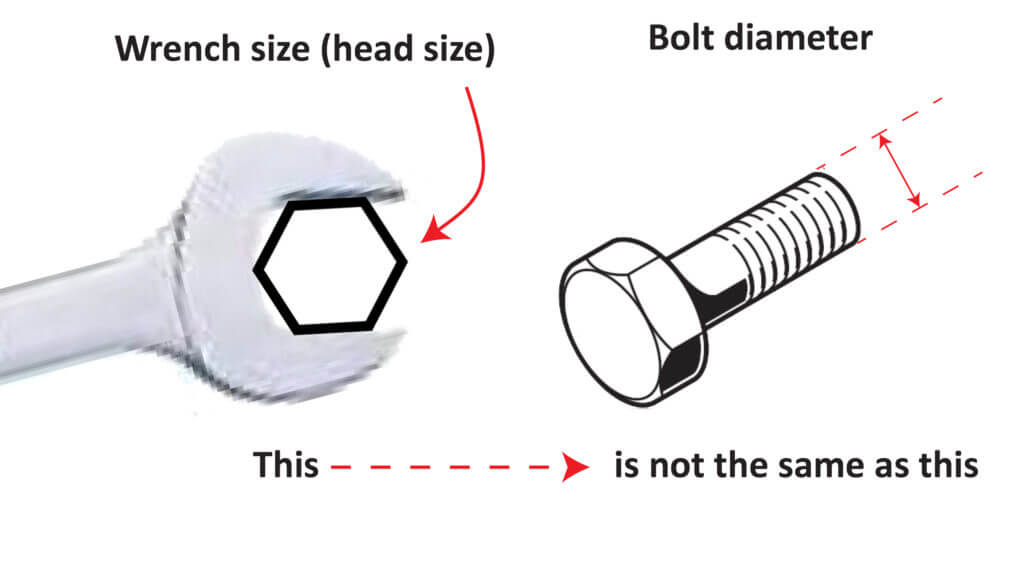
Bolt shank diameter and thread pitch are the two most important measurements. The measurement of the bolt shank diameter is the same for both metric and SAE bolts; it’s measured from the threads. Wrench size refers to the hex head. Wrench size is where most DIYers get messed up. The wrench size is NOT the bolt shank diameter size. In other words, a bolt that requires a 10mm socket does not have a bolt diameter of 10mm!
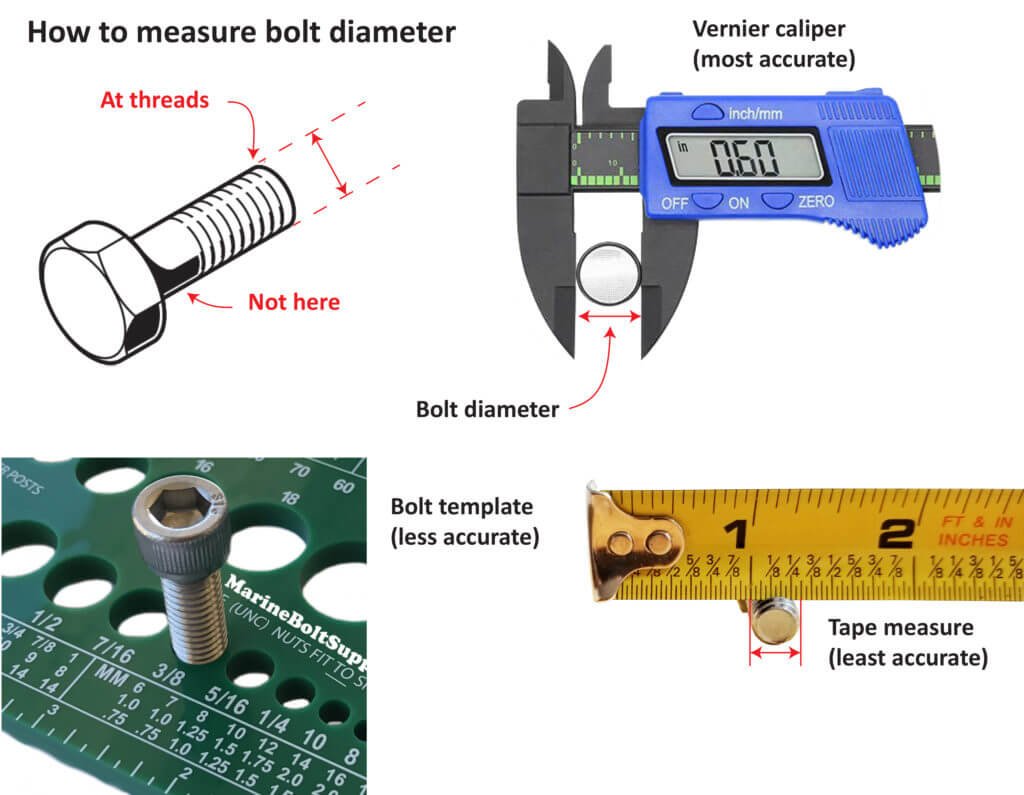
How to measure shank diameter
The best way to measure shank diameter is with a Vernier caliper. Slide the caliper around the threaded portion of the bolt and read the scale. You can buy a Vernier caliper for less than $10 from Amazon or any home center store. Don’t have one? You can use a bolt template. Don’t have a template but have a nut for the bolt? Take that to the hardware store.
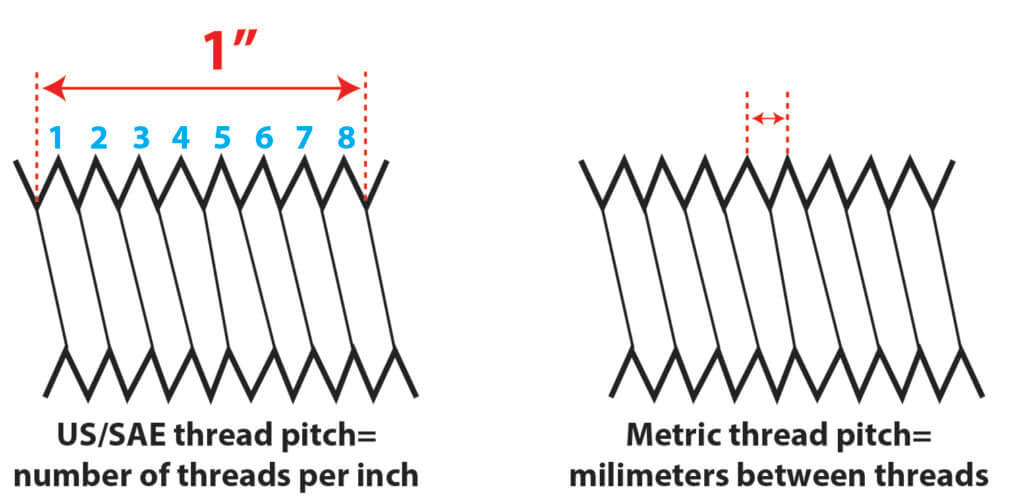
What is thread pitch?
The definition of thread pitch is different for SAE and metric fasteners. For US/SAE threaded fasteners, measure the number of threads per inch. For metric fasteners, measure the distance between two threads in millimeters.
How to measure threads
Use a vernier caliper or a thread pitch gauge. Simply insert 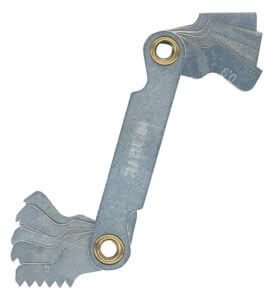 the trial gauges into the threads until the gauge fits perfectly. Then read the pitch off the gauge.
Measure bolt length
Measure the bolt length from directly under the hex head to the tip of the bolt.
How bolt sizes are expressed
For US/SAE bolts
1/4″ ‐ 20 x 3″ means 1/4″ bolt diameter with 20 threads per inch (TPI) and 3″ length
For Metric bolts
M10 x 1.0 x 30 means Metric 10mm bolt diameter with 1mm pitch and 30mm length
What’s the difference between coarse and fine bolts?
A coarse bolt has fewer threads per inch (US/SAE) or a wider gap between two threads (metric). On the flip side, a fine thread has more threads per inch or a shorter gap between two threads.
Advantages of fine bolt thread
• For two bolts of the same diameter and length, the finer the thread pitch, the stronger the bolt. Fine threads have more surface area in contrast with the mating threads and have a larger shank diameter (fine threads aren’t cut as deeply into the shaft).
• Fine thread bolts allow for more adjustment where an adjustment is needed
• Easier to tap fine threads because they don’t cut as deeply into the bolt shaft or the mating material.
• Fine threads require less torque to develop the same preload as a coarse-threaded bolt.
• Fine threads don’t loosen as easily as coarse-threaded bolts
Disadvantages of fine bolt thread
• Since more material is in contact with the mating surface, they’re more susceptible to galling.
• Fine thread bolts are easier to strip during initial engagement.
• A fine thread bolt must be longer than a coarse thread bolt to achieve the same holding power.
©, 2019 Rick Muscoplat
Posted on by Rick Muscoplat