
Learn the Symptoms of a Bad Wheel Bearing
How to Diagnose a Bad Wheel Bearing Like a Pro
Quick Summary:
I’ve seen countless misdiagnosed wheel bearing noise problems. Many DIYers rely on outdated or inaccurate “rock-and-listen” methods, leading to the wrong bearing being replaced. I’ll show you the one diagnostic method that never fails — using an electronic stethoscope.
Article
When a wheel bearing starts to fail, the sound it makes is distinct — a low humming, growling, or rumbling noise that changes with speed or as you change lanes. Unlike tire noise, which remains constant, wheel bearing noise often intensifies as the vehicle’s load shifts from side to side. You’ll hear it most clearly at highway speeds when you slightly turn the steering wheel left or right.
If the noise grows louder when you turn right, the left wheel bearing is usually bad. If it gets louder when turning left, the right bearing is likely worn. This is because turning shifts the vehicle’s weight to the outside wheels, increasing the load on the faulty bearing.
Common Sounds That Indicate Bearing Trouble
Different noises can point to specific mechanical issues:
• Grinding or Growling: Caused by pitted or damaged bearing raceways.
• Snapping or Clicking: Often linked to improper axle nut torque or a worn CV joint.
• Humming or Whining: The most common symptom of wheel bearing noise, especially at higher speeds.
• Clunking or Knocking: Usually from suspension or CV joints, not the bearing itself.
The most reliable clue is the consistent, rhythmic humming that gets louder as you accelerate and fades when you decelerate or turn slightly.
Testing a wheel bearing for play
Many sites tell you to start your diagnosis by wiggling the tire and checking for wheel bearing play by moving the wheel in/out at 12 and 6 and 9 and 3. HOWEVER, most noisy wheel bearings won’t show any play. In fact, a wheel bearing has to be VERY worn to show visual play. In other words, if you’ve been ignoring the wheel-bearing noise for a long time, then yeah, try wiggling the wheel for play. Otherwise, it’s ok to skip this step and move on to real diagnostics.
The most effective way to diagnose which wheel bearing is worn
Use an Electronic Stethoscope
When it comes to pinpointing wheel bearing noise, nothing beats an electronic stethoscope such as the Steelman Chassis Ear. I’ve used this tool for years, and it’s foolproof.
How It Works:
• Attach microphones near each wheel hub.
• Drive the car at various speeds.
• Switch between channels until you isolate the loudest noise.
• You’ll immediately know which bearing is bad — no guessing, no wasted labor.
• You can buy a Steelman Chassis Ear (wired or wireless) for under $150. Even if you sell it afterward, you’ll still save more than the cost of replacing the wrong bearing.
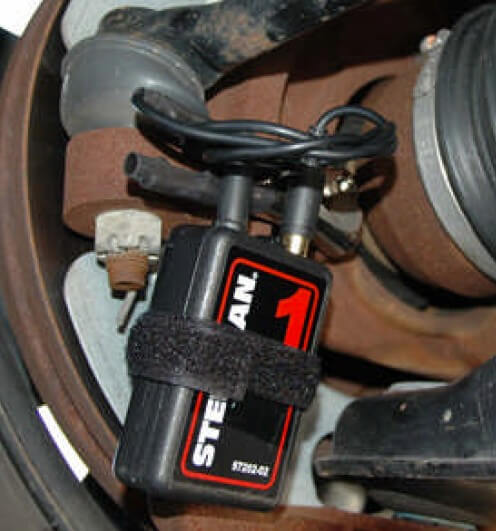
Steelman Chassis Ear strapped to steering knuckle to detect wheel bearing noise
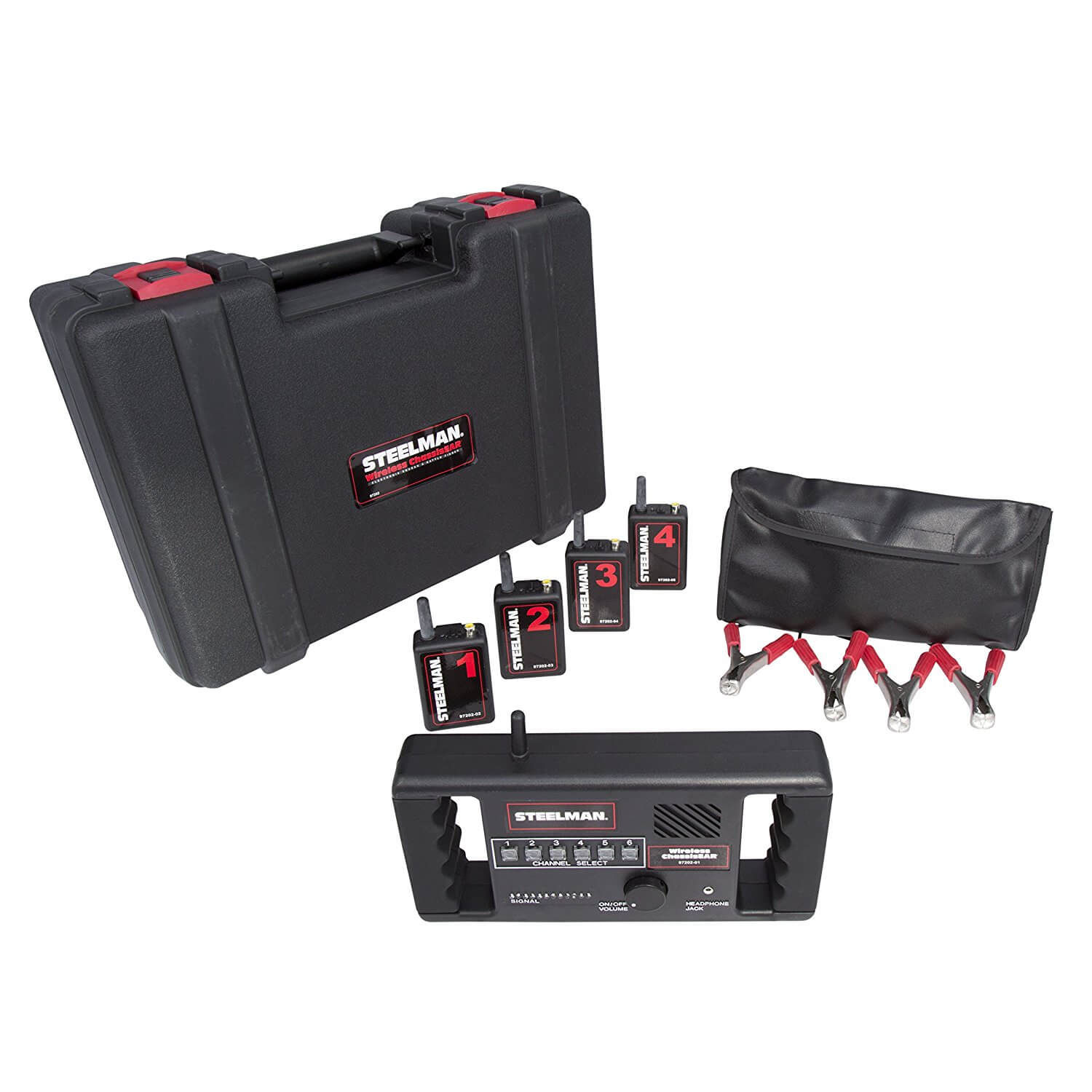
Steelman Chassis ear wireless version
Check for heat to locate a worn wheel bearing.
After a drive, touch the wheel hub near the center (be careful, as it may be hot). If a bearing is going bad, it might generate more heat than usual.
What Causes Wheel Bearing Failure?
• Water Intrusion: Driving through deep puddles or floods forces water past the bearing seals, washing out lubrication, which then causes the bearing to run dry.
• Harsh Road Conditions: Constant potholes and rough terrain accelerate wear.
• Incorrect Torque: Over-tightening or under-tightening the axle nut damages the bearing’s internal preload.
• Unbalanced Tires: Causes continuous vibration that stresses the bearing.
• Overloading the Vehicle: Excessive weight heats up and breaks down the bearing grease.
©, 2023 Rick Muscoplat
Posted on by Rick Muscoplat