
Nissan P0011 Code: The Real Cause Most People Miss
How the Nissan P0011 Code Gets Triggered
Quick Summary
When I see a Nissan P0011 code, I don’t jump straight to replacing parts—and you shouldn’t either. This code almost always points to a variable valve timing (VVT) issue, and in my experience, the root cause is usually oil-related—wrong viscosity, dirty oil, or sludge restricting flow. The next most common culprit is a faulty oil control solenoid, followed by timing chain wear. If you start with the oil condition and work your way through the system logically, you can quickly fix a Nissan P0011 code and avoid expensive mistakes.
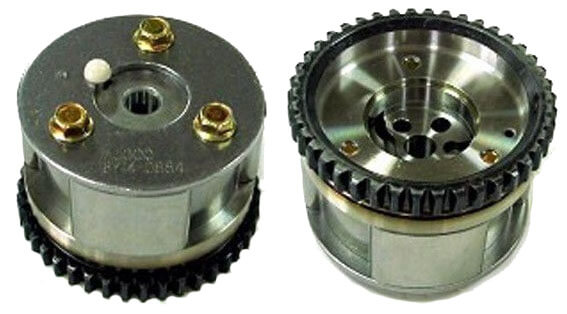
Nissan Variable Valve Timing Mechanism
What the Nissan P0011 Code Really Means
Modern Nissan engines use variable valve timing to adjust camshaft position on the fly, improving both performance and emissions.
At its heart is the variable valve timing system, which uses oil pressure to advance or retard the camshaft. The powertrain control module calculates the ideal cam position based on inputs like engine speed, temperature, and load.
When the commanded cam position doesn’t match what the system actually achieves, the computer sets a Nissan P0011 code, which specifically means the intake cam timing is over-advanced or not responding as expected. That mismatch is the key to understanding this code.
How the System Actually Works (Why Oil Matters So Much)
The VVT system relies on an oil control solenoid to regulate oil flow to the advance and retard chambers within the cam phaser. Here’s something a lot of people don’t realize:
• The solenoid doesn’t create oil pressure—it simply controls it. The entire system depends on clean oil at the correct viscosity.
• If the oil is too thick, too dirty, or restricted, the system can’t react properly — when it can’t respond fast enough—or moves too far—the computer logs the Nissan P0011 code.
The Most Common Causes I See in the Shop
1) Oil Problems (By Far the #1 Cause)
If the oil is:
• Too thick (wrong viscosity)
• Old and oxidized
• Sludged or contaminated
It slows down oil flow through the VVT system. That throws off the timing response and triggers the Nissan P0011 code. I’ve fixed more of these codes with an oil change than any other repair.
2) Faulty or Restricted Oil Control Solenoid
These can fail in two ways:
• Electrically (coil failure or short)
• Mechanically (sticking due to sludge or varnish)
A restricted solenoid can’t meter oil properly, which leads directly to a Nissan P0011 code.
3) Timing Chain Stretch or Tensioner Wear
If the oil has been neglected long enough, I start thinking about mechanical wear. A stretched timing chain or worn tensioner can throw cam timing off enough to set a Nissan P0011 code. When I see this, it’s usually on engines with poor maintenance history.
4) Sensor Input Errors — The system relies on accurate input from:
• Crankshaft position sensor
• Camshaft position sensor
If debris builds up on these sensors or they start to fail, the computer can misinterpret cam position and trigger the code.
How I Diagnose a Nissan P0011 Code (My Real-World Process)
1) The first thing I do is check the oil condition. If it’s dark, thick, or overdue, I change it and reset the code. Then I drive the vehicle and see if the Nissan P0011 code comes back.
2) If the code returns, I move to the oil control solenoid. I test resistance, check for shorts to ground, and then physically inspect it. If I see sludge or varnish, I know I’ve found a problem. At that point, I’ll often recommend multiple short-interval oil changes to clean the system. In severe cases, an engine flush may be necessary.
Set your multimeter on the Ω scale. Touch probes to terminals 1 and 2. Resistance should read 6.7-7.7 Ω at temps 68°F or higher. Next, connect one lead to terminal 1 and ground. You should see ∞ or OL. Connect one lead to terminal 2 and ground. You should see ∞ or OL. If you see any other reading when testing to ground that indicates a short to ground in the solenoid coil, the solenoid must be replaced.
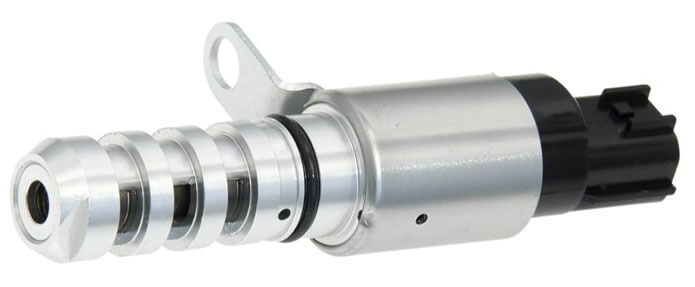
Oil control solenoid
3) If the problem persists, I start looking deeper. I check the crankshaft and camshaft sensors for debris accumulation or damage. Next, I verify camshaft data on a scan tool, and, if needed, inspect the timing chain and tensioner.
4): Remove the timing chain cover and check the shaft on the timing chain tensioner. If fully extended, the chain has stretched, and the tensioner has reached its limit. Replace the timing chain and tensioner.
The biggest mistake I see with a Nissan P0011 code is skipping the basics.
People go straight to replacing sensors or tearing into the engine without checking the oil condition. That’s backward. This system lives and dies by oil quality. Ignore that, and you’ll keep chasing the problem.
Final Thoughts From the Shop
If you think in terms of oil flow, timing accuracy, and system response, the diagnosis becomes straightforward. And, more importantly, you fix it once rather than guessing multiple times.
©, 2020 Rick Muscoplat
Posted on by Rick Muscoplat