
P0325 Code: What It Means and How to Fix It
What a Knock Sensor Code Means in Your Car
Quick Summary:
A P0325 code is defined as a Knock Sensor 1 Circuit Malfunction. This means the ECM has detected an issue with the knock sensor circuit. Don’t automatically assume the code means the sensor itself has failed.
The most common causes of a P0325 code are:
Wiring or Connector Problems — The ECM sets a P0325 code when the knock sensor signal is missing, intermittent, or out of the expected range—and the bad wiring issues listed below can easily cause that.
• Corroded knock sensor connector pins
• Broken or chafed wiring (especially where the harness contacts the engine block)
• Rodent-chewed wires
• Poor ground connection
• Loose or damaged terminal tension in the connector
• Bad knock sensor
• Underlying engine mechanical problems that create noise or vibration — Keep in mind that the knock sensor can’t tell the difference between shock waves from detonation and shock waves from any other mechanical condition. In some vehicles, loose timing chain guide bolts tend to loosen, causing the guide to vibrate and bounce when the engine is running
Article
Whenever I run into a P0325 code, the first thing I remind myself is that it’s a circuit fault. That’s an important detail many DIYers overlook. Before I even think about replacing the knock sensor, I evaluate the entire circuit that supports it.
What a knock sensor does
The knock sensor plays a critical role in detecting abnormal combustion. It works by converting the vibration during a detonation or pre-ignition event into a self-generated electrical signal, which is delivered to the ECM. Detonation and pre-ignition can quickly destroy pistons, so proper knock sensor operation is critical to your engine’s health. As with other sensors, the ECM occasionally tests knock sensor operation by creating a condition that it expects to elicit a specific response from the sensor. In this case, the ECM advances ignition timing to make a knock. If it doesn’t see a corresponding knock signal, it sets a P0325. Or, the ECM may supply a bias voltage to the knock sensor and check for a voltage drop on the circuit.
As mentioned above, this code indicates a circuit problem because the ECM didn’t receive a response from the knock sensor. That’s why you should always start your diagnosis with a circuit check.
How a knock sensor works
Most knock sensors include a piezoelectric crystal element. Piezoelectric materials have a unique property: they generate an electrical voltage when mechanically stressed by bending, compressing, or vibrating.
So, when abnormal combustion occurs (like detonation or pinging), it creates high-frequency shockwaves that travel through the engine block. The knock sensor, which is bolted directly to the metal, detects those vibrations.
Here’s what happens step-by-step:
Combustion knock creates sharp vibration waves in the cylinder
Those waves travel through the block into the knock sensor’s body
The piezoelectric crystal inside flexes due to that vibration
The crystal produces a small AC voltage signal
The ECM reads that voltage and interprets it as knock severity
The ECM retards ignition timing to prevent damage
The harder the knock → the greater the vibration → the higher the voltage output.
Start by inspecting the knock sensor circuit
• Disconnect the knock sensor connector and check for signs of corrosion. If you find any, use contact cleaner to remove the corrosion.
• Check the wiring harness for signs of chaffing or an open condition
• Check the harness for continuity between the ECM and the knock sensor connector.
• Check for a bias voltage and voltage drop using a multimeter
How to replace a knock sensor if the circuit tests good
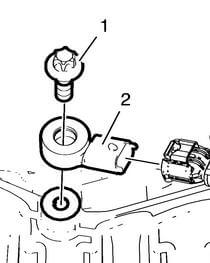
If the circuit tests turn out good, replace the knock sensor to fix a P0325 code. Locate the knock sensor and remove the old one. Install the new sensor and follow the shop manual instructions for proper orientation and torque specifications.
Orientation and torque are critical to the operation of a knock sensor. If you think of a knock sensor as a microphone, you can understand why its orientation during replacement is so important: it must pick up the vibrations emanating from the most likely areas of the engine.
The same logic applies to bolt torque. Over-torquing a knock sensor can dampen its ability to detect knock.
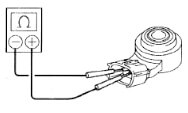
Check the knock sensor resistance with a multimeter set to the Ohms scale
©, 2020 Rick Muscoplat