
P0130 Code Explained: Causes, Diagnosis, and Repair Costs
The Most Common Causes of a P0130 Code
Quick Summary
The P0130 code indicates a problem with the oxygen sensor circuit for Bank 1 Sensor 1, which is the upstream O2 sensor located before the catalytic converter. This sensor monitors oxygen levels in the exhaust so the engine computer can adjust fuel delivery. The most common causes of a P0130 code include
• A failing oxygen sensor
• Wiring problems
• Exhaust leaks
• Engine issues affecting the air-fuel mixture.
Diagnosing the P0130 code involves checking sensor voltage activity, inspecting wiring, and verifying that the engine isn’t running excessively rich or lean. In most cases, replacing the oxygen sensor fixes the issue. P0130 repair cost (diagnosis and repair) ranges from $250–$350 for a traditional oxygen sensor, to as much as $425 – $695 for vehicles equipped with an air/fuel ratio sensor.
Article
Understanding the P0130 Code In Lay Language
When a vehicle’s check engine light comes on, and a scan tool reports a P0130 code, it means the engine control module (ECM) has detected a malfunction in the oxygen sensor circuit for Bank 1 Sensor 1. Bank 1 refers to the side of the engine that contains cylinder number 1. Sensor 1 means the upstream oxygen sensor, which sits before the catalytic converter in the exhaust system.
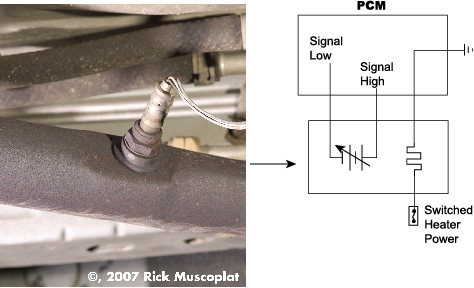
This sensor plays a critical role in engine management. It measures oxygen content in the exhaust gases and sends a voltage signal to the engine computer. The ECM uses this information to adjust the air-fuel ratio to maintain optimal combustion.
When the ECM detects an abnormal signal, no signal, or a signal that doesn’t change as expected, it sets the P0130 code and illuminates the check engine light.
How the Oxygen Sensor Works
To understand why the P0130 code occurs, it helps to know what the oxygen sensor actually does. The upstream oxygen sensor measures the oxygen level in the exhaust stream.
In a perfect world, an engine could run at a constant RPM with the same outside temperature, a flat road, and steady driving conditions. Under those conditions, engineers could set one ideal air-fuel mixture that would deliver maximum power while keeping emissions as low as possible.
But the real world doesn’t work that way. Drivers constantly change the throttle, roads go uphill and downhill, temperatures change, and the engine load is always shifting. Because of those constantly changing conditions, the ECM has to continuously adjust the air-fuel mixture. It does this many times per second to keep the engine running efficiently, maintain good power, and keep emissions within limits. Sometimes the ECM overshoots and adds too much fuel, in others, not enough. So the oxygen sensor is constantly switching between rich and lean voltage readings. On most vehicles, the sensor voltage ranges from about 0.1 volts (lean) to 0.9 volts (rich).
If the signal stays stuck, moves too slowly, or disappears entirely, the computer interprets this as a circuit problem and sets the P0130 code.
The Most Common Causes of a P0130 Code
In my experience diagnosing engine management problems, the P0130 code almost always traces back to one of several common issues.
A failing oxygen sensor — Over time, O2 sensors become contaminated with carbon, oil residue, and fuel additives. As the sensor ages, it becomes slower to respond or may stop generating the proper voltage signal altogether.
Damaged wiring or connectors — The oxygen sensor sits in the hot exhaust stream, and its wiring is exposed to high temperatures, vibration, and road debris. Melted insulation, broken wires, or corroded connectors can interrupt the signal.
Exhaust leaks — Outside air entering the exhaust system can also trigger the P0130 code. If fresh air enters the exhaust system ahead of the sensor, it alters the oxygen reading and confuses the engine computer.
Engine performance problems are another possibility — A vacuum leak, fuel injector issue, or mass airflow sensor problem can cause abnormal exhaust oxygen levels, which may lead the ECM to flag a P0130 code.
Symptoms of a P0130 Code
Sometimes the P0130 code triggers noticeable symptoms, while in other cases, the only sign is the check engine light.
• Illuminated check engine light
• Reduced fuel economy
• Rough idle
• Hesitation during acceleration
• Increased exhaust emissions
In many vehicles, however, the engine may still run relatively normally even with a P0130 code present.
How to Diagnose a P0130 Code
Proper diagnosis of a P0130 code requires more than simply replacing the oxygen sensor.
1) Always connect a scan tool and confirm the stored codes. I also check for related codes that may indicate fuel trim problems or additional sensor faults.
2) Examine live data from the oxygen sensor. A healthy sensor should switch voltage quickly between rich and lean readings. If the voltage is stuck at one level or responds slowly, the sensor may be failing.
3) Inspect the wiring harness and connectors for damage, corrosion, or heat exposure. Wiring issues are responsible for a surprising number of P0130 code cases.
If the wiring and sensor appear normal, the next step is checking for exhaust leaks near the sensor. Even a small leak can introduce oxygen into the exhaust stream and create false readings.
4) Verify that the engine itself is running properly. Vacuum leaks, fuel pressure issues, or intake air leaks can all influence oxygen sensor readings and contribute to a P0130 code.
How to Fix a P0130 Code
Once the root cause has been identified, fixing the P0130 code is usually straightforward.
The most common repair is replacing the upstream oxygen sensor. This repair typically resolves the problem when the sensor has slowed or become contaminated.
If damaged wiring or connectors are discovered, the repair may involve repairing or replacing the wiring harness.
If an exhaust leak is the culprit, sealing the leak or replacing the damaged exhaust component will eliminate the false readings that triggered the P0130 code.
Occasionally, additional repairs may be necessary if another engine problem is affecting the air-fuel mixture.
P0130 Repair Cost
Repair costs for a P0130 code vary depending on the cause and the vehicle involved, and whether the engine has a traditional oxygen sensor or a more expensive air/fuel ratio sensor.
Most repair shops charge one hour of shop time for the diagnosis, costing $140 to as much as $225 for a dealer. If the issue turns out to be a failed oxygen sensor, replacement typically costs $150 to $300 for most vehicles, but up to $695 or more for more expensive sensors or vehicles with difficult sensor access.
If wiring repairs are needed, they can range from $225 to $350, depending on the extent of the damage and the cost of a replacement connector.
Fortunately, most P0130 code repairs fall on the lower end of the cost spectrum compared with many other check engine light issues.
Final Thoughts on the P0130 Code
The P0130 code is one of the more common oxygen sensor trouble codes seen in modern vehicles. While it often indicates a failing upstream oxygen sensor, it’s important to verify the diagnosis before replacing parts.
A careful inspection of the sensor signal, wiring, and exhaust system will quickly identify the true cause of the code. Once repaired, clearing the code and verifying proper sensor operation will restore normal engine management and keep the vehicle running efficiently.
To learn how to replace an oxygen sensor, click here
© 2012 Rick Muscoplat
Posted on by Rick Muscoplat