
P0134: What it means and how to fix it
Learn what a P0134 code means and how to fix it
A P0134 trouble code is defined as Oxygen Sensor Circuit No Activity Detected (Bank 1 Sensor 1). This oxygen sensor is located on the engine bank that houses the #1 cylinder and is located BEFORE the catalytic converter
In older Zirconia oxygen sensors, the PCM expects to see a rapidly changing voltage varying from .1 volts to .95 volts. A Zirconia sensor generates its own voltage based on the difference in oxygen levels between what it sees in the atmosphere and the exhaust stream. If the PCM detects no switching activity, it will set a trouble code P0134.
Newer-style Wideband sensors operate differently. But it’s hard to give a single description for the different types of wideband sensors: Planar, Titania, and Air/Fuel ratio sensor. Each car maker uses a different style, and the way they operate is slightly different.
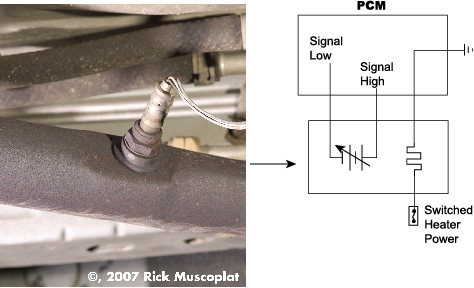
For example, a Titania oxygen sensor is a variable resistor style. The PCM sends a reference voltage to the sensor, and as the oxygen content in the exhaust changes, the resistance of the oxygen sensor also changes. Depending on the condition (rich or lean), the resistance causes the sensor reference voltage to rise or fall. A lean condition will cause a Titania oxygen sensor to output a high-voltage signal. That’s just the opposite of the Zirconia-style sensors. The return voltage range is typically 0 to 5 volts.
How Wideband Planar and Air/Fuel Ratio Oxygen Sensors Work
These sensors can be Wideband, Planar, UEGO, or Air/Fuel ratio sensors. They provide a much more accurate measure of how much Oxygen is in the exhaust stream. Instead of the Zirconia-style rapid switch between rich and lean, these sensors provide a slowly moving voltage. The term ‘planar’ comes from the shape of the sensing element, which is a flat strip (plane) rather than the thimble shape of traditional Zirconia oxygen sensors.
These newer sensors work on roughly the same principle as an ordinary sensor but with an internal oxygen pump. The output current varies in proportion to the Oxygen present in the exhaust. But instead of just a rich/lean signal, the varying voltage provides a far wider range than a traditional sensor, giving the PCM far more precise data.
Each sensor manufacturer designs its sensors differently. But, in general, the PCM sends a 3.3-v or 2.6-v reference voltage to the sensor and looks for a modified return voltage. If the PCM detects no voltage movement on this sensor, it’ll set a P0134.
The most common causes of a P0134 code are a dead sensor or a break in wire between PCM and sensor.
How to diagnose and fix a P0134 trouble code
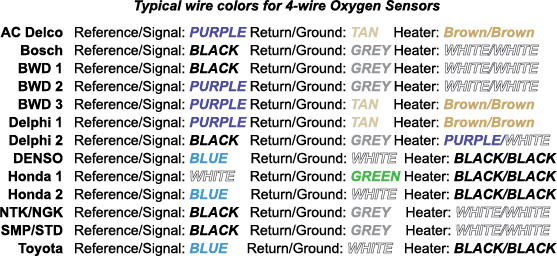
Using a shop manual, identify the wires supplying bias power to the oxygen sensor. Use a multimeter to check for power and ground. Next, check the heater circuit for battery voltage and ground. If you find those values, then the sensor has failed and must be replaced.
The most common cause of a P0134 trouble code is a bad sensor.
To learn more about Zirconia style oxygen sensors, click here
To learn more about the newer air/fuel and wideband sensors, click here
To learn how to replace an oxygen sensor, click here
© 2012 Rick Muscoplat
Posted on by Rick Muscoplat