
P2237 Code: What It Means, Causes, and the Proven Fix
Check Engine Light P2237 Code: Complete Diagnostic Guide
Quick Summary
A P2237 code indicates a problem with the air-fuel ratio (A/F) sensor heater or control circuit on Bank 1, Sensor 1. In plain language, the engine computer isn’t seeing the electrical signal it expects from the upstream oxygen sensor. The most common causes of a P2237 code include damaged wiring, a failed A/F sensor, blown heater fuses, or connector corrosion. In most cases, diagnosing a P2237 code involves checking the wiring harness, verifying power and ground to the sensor heater circuit, and testing the sensor resistance. Very often, the final fix is replacing the air-fuel ratio sensor.
Article
What a P2237 Code Means and How I Diagnose and Fix It
Over the years, I’ve diagnosed many emissions-related trouble codes, and one that shows up fairly often on Toyota, Honda, Subaru, and several other vehicles is the P2237 code. When someone plugs in a scan tool and sees this code, the first reaction is usually confusion—because the description is technical and not very helpful.
Let me break it down the same way I do when I’m in the shop.
A P2237 code means the engine computer has detected an open or abnormal current flow in the air-fuel ratio sensor positive current control circuit for Bank 1 Sensor 1. That sounds complicated, but the idea is actually simple. The upstream oxygen sensor—often 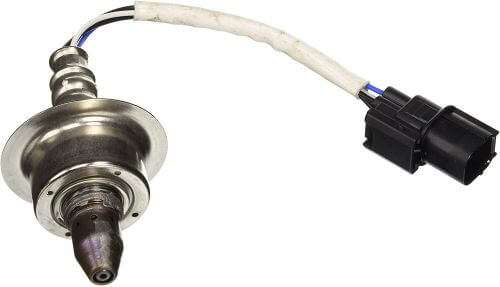 called the A/F sensor—helps the computer determine how much oxygen remains in the exhaust. The computer uses that information to constantly adjust the air-fuel mixture to achieve maximum performance with minimum emissions.
These A/F sensors also contain internal heaters that bring them up to operating temperature quickly, allowing the engine to enter closed-loop fuel control sooner. If the computer detects that the electrical current flowing through that circuit is outside the expected range, it sets a P2237 code.
How Oxygen Sensors and A/F Sensors Actually Work
To understand a P2237 code, you need to understand what the sensor is doing.
Modern vehicles often use wideband air-fuel ratio sensors rather than traditional narrowband oxygen sensors. The upstream sensor is mounted upstream of the catalytic converter, while the downstream sensor is mounted downstream of the converter to monitor catalyst efficiency.
These sensors perform two critical jobs:
• Measure oxygen content in the exhaust
• Help the engine computer maintain the ideal air-fuel mixture
Inside the sensor is a heater element, which is powered by the vehicle’s electrical system. Without that heater, the sensor would take several minutes to warm up. The heater allows the system to reach operating temperature much faster.
If the heater circuit or the signal control circuit fails, the computer flags the problem with a P2237 code.
The Most Common Causes of a P2237 Code
In my experience, most P2237 code cases come down to a few predictable problems.
#1 Cause — Failed heater in the air-fuel ratio sensor — These sensors live in a brutal environment—high heat, moisture, vibration, and contamination from fuel additives. Eventually, the heater or internal circuitry simply burns out.
#2 Cause Damaged wiring — The sensor wiring runs close to the exhaust system, so it’s common for insulation to melt or for the harness to rub against metal brackets. Even a small break in the wire can trigger a P2237 code.
#3 Cause Corroded A/F connector— Water intrusion or road salt can cause resistance in the circuit. Since the engine computer is extremely sensitive to current flow, even slight corrosion can trigger a fault.
#4 Cause Blown fuse or faulty relay — Many oxygen-sensor heaters share a fuse with other emissions components. If that fuse opens, the heater circuit stops working, and the P2237 code appears.
How I Diagnose a P2237 Code
When diagnosing a P2237 code, I always start with the basics rather than immediately replacing parts.
First, I confirm the code with a scan tool and check for related oxygen-sensor or heater-circuit codes. Sometimes multiple codes appear together, which helps narrow down the problem.
Next, I locate Bank 1 Sensor 1. On V-type engines, Bank 1 is always the side containing cylinder number one, and Sensor 1 is the upstream sensor before the catalytic converter.
Once I find the sensor, I inspect the wiring harness carefully. I look for:
• Melted insulation
• Broken wires
• Loose connectors
• Corrosion inside the plug
If the wiring looks good, I check the heater circuit fuse in the under-hood fuse box. After that, I move to electrical testing.
Measure A/F heater resistance — Using a multimeter, I measure the resistance of the heater element across the sensor heater wires. If the heater is open or outside the specified resistance range, the sensor has failed.
Battery voltage and ground — I also check for battery voltage at the heater power wire and verify a good ground. If power or ground is missing, the problem lies in the wiring or control circuit rather than the sensor itself.
How I Fix a P2237 Code
Once the diagnosis is complete, fixing a P2237 code is usually straightforward.
If the sensor heater has failed, the solution is simply to replace the air-fuel ratio sensor. I always recommend using an OEM-quality sensor, because cheaper aftermarket versions sometimes cause inaccurate readings.
The replacement process is generally simple:
• Disconnect the sensor connector
• Remove the old sensor with an oxygen-sensor socket
• Install the new sensor
• Clear the P2237 code with a scan tool
However, on some vehicles, the sensor is tucked into a tight space in the exhaust system. In those cases, a special slotted oxygen-sensor socket is extremely helpful.
If the problem turns out to be wiring damage, the repair involves splicing or replacing the harness section. Any corroded connectors should also be cleaned or replaced.
After repairs, I always clear the code and perform a short test drive to confirm the P2237 code does not return.
Final Thoughts on the P2237 Code
Although it sounds intimidating, the P2237 code is usually not a complicated repair. In most cases, it’s simply a failed upstream air-fuel ratio sensor or a wiring issue near the exhaust.
The key to solving it quickly is taking a systematic diagnostic approach—check the wiring, check the fuse, verify power and ground, and test the heater resistance before replacing parts.
Do that, and you’ll usually have a P2237 code diagnosed and fixed in less than an hour.
©, 2026 Rick Muscoplat
Posted on by Rick Muscoplat