
PCV Delete vs Oil Catch Can: What Actually Works
PCV Delete Explained: Why It’s Illegal, Ineffective, and Overhyped
Quick Summary
A PCV delete sounds appealing if you’ve been told it will stop carbon buildup or unlock hidden horsepower—but that idea is built on misinformation. Deleting the PCV system is illegal, creates new drivability problems, vents harmful blow-by into the atmosphere, and does nothing to stop intake valve carbon. If you’re trying to reduce oil vapor entering the intake, a properly installed oil catch can is the only sensible option—and even then, it’s more about management than magic.
Article
PCV Delete: Pros and Cons vs an Oil Catch Can — What Actually Works?
I’ve lost count of how many times I’ve been asked whether a PCV delete is a smart upgrade or a shortcut to cleaner intake valves. The short answer is no. The longer answer requires understanding what the PCV system actually does, why deleting it doesn’t solve the problem people think it does, and why an oil catch can—while not perfect—is a far better solution if you insist on modifying anything.
Let’s cut through the marketing hype and internet folklore and talk about what actually happens inside the engine.
What a PCV Delete Really Is (and Why the Theory Is Wrong)
A PCV delete removes or bypasses the Positive Crankcase Ventilation system and vents crankcase gases directly to the atmosphere. The theory is that preventing blow-by gases from re-entering the intake eliminates oil contamination, carbon buildup, and performance loss.
That theory falls apart under even light scrutiny.
Modern engine control modules already expect blow-by. They calc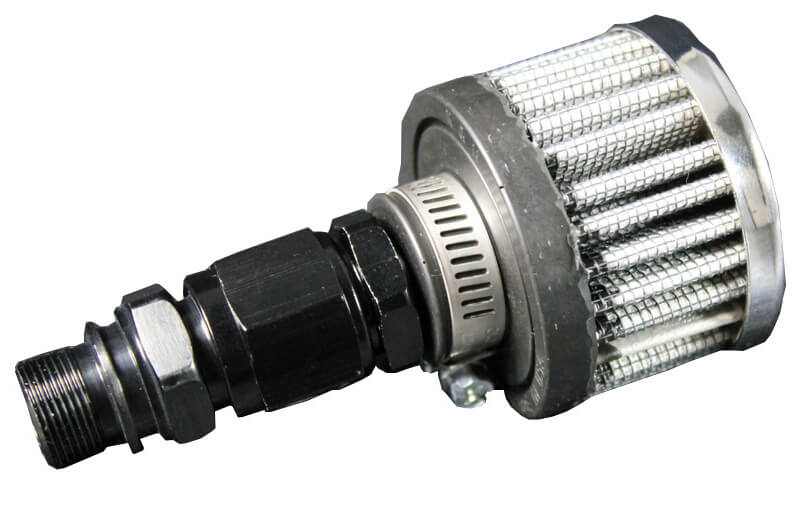 ulate fuel delivery knowing that crankcase gases will contaminate a certain percentage of the intake charge. Remove that flow, and you’re not “freeing up power”—you’re confusing the ECM. Idle quality suffers, fuel trims drift, and the only way to correct it is with tuning changes that erase any imagined benefit.
And let’s be clear: a PCV delete does not eliminate blow-by. It just dumps it outside instead of managing it.
The Legal Reality of a PCV Delete
There’s no gray area here. A PCV delete is illegal anywhere emissions laws exist—which is essentially everywhere. The PCV system is an emissions control device. Removing it and venting hydrocarbons directly into the atmosphere is a violation, regardless of whether your area performs inspections.
Additionally, a PCV delete vents raw fuel vapor, oil mist, and combustion byproducts into the engine bay. If your HVAC system isn’t locked in recirculation mode, those fumes get pulled straight into the cabin. If the kit uses a filter, congratulations—you’ve just added a new maintenance item that doesn’t actually solve anything.
Why a PCV Delete Doesn’t Stop Carbon Buildup
This is where the biggest myth lives.
The PCV system does not solely cause carbon buildup on intake valves in direct-injection engines. Even with a PCV delete, residual blow-by gases remain inside the engine after shutdown. As the engine heats up, those vapors migrate upward and condense on the intake valves anyway.
In other words, deleting the PCV system does not prevent carbon deposits. It simply removes a controlled evacuation path and replaces it with uncontrolled venting.
That’s why every claim that a PCV delete “solves” carbon buildup is flat-out false.
What are the supposed pros and cons of a PCV delete?
Pros to a PCV delete
1. Prevents Oil Contamination in the Intake— As the PCV system operates to recirculate blow-by, it also introduces oil mist into the intake manifold, which can coat the intake valves, throttle body, and other components with oil residue. This can reduce engine efficiency, especially in direct-injection engines, where the fuel does not wash over the intake valves to clean them.
By deleting the PCV system, enthusiasts aim to keep the intake system cleaner, which could potentially improve engine performance and longevity.
2. Improved Engine Performance and Reduced Detonation Risk— The theory here is that the presence of oil vapors in the combustion chamber can lead to detonation (knocking), which can harm the engine. By eliminating the PCV system, some users believe that the engine’s air/fuel mixture can be more precisely controlled, potentially leading to better performance, particularly in high-performance or heavily modified engines.
3. Simplification and Maintenance— Removing the PCV system can simplify the engine bay by eliminating hoses, valves, and other components. This can make maintenance and modifications easier and eliminate the possibility of a clogged PCV valve.
4. Personal Preference or Misinformation— Aesthetics: Some enthusiasts prefer the look of a cleaner engine bay without the PCV system. Sometimes, PCV deletes are done because it is a common trend in certain car
Cons to a PCV delete
1) It’s illegal— Deleting the PCV valve and venting blow-by into the atmosphere is illegal in every state, county, province, or country that has emissions laws, whether or not those areas require emissions testing.
2) Increased Pollution— The PCV system is an emissions control device. Removing it can increase hydrocarbon emissions, which is illegal in many jurisdictions and harmful to the environment.
3). The performance benefits are illusory— The supposed negative effects of recirculating blow-by are greatly exaggerated by companies selling these illegal PCV delete devices. For the vast majority of street vehicles, you won’t see any performance gains.
The Real Downsides of a PCV Delete
Once you strip away the marketing, the downsides are obvious. A PCV delete increases emissions, creates odors, causes idle instability, and provides no measurable performance gain on a street engine. Any horsepower claims are illusory, usually backed by dyno graphs that ignore correction factors or tuning changes.
Worse, you’re reverting your engine to 1960s-era pollution control. Carmakers moved away from atmospheric crankcase venting for very good reasons—engine longevity, emissions compliance, and safety among them.
Will a PCV delete improve performance?
No. Remember, the ECM expects blow-by and calculates the air/fuel mixture with it included. Installing the delete kit will adversely affect your idle performance. To compensate, you’ll have to perform a software update.
Will a delete kit eliminate carbon deposits on the intake valves?
No. Since the kit doesn’t eliminate blow-by gases, any remaining blow-by will rise to the top of the engine and still cause carbon deposits on the intake valves.
The kit is a complete waste of money and is illegal.
What the PCV System Actually Does (and Why Engines Need It)
The PCV system evacuates crankcase blow-by gases using intake vacuum and burns them safely in the combustion process. Blow-by is unavoidable. Piston rings have gaps, and during compression and combustion
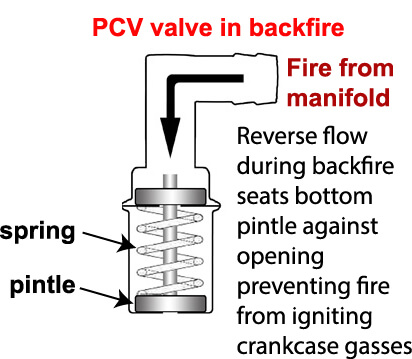
The PCV valve closes to prevent a backfire from igniting crankcase vapors and damaging your engine
fuel vapor, exhaust gases, water vapor, and oil mist slip past those gaps into the crankcase.
If that pressure isn’t relieved, it forces oil past seals, contaminates engine oil, and can even cause gasket failure. The PCV valve meters that flow and includes a one-way check to prevent backfires from igniting crankcase vapors—something early engines learned the hard way.
Why Oil Enters the Intake in the First Place
Oil vapor enters the PCV stream in two primary ways. First, fuel wash strips oil from the cylinder walls—especially in direct injection engines—and that oil becomes part of the blow-by mixture. Second, the PCV pickup location inside the valve cover is exposed to oil splash and vapor.
When those vapors re-enter the intake, oil can condense on the backside of intake valves. In port-injected engines, fuel spray cleaned the valves. In direct injection engines, it doesn’t—so carbon builds up.
Is an Oil Catch Can a Better Idea?
Yes—an oil catch can is a far better idea than a PCV delete, and it doesn’t require breaking the law.
An oil catch can is installed in line with the factory PCV system and acts as an oil separator. As blow-by gases pass through, oil vapor condenses and collects in the can instead of coating intake components. This reduces oil contamination without disrupting airflow modeling or ECM logic.
Is an oil catch can perfect? No. Most of what gets drained is actually water and fuel condensate, not pure oil. But that’s still contamination you don’t want in your intake.
Importantly, an oil catch can preserves crankcase evacuation, emissions compliance, and drivability—qualities a PCV delete forfeits.
Oil catch cans are oil separators
Aside from being slightly overkill, there are no downsides 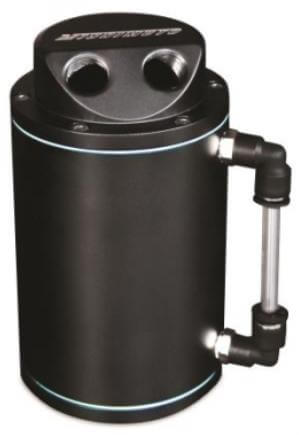 to installing a catch can. However, tuners and modders kid themselves that they’re really catching all that much oil. Most of what they’re draining from the catch cans is really fuel and water.
©, 2021 Rick Muscoplat
Posted on by Rick Muscoplat