
Sell Your Car Yourself and Make More Money
How to Sell Your Car Yourself and Make More Money Than a Trade-In
Quick Summary:
You’ll always make more money by selling your car yourself versus trading it in. It’s not as difficult as most people think. Here are the key steps, from getting read to sell, to handling the negotiations:
1) Clean it up and make it shine— Used car lots always detail their cars, so should you.
2) Make sure it’s up to date on maintenance— Sauvvy buyers will get it inspected, so make sure the fluids, belts, battery, brakes, and tires are in good shape.
3) Take great pictures— Shoot the front, back, sides, and the interior to show off its true condition.
4) Price it right— Use online sources to find out what you vehicle is really worth and start at the high end to give you room to negotiate
5) List it on free sites first— There’s no need to pay when you can list it for free (or a minimal fee) on Facebook Marketplace, Craigslist, Nextdoor, etc.
6) Expect crazy phone calls—Dealing with chiselers and con artists is part of the process, so don’t be surprised when they call. Just follow the rules I list in this article.
Article
When you trade in a car, the dealership must resell it for a profit—so they’ll offer you wholesale value, not market value. In contrast, when you sell your car yourself, you’re cutting out the middleman. You keep that profit margin. On average, you can make more money by selling your car versus trading it in—sometimes $2,000–$5,000 more, depending on the car’s value and condition.
That’s why it’s worth putting in the time to prepare, market, and present your car properly.
Clean and Detail Thoroughly
First impressions matter—a lot! A clean car always sells faster and nets you more cash. The truth is, most used-car buyers don’t know how to inspect a car’s mechanical systems, but they sure know what a clean car looks like! So get rid of the garbage. Then vacuum and clean the interior with upholstery and carpet shampoo, including door panels. After cleaning, coat all plastic surfaces with a vinyl protectant.
Don’t forget to scrub the door jambs, trunk, and under-hood area. If your headlights are cloudy, polish them. Replace worn mats—they’re a cheap upgrade that instantly improves the look.
Wax the exterior so it shines!— Then, move on to the exterior. Wash and wax the exterior, paying special attention to the wheels to remove all the brown brake dust. Check the condition of your headlights. If they’re cloudy, buy a headlight restoration kit and polish them back into shape.
Clean under the hood— I’ve written an article on how to clean your engine and under-hood areas. Find that engine cleaning story here. Buyers expect this.
Handle Minor Repairs and Maintenance
Before listing, I always change the oil, replace the engine air and cabin filters, top off fluids, and replace burned-out bulbs. Buyers may not be experts at car inspection, but they can spot neglect. If your tires are worn, replace them—fresh tires are one of the best return-on-investment upgrades when you sell your car yourself.
Measure The Tire Tread Depth on All Four Tires
Buyers love seeing evidence of good tires.
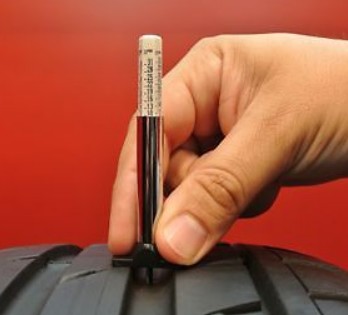
Buy a tire tread depth gauge at any auto parts store and measure the tread depth of each tire. Most new tires measure around 10/32”, and the minimum depth is 2/32.” If yours are 4/32” or less, you’ll probably get some pushback from the buyer.
So, you may make more money by buying a cheap set of tires and adding that to your ad as a selling point: BRAND NEW TIRES go a long way towards closing the deal.
Measure tread depth with a gauge and list the measurements and tread photos in your ad. If they’re new, say so—“Brand new tires!” is a powerful selling point that helps you make more money by selling your car versus trading it in.
Take great pictures
You can’t sell your car yourself without great photos. I always park my car in a well-lit area with a clean background and take multiple shots—front, back, sides, interior, trunk, engine bay, and close-ups of any highlights.
A clean under-hood shot shows you’ve cared for the car.
Before posting, blur your license plate for privacy.
Establish Trust By Providing a Carfax Report
Always get a Carfax or AutoCheck report. It’s cheap and makes your listing stand out. Post a screenshot or link in your ad. I refuse to provide “free reports” from shady sites—those are scams designed to steal your credit card information. Stick with reputable sources. This small step builds credibility and helps you make more money by selling your car rather than trading it in, because it reassures buyers that you’re honest.
AVOID THIS SCAM— Many buyers ask you to provide a car report from sources other than Carfax. This is a scam. These are fake pay-sites designed to capture your credit card information. The instant a potential buyer asks for a report from one of these services, you’re on notice that you’re dealing with a scammer. Stop communication with the person and move on to a legit buyer.
How to price your car
To get the value of your car, go to edmunds.com, kbb.com, and nada.com and enter your vehicle information to get its current value. KBB.com and edmunds.com both will tell you what the private party price is.
• Retail price is what your car would sell for on a car dealer’s lot. You will never get that as a private seller
• Trade-in price is what the dealer might give you if you trade it in on a new car.
• Private party price is often halfway between retail and trade-in, but not always.
Here’s an example of pricing for a 2015 Subaru Forester with 120,000 miles from Edmunds.com and KBB.com

Private Party pricing on a 2015 Subaru Forester from edmunds.com
[caption id="attachment_360109" align="alignleft" width="700"] Private party pricing from KBB.com for the same vehicle.
The selling price depends on your vehicle’s condition. Sellers often over-rate the condition of their vehicles. Most cars fall into the average category. However, if you’re convinced your car is in better shape, list it for the “Good” price. The “Outstanding” price is for showroom condition. That means no dings, scratches, stains, or other damage.
Where to List Your Car for Maximum Exposure
When I sell my car myself, I focus on where buyers actually shop:
Facebook Marketplace: It’s free and effective.
Craigslist: Still works for local sales, but beware of scammers.
Local visibility: A “For Sale” sign in a high-traffic shopping area still gets results.
Skip pay sites like Autotrader or Cars.com unless you’re selling a high-end vehicle. I’ve had far more success on Facebook Marketplace and Craigslist.
Where to sell your car — best places to list it for sale
Start with a free listing on the Facebook marketplace. Then, place an ad on Craigslist ($5). Don’t pay to list your car on sites like CarSoup or Autotrader because, in my opinion, they don’t work as well as Facebook and Craigslist.
Also, Put FOR SALE signs in the windows and park your car in a shopping center parking lot for several hours during peak shopping times.
Handling Buyer Calls and Negotiations Like a Pro
Get ready for ridiculous calls:
“Will you take $2,000 less?”
“What color is it?”
“Does it run?”
Stay calm and professional. I never negotiate price over the phone—only after the buyer sees and drives the car. My rule: Negotiate from the top down, not the bottom up. Start high, then reduce in small increments ($200–$300). This helps you make more money by selling your car versus trading it in while keeping control of the conversation.
Be prepared for the screwball phone calls
Here’s a sampling of the kinds of calls you can expect:
• “I saw your car (listing), will you take $2,000 less?” Answer: No.
• “How low will you go?”Answer: Come see the car and test drive it. If you like it, make an offer.
• “What color is it?” (even though you listed the color in the post
• “Does it run?” (even though you said it’s in excellent condition)
Don’t be surprised by those questions. Just answer and ask, “Are you interested in seeing the car?”
Follow these rules on how to negotiate the price with the buyer
Rule #1: Never negotiate the price of the car on the phone before the buyer has seen it. NEVER. Here’s why: If you come down in price on the phone, you’re signaling you’re desperate. Once the buyer shows up in person and test-drives the car, they’ll start negotiations all over again, starting from the lower price you agreed to on the phone.
If a caller offers you a price over the phone before you’ve seen the vehicle, just say, “I’d be happy to discuss your offer once you’ve seen and test-driven the vehicle.” Don’t back down from that! If they hang up, you haven’t lost anything because they were only going to low-ball you anyway.
Rule #2: Negotiate from the top down, not the bottom up. You list the car for $15,500, and the buyer offers you $13,000. You counteroffer at $15,200. Have the seller raise their offer to your price. Drop your price in only $300 increments.
How to Handle a Pre-Purchase Inspection Request
Sellers always fear that the inspection will reveal thousands of repairs and that the buyer will reopen negotiations. However, if you say no to the inspection, the buyer will be even more suspicious that you’re hiding something. So, say yes to the inspection, subject to the terms listed below. Then expect the shop to find items that need attention. After all, it’s a used car. As long as the inspection shows minor repairs, there’s no need to reduce the price. If they find major items, you will have to adjust the price.
• The shop must be licensed and within 10 miles of your location.
• The buyer pays the inspection fee upfront.
• You drive it to the shop and wait while it’s being inspected.
Completing the Sale Safely
Cashier’s checks and cash can be faked. So, I always meet the buyer at their bank so I can watch the teller issue the cashier’s check or witness the cash withdrawal. Then, head straight to the DMV to transfer the title. Never hand over the keys until payment is verified.
Read this post on how to not get screwed when collecting the money
©, 2016 Rick Muscoplat
.
Posted on by Rick Muscoplat