
Signs of a Bad Wheel Bearing
Learn the symptoms of a bad wheel bearing
Wheel bearings are crucial components in your vehicle’s wheel assembly, providing smooth, efficient, and quiet rotation of the wheels. When wheel bearings fail, they can lead to many problems, affecting vehicle performance and safety and potentially leading to costly repairs. Recognizing the signs of a bad wheel bearing early can prevent further damage and ensure your vehicle remains safe to drive. Here’s a comprehensive guide on how to tell if a wheel bearing is bad.
The first symptom of a bad wheel bearing is an unusual noise
One of the most common and noticeable signs of a bad wheel bearing is unusual noises emanating from the wheel area. These noises can vary but are often described as:
• Grinding or Growling Noise—This sound is typically heard when the vehicle is in motion. It often gets louder as the vehicle accelerates or the weight shifts, such as during turns or lane changes on the highway. The noise is caused by metal-to-metal contact, which occurs when the bearing loses its lubricant or is damaged.
• Humming or Rumbling Noise— Similar to the sound of a washing machine during the spin cycle, this noise usually becomes more pronounced at higher speeds. It can be an indication of a worn wheel bearing.
• Squealing or Chirping Noise— While less common, some wheel bearings can produce a high-pitched squealing or chirping noise if they’ve been running for a low period with no lubricant.
A bad wheel bearing can also produce vibration
Another indicator of a failing wheel bearing is a noticeable vibration. This can be felt through the steering wheel, the floorboard, or even the seats. The vibration is usually more apparent at higher speeds and can vary depending on the severity of the bearing damage.
You can feel play in the wheel on severely worn wheel bearings
Wheel play, also known as wheel wobble or looseness, is a positive sign of a bad wheel bearing. To check for wheel play:
• Jack up the vehicle so that the wheel you want to check is off the ground.
• Grab the wheel at the top and bottom and attempt to rock it back and forth.
• If there is noticeable movement or play, the wheel bearing is worn out.
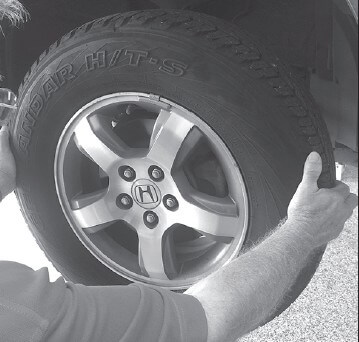
Grab the tire at 3:00 and 9:00 and rock it to check for play
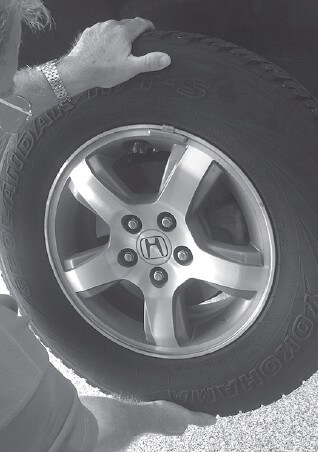
Check wheel bearing by placing hands at 12:00 and 6:00 and rocking wheel in and out
NOTE: A wheel bearing has to be severely worn to feel play using this method. If you don’t feel any play but hear the noises listed above, the bearing can still be bad, just not bad enough to feel play yet.
False ABS Activation can be a sign of a worn wheel bearing
Many modern vehicles are equipped with anti-lock braking systems (ABS) that use wheel speed sensors located near the wheel bearings. A failing wheel bearing can affect the readings from the wheel speed sensors, triggering a false ABS activation or an ABS warning light on the dash. If you notice either of these symptoms, get the trouble code read and check out the sensor and wheel bearing.
Finding which wheel bearing is bad is the hard part
Diagnosing which wheel bearing is half the job, and lots of professional technicians replace the wrong bearing. Here are some ways to narrow down the culprit.
Check for a bad wheel bearing with an automotive stethoscope
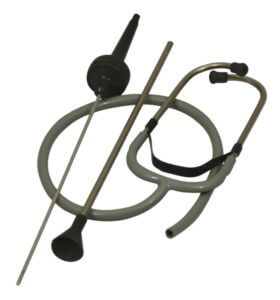
Touch the probe of the stethoscope to the steering knuckle or rear knuckle while you spin the wheel. If you hear grinding, you’ve found the culprit
With the vehicle on jack stands, rotate the wheel by hand and listen for bearing noise. If you hear noise, use an automotive stethoscope to find the location of the noise. Touch the stethoscope probe to the steering knuckle. Read this post on how to use an automotive stethoscope
Check for wheel bearing seal leakage
Many wheel bearings are permanently sealed. But if the seal deteriorates, the grease leaks out, and water gets in. Grease residue around the seal is a sign of bearing failure. A wheel bearing with seals should never show signs of leakage. If it does, it’s bad.
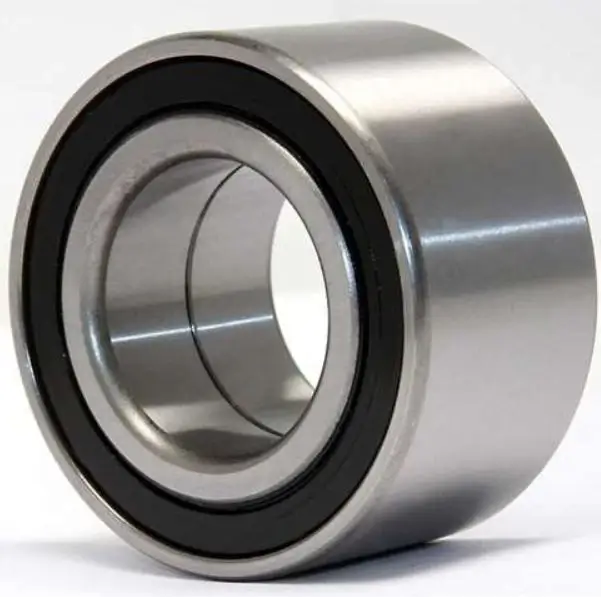
The black seal keep the grease in and water out. If it’s leaking the bearing must be replaced
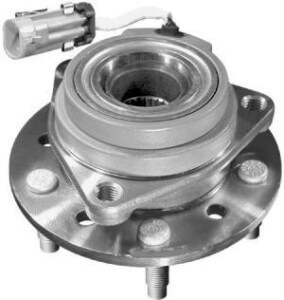
Wheel bearing hub assembly
What causes a wheel bearing to fail? See this post
©, 2015 Rick Muscoplat
Posted on by Rick Muscoplat