
Understanding what causes wheel bearing noise
Top 5 Reasons Your Wheel Bearing Makes Noise
Quick Summary:
That faint humming or growling you hear isn’t just road noise; it’s a warning that one of your wheel bearings is failing.
• Wheel bearing noise is caused by bearing seal failure that allows water into the bearing, flushing out the grease that reduces friction.
• Driving on harsh roads with potholes or impacting curbs
• Improper installation with improper bearing preload torque
What Is Wheel Bearing Noise and Why It Matters
When a wheel bearing begins to fail, the internal steel balls or rollers no longer glide smoothly along their raceways. Instead, they scrape, grind, or chatter—creating the distinct wheel bearing noise that most drivers describe as a low-pitched hum, growl, or roar that changes with vehicle speed.
That noise isn’t just annoying; it’s a sign of friction and heat building up inside the bearing. The longer you drive with that noise, the more damage occurs—not only to the bearing itself but also to the hub, ABS sensor ring, and even nearby suspension components.
Older wheel bearings
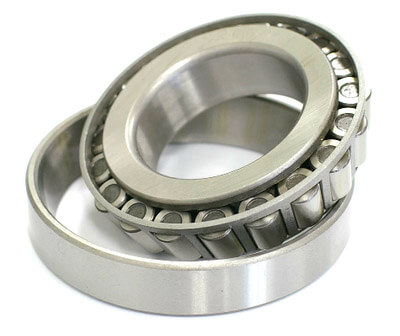
Tapered wheel bearing
had a tapered design with a separate bearing for the inner and outer portions of the wheel hub. Newer wheel bearing styles are single units pressed into the hub. That style incorporates two rows of ball or tapered bearings and two races. Most have an integral grease seal to keep water and road grit out of the bearing. Then there are integral hub units that incorporate the bearing and wheel hub in a single unit.
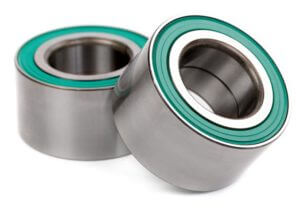
sealed wheel bearing
Here’s how they fail:
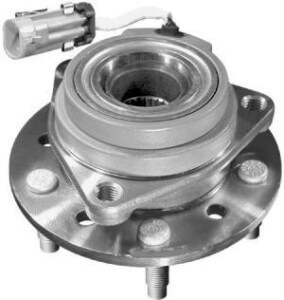
Wheel bearing hub assembly
1. Lack of Lubrication or Contaminated Grease— Wheel bearings rely on high-temperature grease to prevent metal-to-metal contact. When that grease breaks down from age, heat, or water intrusion, the rolling elements start to grind against the raceways—producing that telltale humming or growling wheel bearing noise.
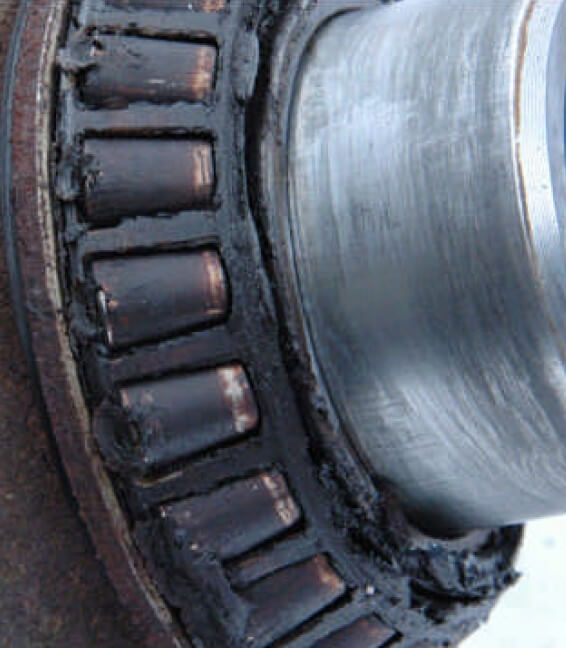
Failed seal on wheel bearing allows water in, which degrades the grease and causes early failure
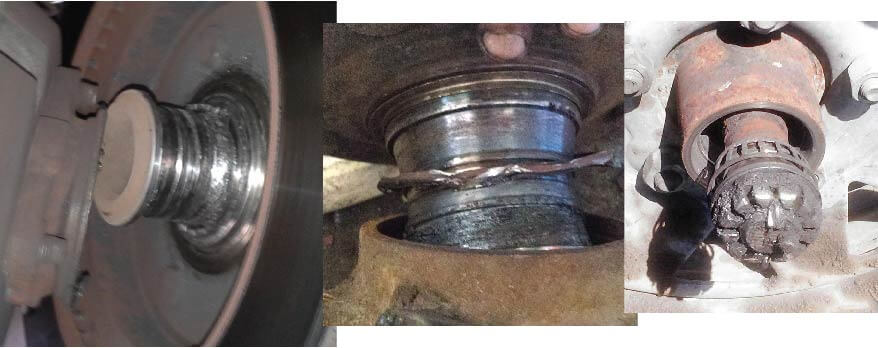
2. Improper Torque During Installation— Over-tightening or under-tightening the axle nut is one of the fastest ways to destroy a new bearing. The preload inside the bearing must be set precisely. Too much torque squeezes the rollers too tightly, causing premature wear; too little allows excessive play that beats up the raceways.
3. Impact Damage from Potholes or Curbs— A hard hit against a pothole or curb can dent the bearing races or damage the seals. Even a tiny flat spot on the raceway will cause a rhythmic vibration that turns into a humming or rumbling sound as you accelerate.
4. Unbalanced or Misaligned Wheels— An unbalanced wheel or misalignment causes vibration that constantly stresses the bearing. Over time, this leads to uneven wear patterns that make the bearing howl or drone at certain speeds.
5) Custom wheels, wheel spacers and wheel offsets— Yeah, they look cool, but they also change the wheel/bearing geometry, causing early bearing failure.
What Does Wheel Bearing Noise Sound Like?
You’ll usually first notice a wheel bearing noise as a faint hum or growl that gets louder the faster you drive. It often changes pitch or intensity when turning the steering wheel slightly left or right.
Here’s a quick breakdown of common sounds:
Humming or Growling: Classic sign of a bad bearing—gets louder with speed.
Grinding or Roaring: Indicates significant internal damage.
Rhythmic Drone: Usually caused by pitted bearing raceways.
Clicking or Popping: Could mean improper axle torque or a damaged CV joint.
When you steer slightly left or right, note whether the noise gets louder or quieter. If the noise increases when turning left, the right wheel bearing is likely bad—and vice versa.
For information on how to locate the wheel bearing causing the noise, see this post
©, Rick Muscoplat
Posted on by Rick Muscoplat