
The Difference Between Regular and Premium Gas
The Difference Between Regular and Premium Gas: What Drivers Need to Know
Quick Summary
If you’re trying to understand the difference between regular and premium gas, here’s the short version:
• The main difference is octane rating, which measures a gasoline’s resistance to engine knock or detonation.
• Premium gas does not automatically contain more power than regular gas.
• Premium fuel does not inherently burn slower or faster than regular gasoline.
• Premium gas does not automatically contain more detergent simply because it has a higher octane rating.
• If your vehicle requires premium gas, use it.
• If your vehicle merely recommends premium, you may gain some performance or efficiency under certain conditions, but regular may still be acceptable.
• If your engine is designed for 87-octane regular gasoline, filling it with 91- or 93-octane premium usually provides little or no meaningful benefit.
• Buying premium for an engine that does not need it is often just paying for knock resistance the engine cannot use.
I’ve heard the same question at gas stations for years: Is premium gas actually better than regular gas?
It’s understandable why people ask. Premium costs more, its button sits at the top of the pump, and the word “premium” certainly makes it sound like you’re buying a superior product. But gasoline doesn’t work that way.
Once you understand what octane actually does, the difference between regular and premium gas becomes much easier to understand—and several long-running gasoline myths fall apart at the same time
What Is the Difference Between Regular and Premium Gas?
The fundamental difference between regular versus premium gasoline is the fuel’s octane rating.
In much of the United States, you’ll commonly see:
• Regular: 87 octane
• Mid-grade: 89 octane
• Premium: typically 91 to 93 octane
The exact numbers can vary by location and fuel supplier.
Higher octane does not mean the gasoline contains dramatically more energy. It means the fuel can better resist abnormal combustion, particularly detonation under high cylinder pressure.
That’s why premium gasoline exists.
Engines with high compression ratios, turbochargers, superchargers, aggressive ignition timing, or other performance-oriented designs may create conditions where lower-octane gasoline is more likely to knock.
Higher-octane fuel gives those engines more resistance to that abnormal combustion.
So when I explain regular gas vs premium gas, I put it this way:
Premium isn’t stronger gasoline. It’s harder to knock.
What Does Octane Actually Mean?
Octane is one of the most misunderstood numbers at the gas pump.
A higher octane rating means the gasoline can withstand greater pressure and temperature before it begins to behave in ways the engine designer doesn’t want. That becomes important inside the combustion chamber.
Under normal operation, the spark plug fires at a carefully controlled moment. A flame front begins at the spark plug and travels through the compressed air-fuel mixture in a predictable way.
The expanding gases push the piston downward.
That’s normal combustion.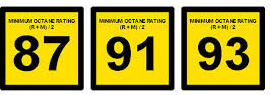
Problems begin when portions of the mixture start burning at the wrong time or in the wrong way.
And that leads us to two terms that are often confused: detonation and pre-ignition.
Detonation vs Pre-Ignition: Why Premium Gas Exists
People often use “knock,” “pinging,” “detonation,” and “pre-ignition” as if they all mean exactly the same thing.
They don’t.
What Is Detonation?
Detonation happens after the spark plug has fired.
As the normal flame front travels across the cylinder, pressure and temperature rise. Under the wrong conditions, pockets of the remaining unburned air-fuel mixture can spontaneously ignite before the normal flame front reaches them. This creates multiple combustion events in the cylinder.
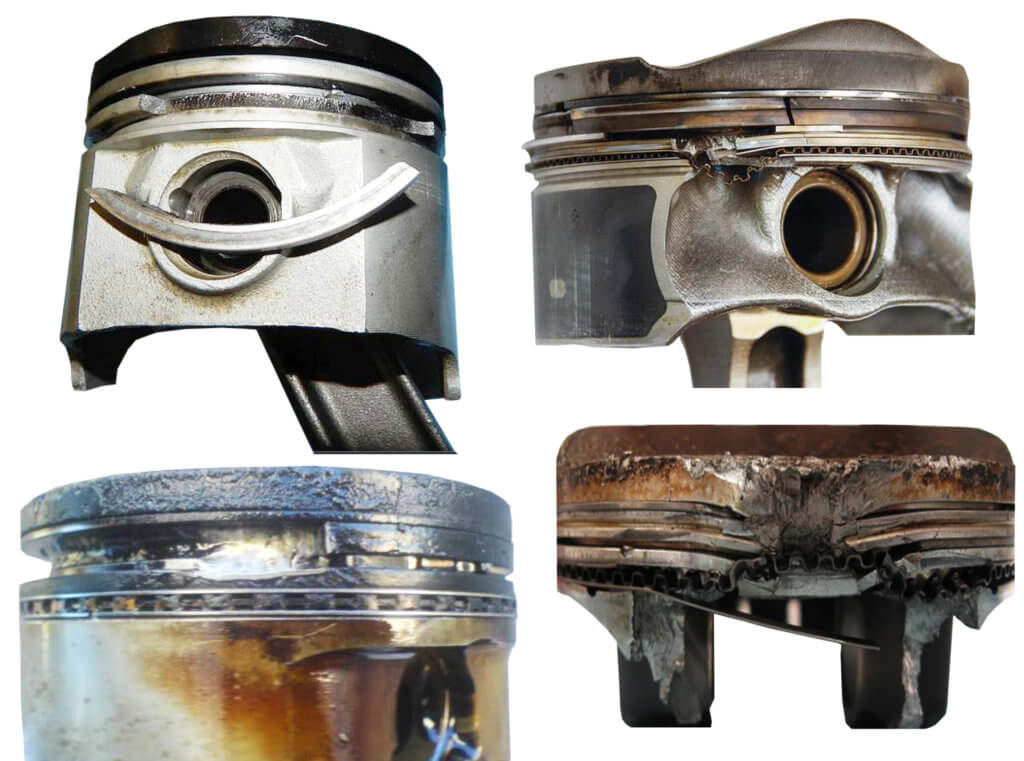
Those pressure waves can collide and create the metallic pinging or knocking sound associated with detonation.
Repeated severe detonation can damage:
• Pistons
• Piston ring lands
• Bearings
• Cylinder-head components
• Other internal engine parts
This is precisely where higher-octane gasoline helps.
Premium gas resists this unwanted spontaneous combustion.
What Is Pre-Ignition?
Pre-ignition is different.
Pre-ignition occurs when the air-fuel mixture ignites before the spark plug fires. A hot spot inside the combustion chamber can ignite the mixture early. Possible sources can include excessively hot deposits or components.
Pre-ignition can create extremely high cylinder temperatures and pressures and can cause severe engine damage.
Higher octane is primarily discussed in connection with detonation resistance, so it’s important not to treat octane as a cure for every abnormal-combustion problem.
That distinction matters in certain engines, but in many others, it doesn’t matter at all.
Does Premium Gas Have More Power Than Regular Gas?
This is probably the most common myth I hear.
No, premium gas does not inherently contain more horsepower.
Gasoline doesn’t create horsepower merely because the number on the pump changes from 87 to 93.
Premium gasoline can allow an engine designed to take advantage of higher octane to run ignition timing, boost pressure, compression, or calibration strategies that produce more power.
That difference matters.
Suppose you have a turbocharged engine designed around premium fuel.
With high-octane fuel, the engine may be able to run the ignition timing and boost strategy its engineers intended.
Put lower-octane fuel in that same engine, and the knock-control system may detect abnormal combustion and reduce timing or make other adjustments.
The engine may then produce less power.
That doesn’t mean premium fuel suddenly “added horsepower.”
It means the engine could take advantage of the fuel’s higher knock resistance.
Will Premium Gas Make a Regular Car Faster?
Usually, no.
If your engine is engineered to produce full power on 87 octane, putting 91 or 93 octane in the tank generally won’t unlock hidden horsepower.
The engine already has enough knock resistance with regular gasoline.
You’re simply buying additional octane capability the engine may not need.
That is why the question of whether premium gas gives you more horsepower needs context.
In an engine designed to benefit from higher octane, potentially yes.
In an ordinary engine calibrated for regular gasoline, generally no meaningful improvement should be expected.
Does Premium Gas Have More Detergent Than Regular Gas?
This myth deserves more attention because people often confuse octane rating with fuel quality.
Higher octane does not automatically mean more detergent.
Octane and detergent are two different characteristics of gasoline.
Octane tells you about the fuel’s resistance to knock.
Detergent additives are intended to help control deposits in areas such as fuel injectors and intake-system components, depending on the engine and additive chemistry.
A fuel supplier may choose to formulate certain grades with different additive packages, but you cannot assume:
93 octane = more detergent than 87 octane.
That conclusion does not follow from the octane number.
If deposit-control additives matter to you, pay attention to the quality and additive standards of the gasoline brand rather than assuming that the most expensive octane grade automatically cleans better.
Is Premium Gas Cleaner Than Regular Gas?
Not simply because it is premium.
This is where marketing language often causes confusion.
Premium gasoline may be sold as a flagship grade, and some companies may emphasize additives or cleaning claims. But the word premium primarily identifies an octane category, not a universal cleanliness rating.
High-quality regular gasoline can contain an effective detergent package.
Premium gasoline from a particular supplier may contain a different additive package.
But you cannot look at the octane sticker alone and determine which fuel has more detergent.
Does Premium Gas Burn Slower Than Regular Gas?
No—not in the simplistic way this myth is usually presented.
I often hear people say:
“Premium burns slower, so it makes more power.”
That’s not what octane means.
Octane rating is about resistance to knock, not a universal measure of flame speed.
In a properly operating engine, both regular and premium gasoline are intended to burn in a controlled manner after the spark plug fires.
The misunderstanding often comes from what happens during detonation.
If unburned portions of the fuel mixture ignite independently in several locations, the total combustion event can become much more violent.
But that doesn’t mean regular gasoline is inherently a “faster-burning fuel.”
It means abnormal combustion has occurred.
Think about lighting a pile of dry leaves.
If you light it in one place, the flame spreads outward.
Light the same pile in six places simultaneously, and the pile will be consumed more rapidly.
The leaves themselves didn’t suddenly acquire a different burn rate. You simply created multiple ignition points.
That’s a useful way to visualize detonation.
Does Premium Gas Burn Hotter?
Another common myth is that premium gasoline burns substantially hotter simply because it has a higher octane rating. Again, octane isn’t a heat rating.
The octane number indicates knock resistance.
Combustion temperature depends on many other factors, including:
• Air-fuel ratio
• Engine load
• Compression
• Ignition timing
• Boost pressure
• Combustion-chamber design
• Engine calibration
Simply switching from 87 to 93 octane does not mean you’re pouring “hotter-burning” fuel into the engine.
Does Premium Gas Contain More Energy?
Not necessarily.
This is another place where price creates the wrong impression.
Premium costs more, so many drivers assume it must contain significantly more energy per gallon. But octane rating doesn’t measure energy content.
Actual gasoline energy content can vary with fuel composition and formulation, but you should not assume that the highest-octane gasoline at a pump automatically contains the most usable energy.
Higher price mainly reflects the cost of producing and blending fuel to achieve the required octane rating and market positioning—not a guarantee that you’re buying extra horsepower in liquid form.
Does Premium Gas Improve Gas Mileage?
Sometimes—but not for the reason people think.
If your engine is specifically calibrated to take advantage of premium gasoline, higher octane may allow the engine management system to use more favorable ignition timing or other operating strategies. Under those circumstances, premium can sometimes improve performance or efficiency.
But if your vehicle is designed to run normally on regular 87-octane gasoline, you shouldn’t automatically expect better fuel economy from premium.
And even when you get a small mileage improvement, the higher price per gallon may outweigh the savings.
That’s why I don’t ask only:
“Will premium improve MPG?”
I ask:
“Was this engine designed to gain something from higher octane?”
That’s the question that actually matters.
Premium Required vs Premium Recommended
This distinction may be the most useful thing you can learn in the entire regular-versus-premium gas discussion.
The owner’s manual may say premium fuel is either required or recommended. Those words matter.
If Premium Gas Is Required
If the manufacturer specifies premium as required, use the specified octane.
The engine was designed and calibrated around that fuel requirement.
Yes, modern knock sensors and engine computers may sometimes protect the engine if lower-octane fuel is accidentally used.
But protection isn’t the same as saying lower-octane fuel is the correct choice.
The engine may have to reduce ignition timing, boost, or other performance parameters to protect itself.
You may experience:
• Reduced horsepower
• Reduced throttle response
• Lower fuel economy
• Increased knock-control intervention
• Possible long-term consequences if inappropriate fuel is used repeatedly under demanding conditions
When the manufacturer says premium is required, I wouldn’t try to outsmart the engineering team to save a few dollars at the pump.
If Premium Gas Is Recommended
“Premium recommended” is different.
In many vehicles, the manufacturer allows regular gasoline but specifies that premium may provide maximum rated horsepower, torque, or efficiency.
That means the engine management system can operate on regular under allowable conditions. If you’re deciding whether premium gas is worth it when recommended, think about how you drive.
Premium may make more sense if you:
• Frequently accelerate hard
• Tow or carry heavy loads
• Drive in very hot conditions
• Want maximum advertised performance
• Own a high-output turbocharged engine
• Regularly drive under high-load conditions
If you mostly commute gently and the manufacturer explicitly permits regular fuel, the performance difference may matter much less.
Always follow the owner’s manual for your specific vehicle.
What Happens If You Put Regular Gas in a Premium Car?
This depends on whether premium is required or merely recommended, and how the engine is calibrated.
Modern engines commonly use one or more knock sensors. When abnormal combustion begins, those sensors detect vibration patterns associated with knock and report them to the engine computer. The computer can respond by adjusting ignition timing and, on some engines, other operating parameters.
The objective is to protect the engine.
But there’s a common misconception here.
People sometimes say, “The computer will just adjust, so fuel grade doesn’t matter.” That’s not the right conclusion. The computer is compensating for a fuel limitation. That compensation may reduce performance and efficiency.
Think of knock control as a safety and optimization system—not permission to permanently ignore the manufacturer’s fuel requirement.
What Happens If You Put Premium Gas in a Regular Car?
Usually, not much.
If your car requires only 87 octane and is engineered to perform fully on regular gas, putting 91 or 93 octane in the tank generally won’t hurt it.
But it usually won’t transform it either.
You should not expect premium gasoline to automatically:
• Add horsepower
• Clean the engine dramatically better
• Make acceleration noticeably stronger
• Extend engine life
• Burn slower
• Run significantly cooler
• Increase MPG enough to justify the cost
Your engine doesn’t receive bonus points for octane it doesn’t need.
Is It Okay to Mix Regular and Premium Gas?
Generally, if both fuels are gasoline grades approved for the vehicle, mixing different octane grades simply results in a blended effective octane somewhere between the two. That’s essentially the idea behind mid-grade gasoline.
However, if your vehicle specifically requires a minimum octane rating, you still want the resulting fuel mixture to meet the manufacturer’s requirement.
Don’t rely on guesswork when your owner’s manual specifies a minimum.
Is Mid-Grade Gas Better Than Regular?
Not automatically.
Mid-grade gasoline usually falls between regular and premium in octane rating. If your vehicle requires 87 octane, buying 89 octane isn’t inherently better.
If your vehicle requires or recommends an octane higher than regular provides, mid-grade may or may not meet that requirement, depending on the specified minimum.
Again, the owner’s manual matters more than the pump’s marketing label.
Do Premium Gas Clean Fuel Injectors Work Better?
Not because it has more octane.
This myth is closely related to the detergent misconception. Fuel injector cleanliness depends primarily on detergent additive chemistry and fuel quality, not whether the octane number says 87 or 93.
If one particular premium formulation contains a stronger additive package than that supplier’s regular fuel, there may be a difference between those specific products. But that is a formulation decision made by the fuel company. It is not an inherent property of premium gasoline.
Can Premium Gas Remove Carbon Deposits?
Don’t count on premium octane to clean carbon deposits. High octane and carbon removal are separate issues.
Some gasoline additive packages are designed to help control certain types of deposits, but switching from regular to premium doesn’t automatically dissolve years of combustion-chamber or intake-valve carbon.
And on direct-injection engines, gasoline may not even wash across the back of the intake valves the way it does in a traditional port-injected engine.
So the advice that “just run a few tanks of premium and it will clean everything out” is far too simplistic.
Can Old Cars Benefit From Premium Gas?
Sometimes—but age alone isn’t the reason. An old engine does not automatically need premium fuel. The original fuel requirement still matters.
However, changes in the engine over time—such as deposits, mechanical issues, altered compression characteristics, or cooling-system problems—can sometimes contribute to knock.
If an engine that originally ran correctly on regular fuel suddenly begins knocking on the manufacturer’s recommended octane, I don’t automatically treat premium gas as the repair.
I look for the underlying problem.
Higher octane may mask a symptom.
It doesn’t necessarily fix the cause.
What About Turbocharged Engines?
Turbocharged engines deserve special attention because boost effectively forces more air into the cylinders, increasing cylinder pressure.
Greater cylinder pressure can increase the tendency toward knock.
That’s one reason many performance-oriented turbocharged engines require or recommend premium gasoline.
But turbocharged doesn’t automatically mean premium is required.
Manufacturers can design turbocharged engines around different fuel grades.
Some are engineered to produce rated output on regular.
Others require high octane.
Some allow regular but develop maximum rated power on premium.
That’s why general internet advice such as “all turbos need premium” is unreliable. Read the fuel requirement for your exact vehicle.
What About High-Compression Engines?
Higher compression can increase thermal efficiency, but it can also make knock resistance increasingly important. Compressing the air-fuel mixture more aggressively raises pressure and temperature inside the cylinder.
That can increase the need for higher-octane fuel. But once again, engine design matters.
Modern combustion chambers, fuel injection, valve timing, ignition control, exhaust-gas recirculation strategies, and sophisticated computer controls allow engineers to do things that simple compression-ratio rules don’t fully capture.
Don’t select octane based only on a compression-ratio number you found online. Follow the manufacturer’s requirement.
Does Premium Gas Protect Your Engine Better?
Only when the engine needs the additional knock resistance.
That’s the qualification that often gets left out.
If your engine requires high octane, premium helps protect it from the abnormal combustion that can occur with insufficient octane.
In that context, premium absolutely matters.
But if an engine runs properly on regular gasoline without knock, higher octane doesn’t magically create an extra layer of mechanical protection.
The word “premium” should not be confused with “engine insurance.”
Does Regular Gas Cause Engine Knock?
Regular gasoline does not inherently cause knock. Insufficient octane for the engine’s operating conditions can contribute to detonation. That’s different.
An engine specifically designed for 87 octane should normally operate correctly on appropriate-quality 87-octane fuel.
An engine engineered for a higher minimum octane may knock or require aggressive knock-control intervention if you use lower-octane fuel.
So the correct statement isn’t:
“Regular gas causes knock.”
It’s:
“Fuel with insufficient octane for the engine and operating conditions can increase the likelihood of knock.”
Myth: Premium Gas Is Just Better Gas
This is the myth behind almost every other premium-fuel myth. A higher price doesn’t automatically mean it’s universally better.
Premium gasoline is better at resisting knock.
That’s what you’re paying for.
Think about it like buying a tool.
A 3/4-inch torque wrench may cost more than a small ratchet, but that doesn’t mean you should use it for every fastener on the car. Different tools solve different problems. Premium fuel is much the same.
It’s the correct fuel when the engine needs the octane capability.
It’s not automatically the correct fuel for every engine.
Myth: Premium Gas Makes Any Engine Run Smoother
People frequently report that their car “feels smoother” after switching to premium. Sometimes there may be a legitimate explanation—particularly if the engine had been experiencing knock correction on lower-octane fuel.
But subjective impressions are difficult to separate from expectation.
If the engine is designed for regular gasoline, is running correctly, and isn’t knock-limited, don’t assume a smoother sensation automatically means the premium fuel improved combustion.
Modern engines constantly vary operating parameters, and driving conditions rarely repeat perfectly from one tank to the next.
Myth: You Should Occasionally Run Premium to Clean the Engine
No universal maintenance rule says an engine designed for regular gasoline needs an occasional tank of premium octane to “clean itself out.”
If you’re concerned about deposit control, focus on:
• Using the correct fuel
• Buying appropriate-quality gasoline
• Maintaining the engine properly
• Repairing misfires and fuel-system problems promptly
• Following manufacturer maintenance recommendations
Octane isn’t a cleaning service.
Myth: Premium Gas Lasts Longer in the Tank
Premium’s octane rating doesn’t inherently mean the gasoline stays fresh much longer than regular gasoline. Fuel aging depends on storage conditions, formulation, exposure to air and moisture, temperature, and time.
If you store gasoline for extended periods, storage practices and fuel stability matter more than whether the pump said regular or premium.
Myth: Higher Octane Means Higher Quality
This one is worth repeating because it influences so many buying decisions.
Octane rating and overall fuel quality are not the same measurement.
A higher octane number tells you one primary thing: greater knock resistance.
It doesn’t automatically tell you:
• How much detergent is present
• How fresh the gasoline is
• How well the station maintains its tanks
• Whether the fuel contains more energy
• Whether your engine will make more horsepower
• Whether your MPG will improve
Octane is one specification—not an overall report card.
Which Gas Should You Put in Your Car?
I use a very simple decision process.
If Your Owner’s Manual Says Regular 87 Is Required
Use regular gasoline that meets the manufacturer’s specification.
There is usually no compelling reason to pay extra for premium solely because you believe it is better fuel.
If Your Manual Says Premium Is Recommended
Regular may be permitted, but premium may offer better performance or efficiency.
Decide whether those benefits matter enough to justify the added cost.
If Your Manual Says Premium Is Required
Use premium at or above the specified minimum octane.
That’s the fuel the engine was designed around.
If You Don’t Know
Check:
• The owner’s manual
• The fuel-filler door
• The fuel-cap label, where applicable
• Reliable manufacturer information for the exact vehicle
Don’t choose based on what your neighbor uses or what an online forum says another trim level requires.
Regular vs Premium Gas: Which One Saves More Money?
This sounds like an easy question, but there’s more to it than the price displayed on the pump. If your vehicle performs identically on regular fuel, regular is clearly the economical choice.
If your vehicle can use either grade but gets slightly better fuel economy on premium, compare the percentage change in MPG with the percentage increase in fuel price.
For example, if premium costs dramatically more but improves fuel economy only slightly, you’re still spending more per mile.
The financial calculation should be:
Cost per mile = price per gallon ÷ miles per gallon
That’s a better way to evaluate premium fuel than simply looking at whether MPG went up.
The Difference Between Regular and Premium Gas: My Bottom Line
After years of hearing people debate regular versus premium gas, I think the confusion largely comes from one word:
Premium. We naturally hear that word and assume it means better.
But in gasoline, premium really means higher octane.
Higher octane means greater resistance to knock.
That’s the important difference.
Premium gasoline isn’t automatically more powerful, cleaner, slower-burning, hotter-burning, more energy-dense, or better for every engine.
If your engine requires higher octane, premium is absolutely the correct fuel.
If your engine can benefit from premium but does not require it, the decision becomes a balance between performance and cost.
And if your engine was designed to deliver everything it has on 87-octane regular gasoline, paying for 91 or 93 usually means you’re buying a capability your engine doesn’t need.
So the next time you’re standing at the pump wondering whether premium gas will make your car run better, don’t let the price or the name make the decision.
Read what the manufacturer requires.
That’s the octane your engine was engineered to use.
Regular vs Premium Gas FAQ
Is premium gas better than regular gas?
Not universally. Premium gasoline has a higher octane rating and therefore greater knock resistance. Whether that makes it “better” depends on what your engine requires.
Does premium gas make your car faster?
Only if the engine is designed to take advantage of higher octane. An engine calibrated for regular gasoline generally won’t gain meaningful horsepower simply from switching to premium.
Does premium gas have more detergent?
Not automatically. Detergent additives and octane rating are different characteristics. A fuel supplier may use different additive packages between grades, but higher octane by itself does not mean more detergent.
Does premium gas give better gas mileage?
It can in an engine designed to benefit from higher octane, but it isn’t guaranteed. Engines designed for regular often show little or no meaningful MPG benefit.
Does premium gas clean your engine?
High octane itself is not an engine cleaner. Deposit-control performance comes from detergent additives and fuel formulation, not octane alone.
Can premium gas hurt an engine designed for regular?
Using a higher octane than required generally isn’t harmful when the fuel otherwise meets the manufacturer’s requirements. The bigger issue is that you may spend money without getting a measurable benefit.
Is 93 octane better than 87?
It has greater knock resistance. Whether it is better for your vehicle depends on the manufacturer’s octane requirement.
Does regular gas burn faster than premium?
Not simply because it has a lower octane rating. Octane measures resistance to abnormal combustion, not a universal fuel burn-speed ranking.
What happens if I accidentally put regular gas in a premium car?
The effect depends on the vehicle and whether premium is required or recommended. Modern engine controls may reduce knock by altering operation, but you should follow the manufacturer’s specified minimum octane.
Should I use premium gas in a turbo engine?
Use whatever octane the manufacturer specifies. Some turbocharged engines require premium, some recommend it, and others are designed to run normally on regular gasoline.
©, 2021 Rick Muscoplat
Posted on by Rick Muscoplat