
Common Causes of Engine Overheating
Why your car overheats and what to do about it
Quick Summary
The common causes of engine overheating include:
• Low coolant
• Radiator fan failure
• Stuck thermostat
• Clogged radiator
• Failing water pump
• Blown head gasket
• Cooling system electrical problems.
However, many drivers are surprised when they experience engine overheating even when the coolant is full. In those cases, the problem is often restricted coolant flow, a failed radiator fan, a bad thermostat, trapped air, or a worn water pump. The key takeaway is simple: if your engine overheats, stop driving immediately. Continued operation can warp cylinder heads, damage the head gasket, and lead to repairs costing thousands of dollars.
The Most Common Causes of Engine Overheating
As an ASE Master Technician who’s diagnosed hundreds of overheating complaints over the years, I can tell you that overheating rarely happens without a reason. Modern cooling systems are remarkably reliable, but when one component fails, engine temperatures can rise very quickly.
The challenge is that many different problems can produce the same symptom: a temperature gauge climbing into the danger zone.
Let’s look at the most common causes of engine overheating and how I diagnose them.
1) Low Coolant Is Still the Number One Cause — When someone tells me their vehicle is overheating, the first thing I check is the coolant level.
A properly functioning cooling system is sealed. It shouldn’t consume coolant under normal conditions. If coolant is low, there’s usually a leak somewhere in the system.
Common Coolant Leak Sources
• Cracked radiator hoses
• Leaking heater hoses
• Rusted metal coolant lines
• Cracked plastic fittings
• Radiator leaks
• Water pump seal failure
• Heater core leaks
• Head gasket leaks
Even a small coolant leak can eventually lower the coolant level to the point where proper heat transfer is prevented.
Signs of Low Coolant
• Sweet coolant smell
• Puddles under the vehicle
• Low coolant reservoir level
• Temperature fluctuations
• The heater is blowing cold air
2) The Engine is Overheating, But the Coolant Is Full — This situation often confuses drivers because they assume a full coolant reservoir means the cooling system is functioning properly. Unfortunately, coolant level is only one part of the equation.
Common Causes of Engine Overheating, but Coolant Is Full
• Stuck thermostat
• Failed radiator fan
• Water pump impeller damage
• Air trapped in the cooling system
• Clogged radiator
• Collapsed radiator hose
• Faulty fan relay
• Blown head gasket
• Restricted heater core
In these cases, coolant may be present, but it isn’t circulating or dissipating heat properly.
3) Radiator Fan Failure — Modern vehicles rely heavily on electric radiator fans. The fan’s job is simple: pull air through the radiator when the vehicle speed isn’t high enough to provide natural airflow.
When a fan fails, overheating usually occurs:
• At stoplights
• In heavy traffic
• During extended idling
• When using the air conditioner
Symptoms of a Bad Radiator Fan
• Temperature rises at idle
• The temperature drops when driving
• Air conditioning performance decreases
• The fan never turns on
I’ve diagnosed countless overheating problems that were ultimately caused by a failed relay, a blown fuse, a faulty temperature sensor, or a bad fan motor.
4) Thermostat Failure — The thermostat is a small component with a huge responsibility. It regulates coolant flow 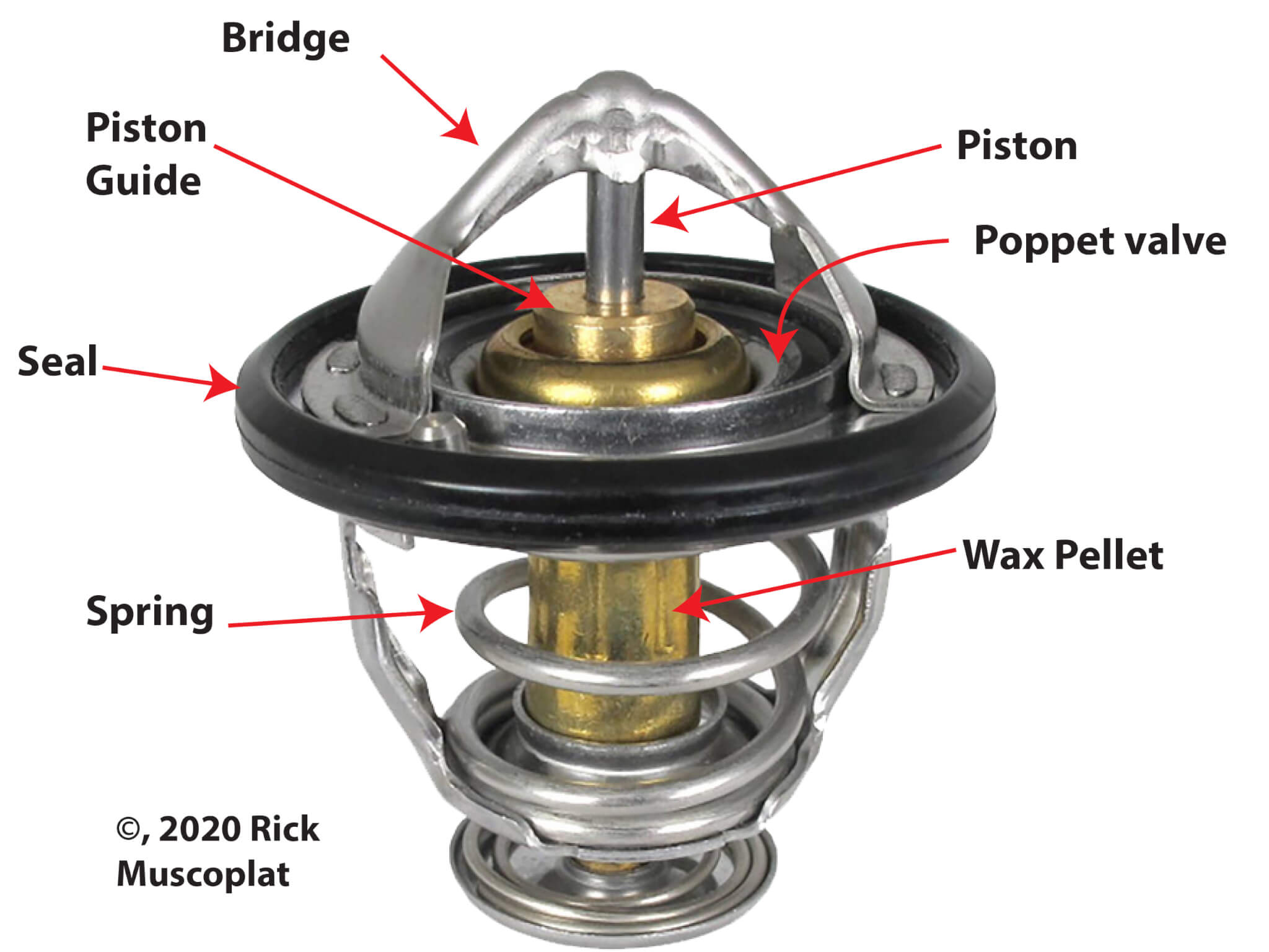 between the engine and radiator. When a thermostat sticks closed, coolant cannot circulate properly. The result? Rapid overheating.
Symptoms of a Stuck Thermostat
• The engine overheats quickly
• Upper radiator hose stays cool
• Heater performance becomes erratic
• The temperature gauge climbs rapidly
Fortunately, thermostat replacement is usually one of the less expensive cooling system repairs.
5) Clogged Radiator — A radiator must transfer heat efficiently from coolant to outside air. Over time, radiators can become clogged internally or externally. There are two types of radiator blockage:
Internal Radiator Blockage — Old coolant eventually becomes acidic and corrosive. This can cause:
• Rust buildup
• Mineral deposits
• Scale formation
• Restricted coolant passages
External Radiator Blockage — This is where the fins become blocked, restricting airflow across the radiator. I’ve seen radiators packed with:
• Bugs

Radiator fins clogged with bugs and dust
• Dirt
• Road debris
• Cottonwood fluff
• Mud
Anything that blocks airflow through the radiator reduces cooling efficiency.
6) Water Pump Failure — The water pump is the heart of the cooling system. Without proper coolant circulation, overheating becomes inevitable.
Common Water Pump Problems
• Leaking shaft seal
• Worn bearings
• Broken impeller
• Corroded impeller blades
• Cavitation damage
One of the most deceptive failures occurs when the impeller erodes. The pump may not leak or make noise, yet it can no longer move enough coolant through the engine.
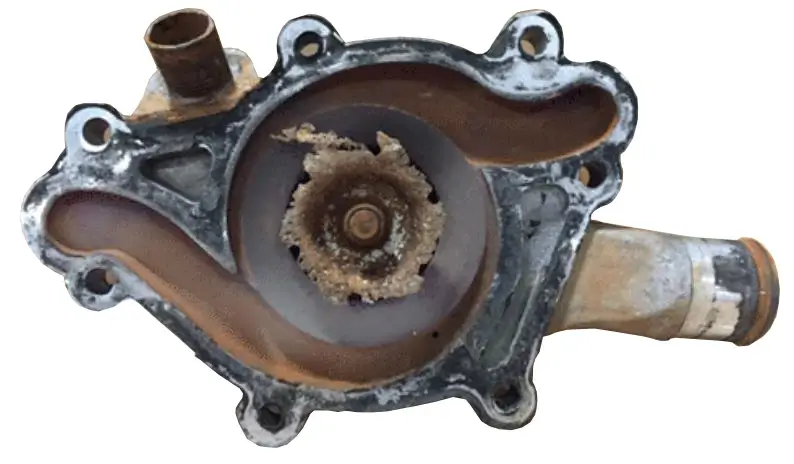
7) Cooling System Air Pockets — After coolant replacement or repairs, air can remain trapped in the system. Air pockets can create hot spots inside the engine and prevent coolant from flowing properly.
Symptoms of Air in the Cooling System
• Engine overheating intermittently
• Gurgling sounds
• The heater is not working correctly
• Temperature gauge fluctuations
Many modern vehicles require a specific bleeding procedure to remove trapped air.
8) Head Gasket Failure —A failing head gasket is both a cause and a consequence of overheating. When the gasket fails between a combustion chamber and a coolant passage, combustion gases enter the cooling system. This creates:
• Overheating
• Coolant loss
• Air pockets
• Excessive cooling system pressure
Signs of Head Gasket Failure
• White exhaust smoke
• Coolant loss with no visible leak
• Bubbling in the radiator
• Sweet exhaust smell
• Engine misfires
9) Fan Clutch Failure — Many trucks and rear-wheel-drive vehicles use a mechanical cooling fan with a viscous clutch. The clutch controls fan speed based on engine temperature. When the clutch fails, the fan doesn’t move enough air through the radiator.
Typical Symptoms
• Overheating at idle
• Poor towing performance
• Higher temperatures with air conditioning on
• Little fan roar during warm operation
10) Electrical Cooling System Failures — Modern cooling systems rely on electronic controls. I’ve diagnosed overheating problems caused by:
• Blown fuses
• Bad relays
• Faulty fan controllers
• Corroded wiring
• Defective coolant temperature sensors
• Failed engine control modules
These failures can prevent cooling fans from operating even though all mechanical components are functioning correctly.
What To Do If Your Engine Overheats
One of the biggest mistakes drivers make is continuing to drive after the temperature gauge enters the red zone.
My Recommended Steps
• Pull over safely.
• Shut the engine off immediately.
• Do not remove the radiator cap.
• Allow the engine to cool completely.
• Arrange for a tow if necessary.
• Diagnose the root cause before driving again.
Many people have heard advice to turn the heater on and keep driving. That may have worked decades ago on cast-iron engines, but modern aluminum engines can suffer serious damage very quickly.
The thermostat regulates the flow of coolant between the engine and the radiator. If it fails, it can cause overheating.
Cooling System Electrical Failures: Relays, Controllers, and Bad Designs
Some manufacturers make design choices that directly contribute to the most common causes of car overheating.
GM uses three relays to control its radiator fans, allowing them to run at two or three speeds.
GM uses multiple relays to control fans at low, medium, and high speeds. If even one relay fails, the high-speed fan never engages—leading to car overheating during heavy load or AC use.
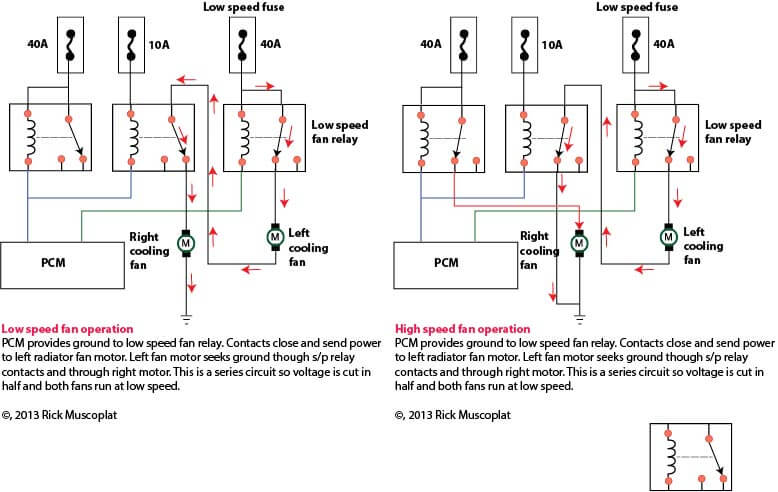
GM 2-speed radiator fan wiring diagram
Radiator fan wiring diagram for 3-speed fans
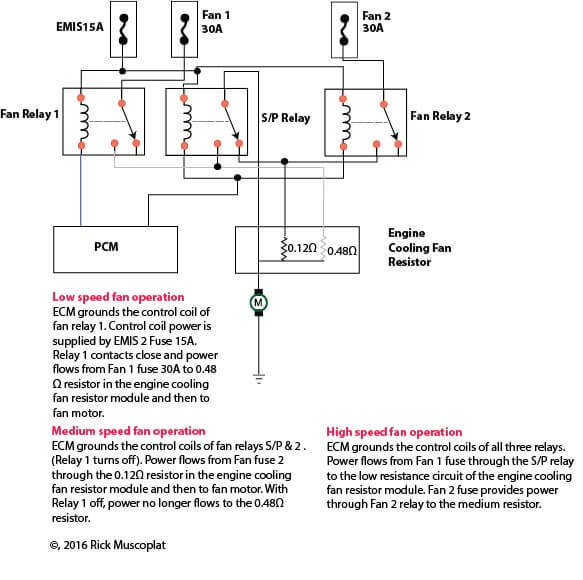
GM 3-speed radiator fan wiring diagram
Chrysler Digital Fan Controllers
Chrysler mounted the controller low in the engine bay, where road salt and moisture corrode the heat sink. When the controller overheats and fails, the car overheats almost immediately. 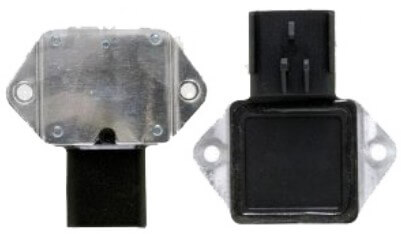
If you replace the relay without removing the corrosion, you’ll have another failure. To do the job right, remove the corrosion and coat the cleaned frame member with dielectric grease before replacing the relay.
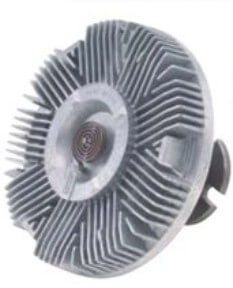
Viscous Fan Clutch Failures: Mechanical Causes of Car Overheating
Older fan clutches use a bi-metallic spring to regulate silicone fluid pressure. When they fail, the fan freewheels—offering little to no cooling at idle.
Newer electronically controlled viscous clutches (especially early GM versions) are notorious for failures that cause the car to overheat when stopped.
How to Prevent Engine Overheating
Preventive maintenance is the best defense.
I recommend:
Checking coolant level monthly
Replacing coolant at manufacturer intervals
Inspecting hoses annually
Cleaning radiator fins
Repairing leaks immediately
Replacing worn thermostats and water pumps when necessary
A cooling system inspection costs far less than replacing a head gasket or engine.
Final Thoughts
When diagnosing the common causes of engine overheating, I always start with the basics: coolant level, thermostat operation, radiator condition, water pump performance, and cooling fan operation.
Remember, engine overheating even when the coolant is full doesn’t mean the cooling system is healthy. Coolant must circulate properly and shed heat effectively. Any restriction in that process can send temperatures soaring.
If your vehicle overheats, don’t gamble with expensive engine damage. Shut it down, diagnose the cause, and fix it before driving again.
© 2016 Rick Muscoplat
Posted on by Rick Muscoplat