
The Pros and Cons of E15 Gas
Exploring the Pros and Cons of E15 Gasoline
As fuel prices fluctuate and environmental concerns grow, consumers are increasingly exploring alternative fuels. One such option is E15 gasoline, a blend containing 15% ethanol and 85% gasoline. While E15 is becoming more widely available across the United States, many drivers are left wondering whether it’s suitable for their vehicles. This article will explore what E15 gas is, the pros and cons of E15 gas and help you determine whether it’s the right choice for your car.
What is E15 Gasoline?
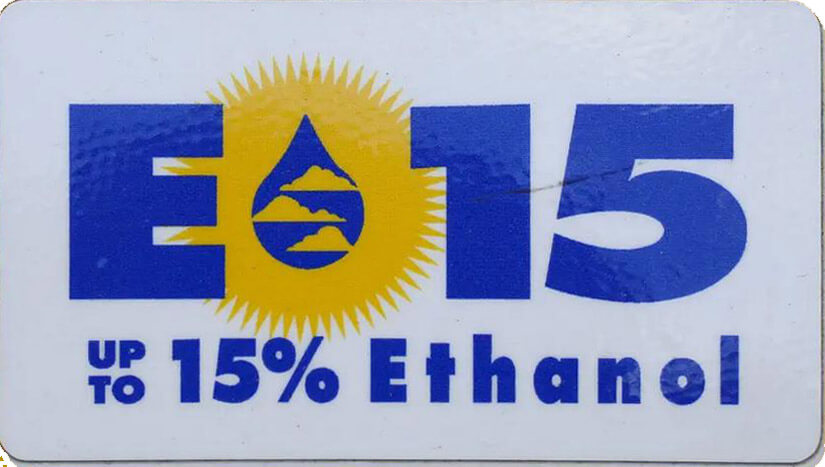
E15 gas is a type of fuel that blends 15% ethanol with 85% gasoline. Ethanol is a renewable fuel made from various plant materials, such as corn, sugarcane, and other biomass. The use of ethanol in fuel is part of an effort to reduce greenhouse gas emissions, decrease reliance on fossil fuels, and promote the use of renewable energy sources.
In the United States, E10 (10% ethanol, 90% gasoline) has been the standard blend for many years. E15 was approved by the Environmental Protection Agency (EPA) for use in vehicles manufactured in 2001 and later. However, the availability and use of E15 are still growing, and it’s not as widely distributed as E10.
Why add ethanol to gasoline
Refiners used to use Methyl tert-butyl ether (MTBE) as an additive to replace tetraethyl lead to increase octane and reduce knock. However, MTBE is a major pollutant when it enters the water table after being spilled at gas stations and in marine applications.
By 2007, most states had banned the use of MTBE. So, refiners had to come up with another additive that would boost octane but not worsen emissions. Ethanol was the answer, and E15 and E85 were developed.
E15 is safe for most cars manufactured since 2001 and beyond. However, it may cause problems with the rubber used in earlier model vehicles.
Pros of E15 gA
E15 Gas is cheaper than 100% gasoline or E10, and the MPG is about the same as E10.
Ethanol for use in gasoline is produced using corn and a fermentation process. The production process has been refined to the point where producing ethanol no longer uses more energy than the amount of energy contained in the alcohol itself.
So, it helps the farming industry by increasing the octane and oxygen content in fuel.
E15 burns cleaner than 100% gasoline but burns about the same as E10 fuel.
Cons of E15
In summer months, the alcohol evaporation from E15 can cause ground-level air pollution that reacts with sunlight to form smog.
The biggest drawback to E10 and E15 fuel is that ethanol is “hygroscopic” and adsorbs water. When E10 and E15 reach their limit of water adsorption, they are subject to “phase separation,” where the ethanol/water component separates from the gasoline and falls to the bottom of the tank.
Phase separation is especially problematic in small engines that use carburetors. The ethanol-water component tends to corrode and clog the small passageways in carburetors.
What vehicles can use E15?
Vehicles made after 2001 can use 100% gasoline, E10 and E15 with no problems.
E15 should not be used in small engines.
E15 should NOT be confused with E85, which is 85% ethanol and 15% gasoline and is referred to as a “Flex Fuel.”
©, 2022 Rick Muscoplat
Posted on by Rick Muscoplat