
The Truth About Brake Fluid Color and Brake Fluid Condition
Brake Fluid Color: Is Dark Brake Fluid Really Bad?
Quick Summary
Brake fluid color is NOT a reliable indicator of the fluid’s condition. Fluid can turn dark quickly and still be perfectly functional, while clear-looking fluid can be contaminated and dangerous. The only accurate way to judge brake fluid condition is through testing—specifically, moisture content, copper levels, and pH. If you rely on brake fluid color alone, you’re guessing—and that’s not something you want to do with your brakes.
The Truth About Brake Fluid Color (What Most People Get Wrong)
Brake fluid color changes for several reasons—and most of them have nothing to do with failure.
Here’s what’s really going on inside the system:
• Rubber seals and hoses shed microscopic material
• Assembly lubricants dissolve into the fluid
• Heat cycles alter the fluid’s appearance due to oxidation.
• Internal coatings and metals can discolor the fluid
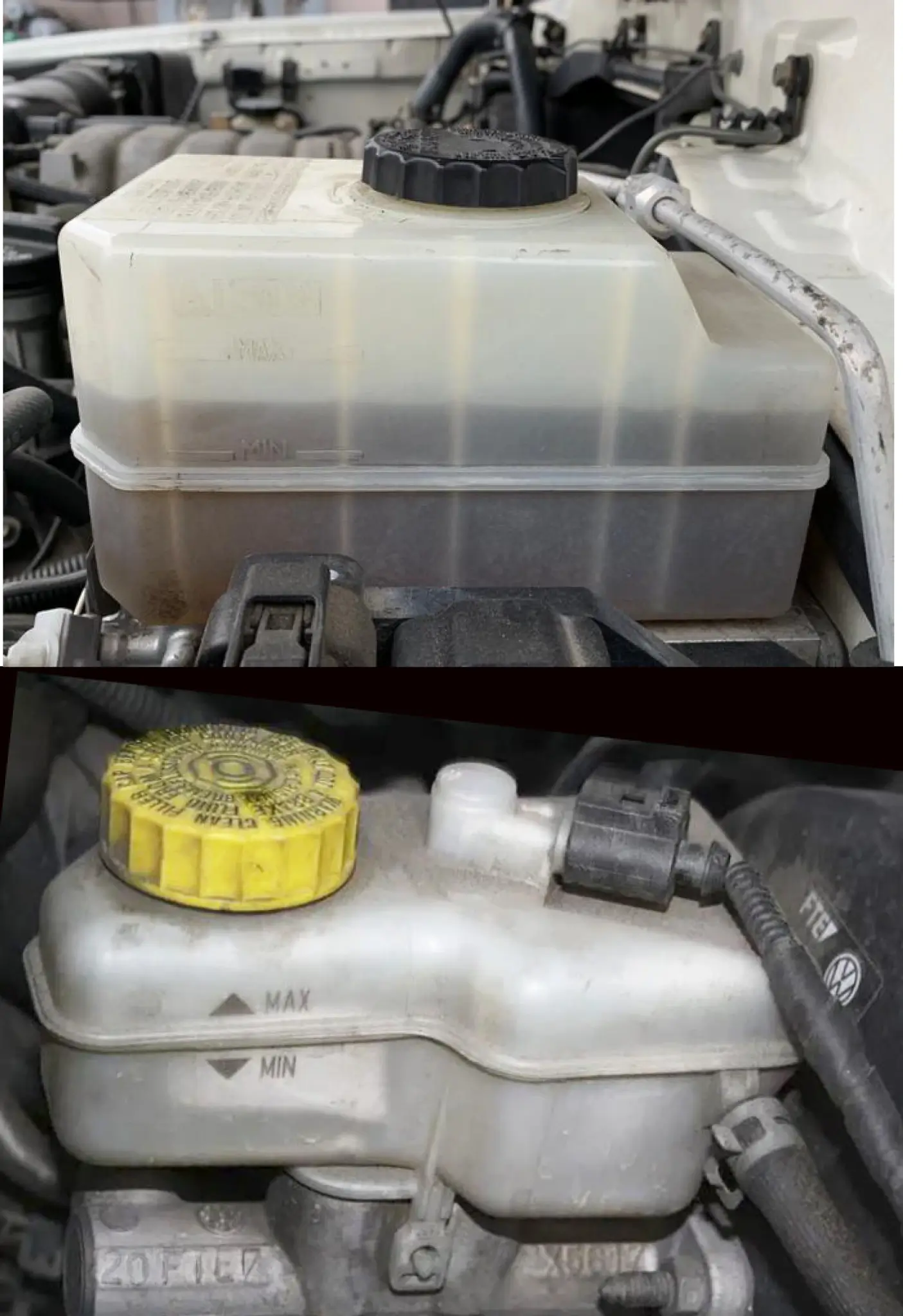
Fluid can go from clear to brown shortly after a change—and still meet all performance requirements. That’s why judging brake fluid color is misleading.
Brake Fluid Color can offer some clues, but it’s not a reliable diagnostic tool on its own.
Fresh brake fluid is typically clear to light yellow (DOT 3, 4, and 5.1). DOT 5 silicone fluid is usually purple, which helps distinguish it from glycol-based fluids.
What color can indicate:
Darker yellow to amber — This is normal aging. It darkens gradually as it oxidizes and accumulates dissolved contaminants from aging rubber in the brake system.
Dark brown or black — This indicates more significant degradation. This often means the rubber seals and hoses in the system are breaking down and shedding particles into the fluid. It can also indicate heavy oxidation. At this point, a flush is generally warranted.
Milky or cloudy — This is a more serious sign — it usually means the fluid’s water contamination has gone beyond the normal hygroscopic absorption, or in rare cases, that incompatible fluids have been mixed.
Why Shops Push Brake Fluid Flushes Based on Color
Let me be blunt—this is where people get taken advantage of. Using brake fluid color as a selling point is easy:
• It’s visual
• It’s quick
• It sounds logical
But color-based recommendations have no scientific backing.
That doesn’t mean brake fluid changes aren’t important—they absolutely are. It just means the decision should be based on testing or time/mileage, not appearance.
Read this quote from automotive trainer Andrew Markel from Brake and Front End Magazine
“Visual inspection of the fluid can be extremely misleading. The color of brake fluid can vary from clear to shades of blue. Even if the brake fluid is discolored or cloudy, it might still meet the system’s performance requirements. The brake fluid in the master cylinder reservoir can have a markedly different appearance from the fluid in the calipers. But, if you can see debris in the fluid with your naked eye, it could be a sign that rubber in seals or hoses are starting to degrade. Or, it could be the customer left the cap off the reservoir.” — Andrew Markel Brake and Front End Magazine Oct 7, 2020
How Brake Fluid Actually Fails
Here’s where the real story is. Brake fluid doesn’t “wear out” in the way people think. The base fluid is very stable. What actually fails are the additives.
• Anti-corrosion additives degrade over time
• Moisture accumulates in the fluid
• The fluid can become acidic
That’s what determines brake fluid condition—not color.
The Three Tests I Trust (And You Should Too)
When I’m diagnosing a brake system, I don’t look at color—I test the fluid.
1. Copper Content Test — This is one of the most useful and overlooked tests. As corrosion inhibitors break down, copper leaches into the fluid from the brazing in the st
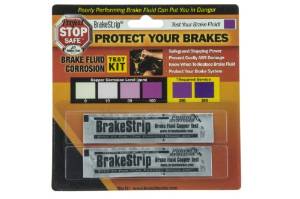
Buy a package of brake fluid test strips and test your brake fluid so you don’t get scammed.
eel brake lines. Interestingly, high copper levels can even give the fluid a green tint—but again, that’s not something you can rely on visually.
Safe: Low copper levels
Replace fluid: 200 ppm or higher
2. Moisture Content Test — Brake fluid is hygroscopic—it absorbs moisture. Once moisture exceeds about 2%, you’re in danger territory.
• Water lowers the boiling point
• Boiling fluid creates vapor
• Vapor compresses → soft pedal or brake failure
This is the number one cause of brake fade in real-world driving.
3. pH Testing (Often Ignored) — Brake fluid contains buffering agents to prevent corrosion.
Over time:
• Those buffers wear out
• The fluid becomes acidic
• Internal components begin to corrode
A simple pH test strip can reveal this, but most DIYers never check it.
Brake fluid testing for moisture
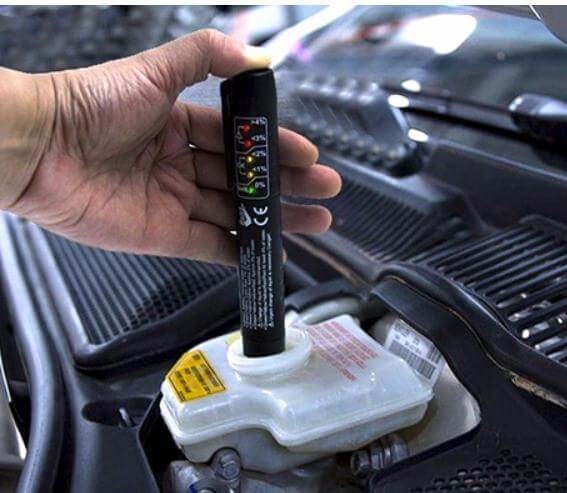
Test the brake fluid’s moisture content with a battery-operated tester
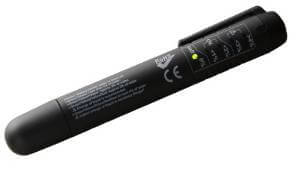
A battery-powered brake fluid moisture tester
or a refractometer. If the fluid’s moisture content exceeds 2%, you should agree to a brake fluid flush.
Even if your maintenance manual recommends a periodic brake fluid flush based on time or mileage, it’s not a bad idea to have it tested before agreeing to the service. If the fluid hasn’t accumulated moisture and the copper content is low, you can extend the change intervals.
Final Thoughts: Don’t Judge Brake Fluid by Its Color
If you remember one thing from this article, make it this:
Brake fluid color is not a diagnostic tool. Testing is.
I’ve seen clear fluid that was dangerous and dark fluid that was perfectly serviceable. The only way to know for sure is to measure what actually matters—moisture, copper, and pH.
Don’t guess. Test.
©, 2021 Rick Muscoplat
Posted on by Rick Muscoplat