
Tire Cupping: Causes, Problems, and Prevention
What is tire cupping, and what causes it?
Tire cupping, also known as tire scalloping, is a specific type of irregular tire wear characterized by the presence of high and low points on the tire tread. These patches of wear appear as cup-like depressions and can cause significant issues for vehicle performance and safety.
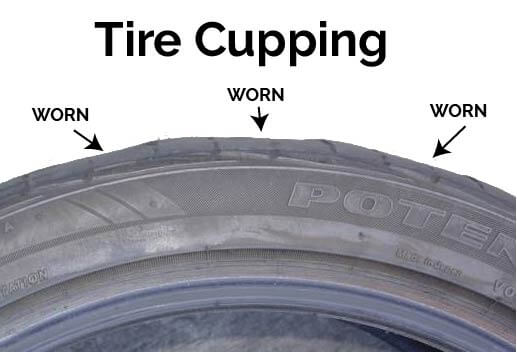
This is what tire cupping looks like, with high and low spots
Tire cupping is a tread wear condition in which portions of the tire tread have been worn away in a scalloped or scooped pattern. It causes excessive noise when driving at higher speeds and can cause a rough ride at slow speeds.
The root cause of tire cupping can be fixed, but once a tire is severely cupped, the damage is done, and the tire must be replaced. After the repair, you can rotate the tires, but the noise will remain until the tread wears down past the tire cupping area.
Tire cupping causes
• Worn shocks/struts— The main job of a shock absorber is to dampen spring oscillations and reduce tire bounce. When shock or struts wear to the point where they can no longer dampen spring oscillations, the tire bounces excessively, causing the same type of scuffing as would be caused by an out-of-round or out-of-balance tire. Shocks/struts have a limited lifespan of around 80,000 miles, depending on the type of roads you drive.
• Low quality tires— Tire cupping can be caused by low quality tires, out-of-round tires, an out-of-balance problem (tire or wheel), vehicle alignment, control arms, bushings, bearing or shock absorber/strut wear issues.
• Tire balance/out-of-round causes tire cupping— When a tire is out-of-round or the tire/wheel isn’t balanced, the high or heavy point will lift off the road slightly with each rotation. The lifting becomes worse as vehicle speed increases, causing the tire to bounce and slow while it’s in the air. Each time it returns to the pavement, the tire scuffs as it regains speed, just like airplane tires do when they contact the runway during landing. The tire loses a small amount of rubber during each scuff, causing the out-of-balance condition to get even worse and cause more severe scuffing.
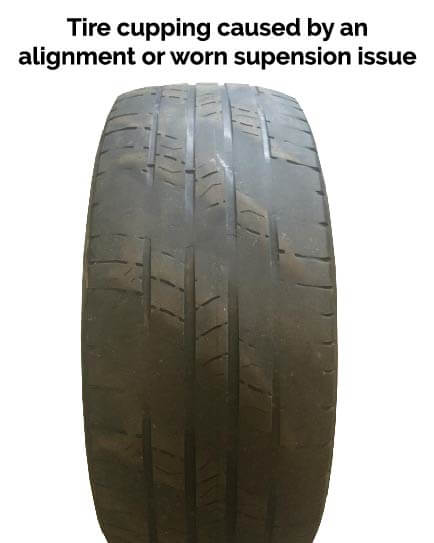
This is an example of diagonal tire cupping
• Alignment— Tire cupping occurs when the front and rear axles aren’t parallel with one another. This can happen when the front toe angles are off. Diagonal tire cupping occurs when the rear wheels on a FWD vehicle aren’t perfectly aligned with the front wheels. That causes the rear tires to be dragged at an angle, which causes them to hop. each hop causes the tire to lift off the road and hit again as it contacts the pavement. Since the tire is at an angle to the front wheels, the cupping is also at an angle.
• Control arms, bushings, or bearings— Each of these components plays a part in keeping the tires rotating in the same plane. If they wear, the tire pushes slightly sideways when rolling (like walking with your toes pointing 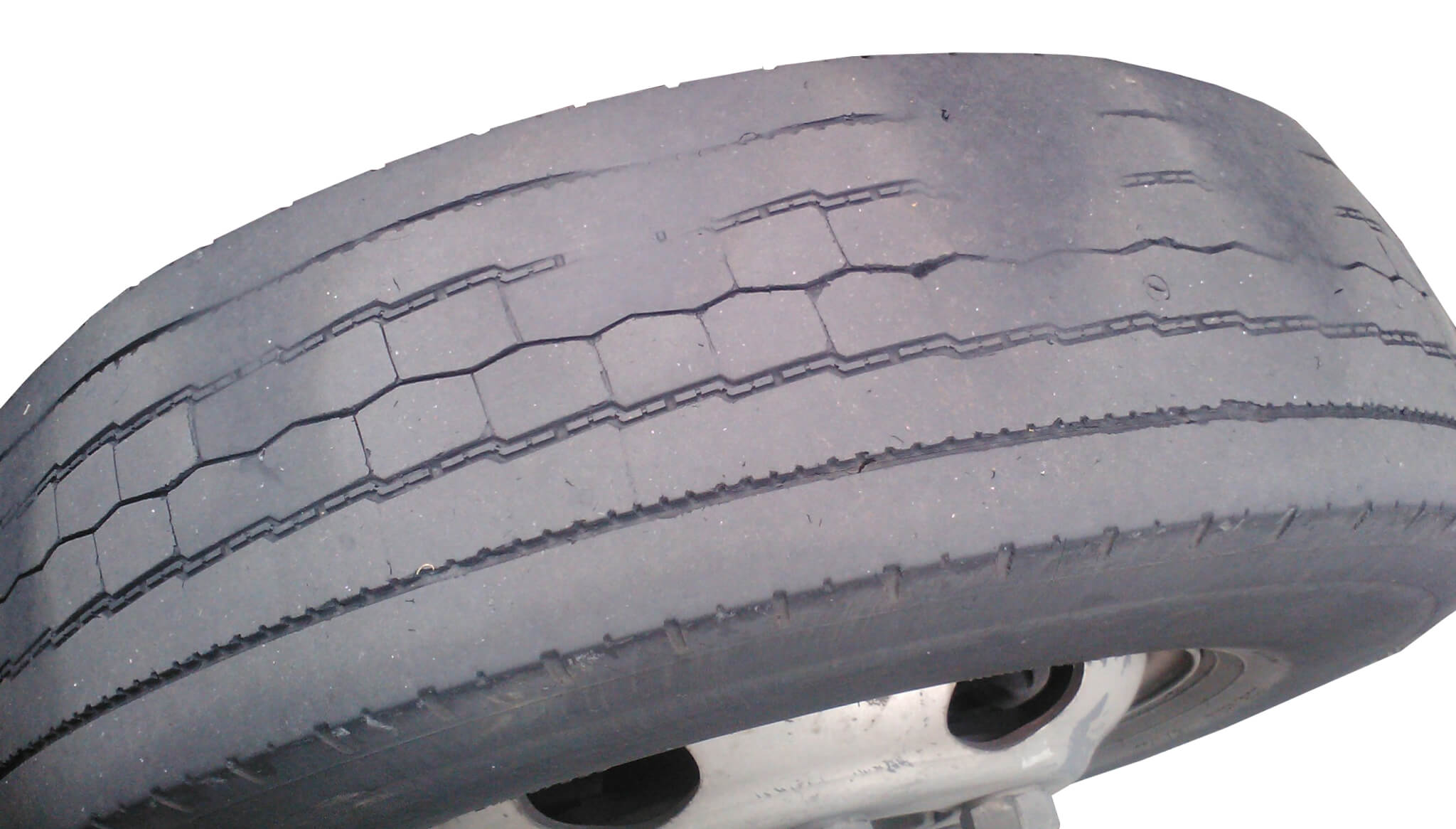 inward). That causes the tread block to feature slightly and snap back into position as they roll off the pavement.
Symptoms of Tire Cupping
Identifying tire cupping early can help prevent further damage to the tires and vehicle. Some common symptoms include:
• Vibration and Noise— Drivers may notice unusual vibrations and increased noise levels when driving, especially at higher speeds.
• Uneven Tread Wear— Visual inspection of the tires may reveal noticeable high and low points on the tread.
• Reduced Handling— The vehicle may feel less stable, with compromised handling and traction, particularly in wet or slippery conditions.
How to Prevent Tire Cupping
• Regular Suspension Maintenance— Ensuring the suspension system is in good condition is crucial for preventing tire cupping. Regular inspections and maintenance of shocks, struts, and other suspension components can help maintain consistent tire-road contact. Replace worn or damaged suspension parts promptly to avoid causing further damage to the tires.
• Proper Wheel Balancing— Regular wheel balancing helps to prevent the uneven tire wear that can lead to cupping. Have your wheels balanced each time you replace or rotate your tires.
Address any imbalance issues immediately to prevent long-term damage.
• Wheel Alignment— Ensure that your vehicle’s wheels are properly aligned according to manufacturer specifications. Regular alignment checks can help detect and correct misalignment before it causes significant tire wear.
Alignment should be checked at least once a year or whenever you notice symptoms of misalignment, such as uneven tire wear or the vehicle pulling to one side.
• Maintaining Correct Tire Pressure— Regularly check and adjust tire pressure to maintain optimal levels. Use the recommended pressure levels provided by the vehicle manufacturer, typically found in the owner’s manual or on a sticker inside the driver’s door. Proper tire pressure helps ensure even wear and extends the life of your tires.
• Quality Tires and Regular Maintenance— Invest in high-quality tires that are appropriate for your vehicle and driving conditions. High-quality tires are more likely to withstand the stresses of regular driving without developing uneven wear patterns. Regularly rotate your tires to ensure even wear across all tires. Tire rotation should be done every 5,000 to 7,000 miles, or as recommended by the tire manufacturer.
For more information on shocks and struts, read this post.
©, 2016 Rick Muscoplat
Posted on by Rick Muscoplat