
Cheap or Premium Tires: Making the Right Choice
The Pros and Cons of Cheap vs. Premium Tires
Shopping for new tires? The first issue you’ll confront is whether to buy cheap or premium tires. To make that decision, you should know the real difference between cheap bargain tires and more costly premium tires.
Cheaper tires use cheaper raw materials
Tires have to provide maximum traction on dry and wet pavement, resist wear, resist the effects of heat and sunlight, maintain stability between the multiple layers of different materials, absorb millions of bumps and potholes, flex and roll with minimum effort, and provide comfort.
To provide all those benefits, tire chemists use different raw components in differing quantities based on the buyer’s comfort and durability expectations, coupled with a specified selling price range. So it makes sense that you get more comfort, longer life, and better handling if you use higher-quality raw materials and tread designs. But the tire’s ultimate selling price at the tire store starts with the raw materials they select at the manufacturing plant. You simply can’t make a cheap tire with premium raw materials and expect to stay in business.
Cheap or premium tires are made with various combinations of the following raw materials:
• Natural rubber from rubber plants and trees.
• Synthetic rubber is used in varying quantities depending on the intended use and selling price
• Carbon black and silica are used as reinforcing agents to improve durability and traction and reduce rolling resistance
• Metallic and textile reinforcement materials to form the belts and beads
What is synthetic rubber?
Natural rubber comes from trees and plants and is known for its water resistance, high resilience, and large stretch ratio. Synthetic rubber (SBR) is made from petroleum and is manufactured in chemical factories. SBR has similar properties to natural rubber but is more resistant to abrasion, wear, and water. Approximately 15 billion kgs of rubber are produced annually, and roughly two-thirds of that rubber is synthetic.
What other materials are used in cheap or premium tires?
Tire manufacturers also add carbon black and non-black fillers, plasticizers, age resistors, vulcanizing agents, activators, and other special-purpose ingredients. The amount of carbon black used helps determine the curing time and particle size of the rubber. Materials like clay, calcium carbonate, silicates, and silicas can be added to tire compounds to improve tire performance or increase or reduce the selling price. Other raw materials may be added to reinforce the rubber and enhance tensile strength and tear and abrasion resistance.
Still, other raw materials like plasticizers can be added in small doses as an extender to reduce the cost of the tire. Plasticizers can also be used as modifiers to obtain different vulcanizing properties. Age resistors (also called anti-degradants) are organic materials used in small quantities to slow down rubber deterioration caused by aging, so they extend the tire’s service life. Age-resistant materials also protect the tire from oxidation, ozone exposure, heat degradation, sunlight (UV), and high humidity.
Tire construction methods and materials
Like a house, a tire must be built on a foundation with layers added on top of one another before reaching the actual tread.
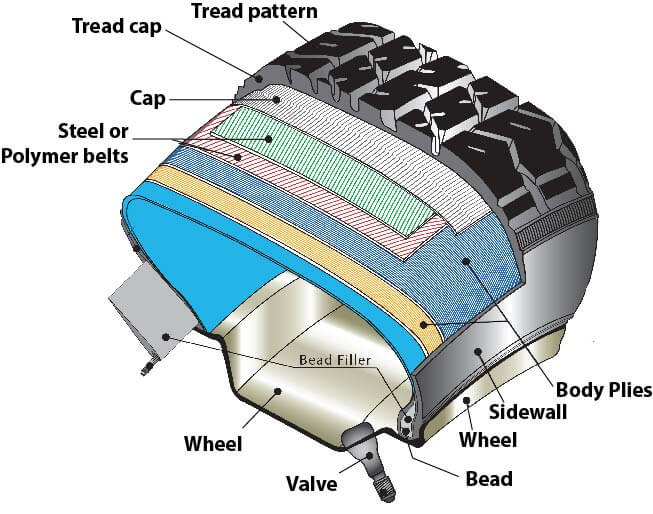
Tire construction
• The tire bead is a circular ring that mates with the wheel rim to prevent dislodging on impact
• The inner liner prevents air from migrating through to the layers. It acts like and inner tube
• The plies are wrapped around the inner liner to add strength and prevent the liner from ballooning.
• The belts provide additional strength and impact resistance. Belts can be made from steel or polymer fabric.
• The cap is the final layer before the tread is applied.
The type and quality of the tire construction materials play a significant role in the performance, durability, handling characteristics and overall life of the tire. Tire manufacturers choose these construction based on the projected selling price of the tire and its intended use.
Automotive Tire Tread design
Tread design plays an important part in the tire’s ability
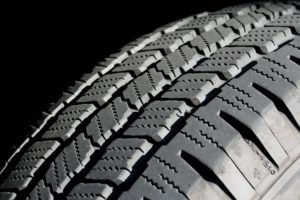
Sipes in tread blocks
to stop, corner, and maintain traction on rain, snow, and ice-covered roads. The most advanced tread designs incorporate built-in separations called “sipes” that act like squeegees to move water away from the tire to prevent hydroplaning. The design of the individual tread blocks also affects noise and overall tire life.
Tread blocks are also designed to either retain snow or reject it from the voids between them. By retaining snow between the tread blocks, you actually get MORE traction. Snow-on-snow provides more traction than rubber-on-snow. But the tread designs that retain snow also retain mud, and mud-on-mud is the worst possible combination. So, the latest tread designs can retain snow but reject mud buildup.
What happens to outdated tread designs and tread molds?
Simple. They use old molds to make cheap tires.
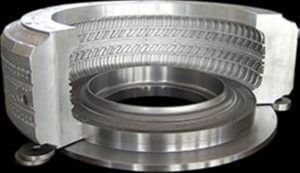
Outdated tire tread molds are used to produce cheap tires
In other words, cheap tires have outdated tread designs.
The take-aways of cheap versus premium tires
Cheap tires are made with less expensive raw materials that don’t perform as well or last as long as premium tires. They are less durable, wear faster, and perform poorer in rain, snow, ice, and heat. They offer less resistance to hydroplaning and, therefore, have less overall traction on wet roads. The cheaper raw materials provide a less comfortable ride and don’t handle as well in turns.
10 reasons why you shouldn’t buy cheap tires
1) Tires are your only contact with the road. Cheap tires compromise your safety because they take longer to stop.
2) Cheap tires produce more noise than premium tires
3) Cheap tires are made with the oldest most outdated tread patterns, so they provide less resistance to hydroplaning on rain, snow and ice.
4) Cheap tires don’t handle as well in turns as premium tires
5) Cheap tires provide a less comfortable ride.
6) Cheap tires age faster because they create more heat and have less resistance to heat buildup.
7) Cheap tires aren’t as fuel efficient because they have a higher rolling resistance.
8) Cheap tires have less impact resistance
9) Cheap tires wear out faster than premium tires
10) Dollar for dollar, cheap tires provide less value
©. 2017 Rick Muscoplat
Posted on by Rick Muscoplat