
Toyota P1135 Code Explained: Causes, Fixes, and Diagnosis
Common Causes of Toyota P1135 Code
Quick Summary
The Toyota P1135 code indicates that the engine control module has detected a failure in the air/fuel ratio sensor heater circuit (Bank 1, Sensor 1). In most cases, the fix is replacing a faulty upstream air/fuel sensor, but wiring issues or exhaust leaks can also trigger the code. That’s why you must diagnose it properly before replacing parts.
What Does the Toyota P1135 Code Mean?
In my experience diagnosing Toyota drivability issues, the 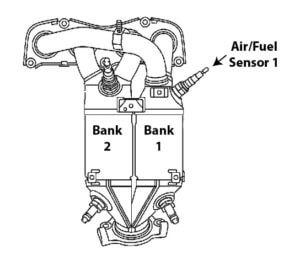 Toyota P1135 code is one of the more straightforward emissions-related trouble codes—but it’s also one that gets misdiagnosed all the time. The code specifically indicates a malfunction in the air-fuel ratio (A/F) sensor heater circuit on Bank 1, Sensor 1.
Here’s what that really means in plain English:
• Bank 1 = the side of the engine with cylinder #1
• Sensor 1 = the upstream sensor (before the catalytic converter)
• Heater circuit = the internal heating element that gets the sensor up to operating temperature quickly
Toyota uses an A/F sensor instead of a traditional O2 sensor in this position. It needs to reach about 1,200°F to produce accurate readings, and the heater circuit is what makes that happen quickly. If the heater fails or the circuit has an issue, the sensor responds too slowly—or not at all—and the ECM sets the code.
Most Common Causes of the Toyota P1135 Code
After diagnosing dozens of these, I can tell you there are a handful of causes that recur.
1. Failed Air/Fuel Ratio Sensor (Most Common) — This is the big one. The heater element inside the sensor burns out over time. This is typical of higher-mileage Toyotas.
2. Damaged Wiring or Connector — The heater circuit depends on good electrical flow. If there’s corrosion in connectors, broken or shorted wires, or melted wiring near the exhaust that can prevent the heater from working. If you don’t check out those wiring problems first and just replace the sensor, you might see the code return.
3. Blown Fuse or Power Supply Issue — The heater circuit needs power from a fused circuit. Check the A/F connector for power and ground. If you don’t see either, check for:
• Blown EFI fuse
• Poor ground connection
• Voltage supply problems
4. Exhaust Leaks Near the Sensor Can Cause This Code— This is often overlooked.
• Leaks skew sensor readings
• Can cause heater circuit errors indirectly
• Common near manifold or flange
5. ECM (Rare but Possible) — In rare cases, the engine control module fails to control the ground side of the heater circuit correctly.
Symptoms of a Toyota P1135 Code
Here’s what I typically see when a Toyota P1135 code is active:
• Check engine light ON•
• Poor fuel economy
• Rough idle or hesitation
• Failed emissions test
• Sluggish performance
Because the sensor helps control fuel mixture, a bad reading can cause the engine to run rich or lean.
How to Diagnose a Toyota P1135 Code (Step-by-Step)
This is where most DIYers and even some shops go wrong—they jump straight to replacing the sensor. I don’t. I test first.
Step 1 – Inspect the Sensor and Wiring — Pop the hood and locate the upstream sensor. This quick inspection can save you from unnecessary parts replacement.
Check for:
• Burned or brittle wires
• Oil contamination
• Loose connectors
Step 2 – Test the Heater Circuit — Using a multimeter:
• Check resistance across the heater terminals
• Compare to spec (usually 10–20 ohms range)
• Check for power and ground with key ON
• If there’s no power → wiring, or fuse issue
• If resistance is out of spec → bad sensor
Step 3 – Check Power Supply (Fuse and Relay) — Verify:
• EFI fuse is intact
• Proper voltage at the A/F connector
• No voltage = electrical issue, not a sensor problem.
Step 5 – Inspect for Exhaust Leaks — Leaks can affect sensor readings and trigger the code. Look and listen for:
• Ticking noise at cold start
• Black soot around joints
Step 5 – Replace the Sensor (If Confirmed Faulty) — If everything checks out and the heater is bad:
• Replace Bank 1 Sensor 1 A/F sensor
• Use OEM or high-quality aftermarket (cheap sensors often fail early)
Pro-Level Insight (What Most People Miss)
Here’s something I’ve learned over the years: Many people confuse the A/F sensor with a standard O2 sensor—they’re not the same.
• A/F sensors are more precise
• They operate differently
• Using the wrong replacement part can keep the code coming back
I’ve seen cases where the wrong sensor was installed, and the Toyota P1135 code never went away until the correct part was used.
Clear the P1135 trouble code
Use your code reader or scan tool to clear the trouble code. Then take it for a test drive.
©, Rick Muscoplat
Posted on by Rick Muscoplat