
Understanding a Distributorless Ignition System: How It Works
How a Distributorless Ignition System Enhances Engine Performance
Distributorless Ignition Systems (DIS) represent a significant advancement in automotive ignition technology. By eliminating the need for a traditional distributor, DIS offers several benefits, including improved engine performance, reliability, and efficiency. This article delves into the workings of distributorless ignition systems, their advantages over traditional systems, common issues, and maintenance tips to ensure optimal performance.
Distributorless ignition system components
DIS ignition systems use one ignition coil for every two cylinders. The ignition coil may be designed as a separate unit, called a coil pack or may be built as several ignition coils integrated into a single unit. When configured with individual coils, a repair can be as simple as replacing just the bad coil pack. However, when configured as a single ignition unit, the failure of one coil in the pack requires the replacement of the entire unit.
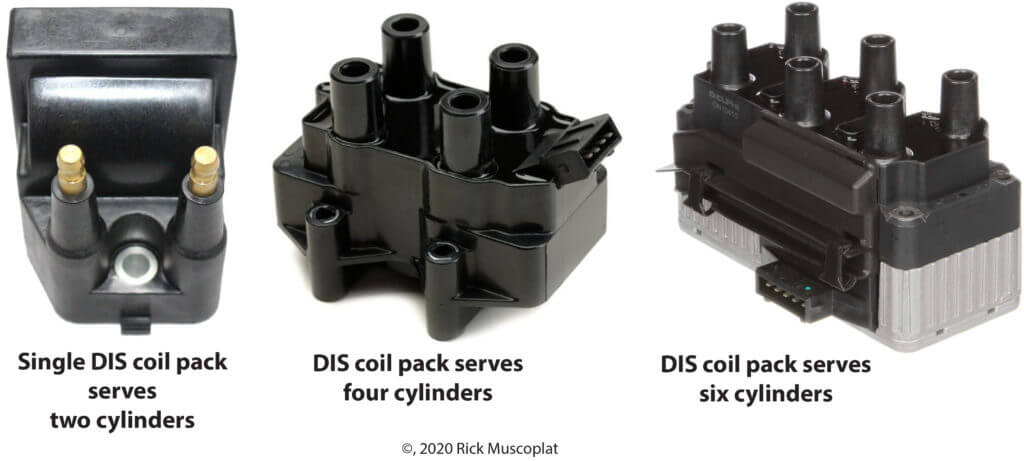
How a DIS ignition system works
The ignition module receives camshaft rotation data from the camshaft position sensor. Just like in a distributor system, the camshaft position data is used to calculate when to disconnect power to the ignition coil. When the ignition coil is powered, a strong magnetic field is created. When the power is shut off, the magnetic field collapses, creating a high voltage that flows to the spark plug and jumps the gap to create ignition. and the generation of high voltage to create the spark. In a traditional distributor ignition system, a single ignition coil generates the magnetic field and spark. The length of the coil on time is referred to as dwell. Since the coil must serve all cylinders, the dwell time is short, especially at higher RPMs.
Since a DIS system uses multiple ignition coils, each coil can remain powered for longer periods. The longer dwell time creates a more powerful magnetic field, which in turn, provides a higher voltage and hotter spark.
Once the power is shut off to a DIS coil, the field collapses, and the spark jumps from the spark plug center electrode to the side electrode in the firing cylinder, causing the fuel mixture to ignite. The return electrical path is through the spark plug in the partner cylinder, where the spark jumps from the side electrode to the center electrode, up through the partner’s cylinder spark plug tower, and back to the ignition coil. The spark that occurs in the partner cylinder is referred to as a “waste spark” since it doesn’t ignite any fuel.
Advantages of Distributorless Ignition Systems
Improved Reliability— By eliminating the moving parts of a traditional distributor, DIS systems reduce mechanical wear and the risk of component failure. This leads to increased reliability and less frequent maintenance compared to older ignition systems.
Enhanced Performance— DIS systems offer improved engine performance due to their precise electronic control. The ability to adjust spark timing in real-time ensures optimal combustion, leading to better fuel efficiency, increased power output, and smoother engine operation.
Reduced Maintenance— With fewer moving parts and no need for periodic adjustments, DIS systems require less maintenance than traditional ignition systems. This reduction in maintenance needs translates to lower long-term ownership costs and fewer chances of ignition-related issues.
Better Fuel Efficiency— The accurate timing and efficient spark delivery provided by DIS systems contribute to better fuel combustion. This can result in improved fuel economy, as the engine operates more efficiently and effectively uses the fuel-air mixture.
Lower Emissions— With improved combustion efficiency, DIS systems also contribute to reduced exhaust emissions. Cleaner combustion means fewer pollutants are released into the environment, helping vehicles meet stricter emission standards.
Common Issues with Distributorless Ignition Systems
DIS systems rely on sensors to provide accurate timing data. Failures or malfunctions in sensors, such as the crankshaft position sensor or camshaft position sensor, can affect spark timing and lead to engine performance issues. Diagnosing and replacing faulty sensors is necessary for proper ignition system operation.
©, 2020 Rick Muscoplat
Posted on by Rick Muscoplat