
Understanding the most common signs of head gasket failure
Learn The Most Common Signs of Head Gasket Failure
A head gasket is a critical component in an internal combustion engine, sealing the cylinder head to the engine block and preventing the mixing of coolant, oil, and combustion gases. When a head gasket fails, it can lead to severe engine problems. Recognizing the early signs of head gasket failure early can help prevent extensive damage and costly repairs. Here are the most common signs of head gasket failure:
Signs of head gasket failure
• Excessive white smoke coming from the exhaust— This indicates a head gasket failure between the combustion chamber and a coolant passage that results in coolant being burned along with the air and fuel, causing excess steam to flow out the tail pipe. Unlike normal exhaust smoke/steam condensation in winter that occurs at startup and then goes away, this white steam occurs even when the engine is at operating temperature. It doesn’t go away.
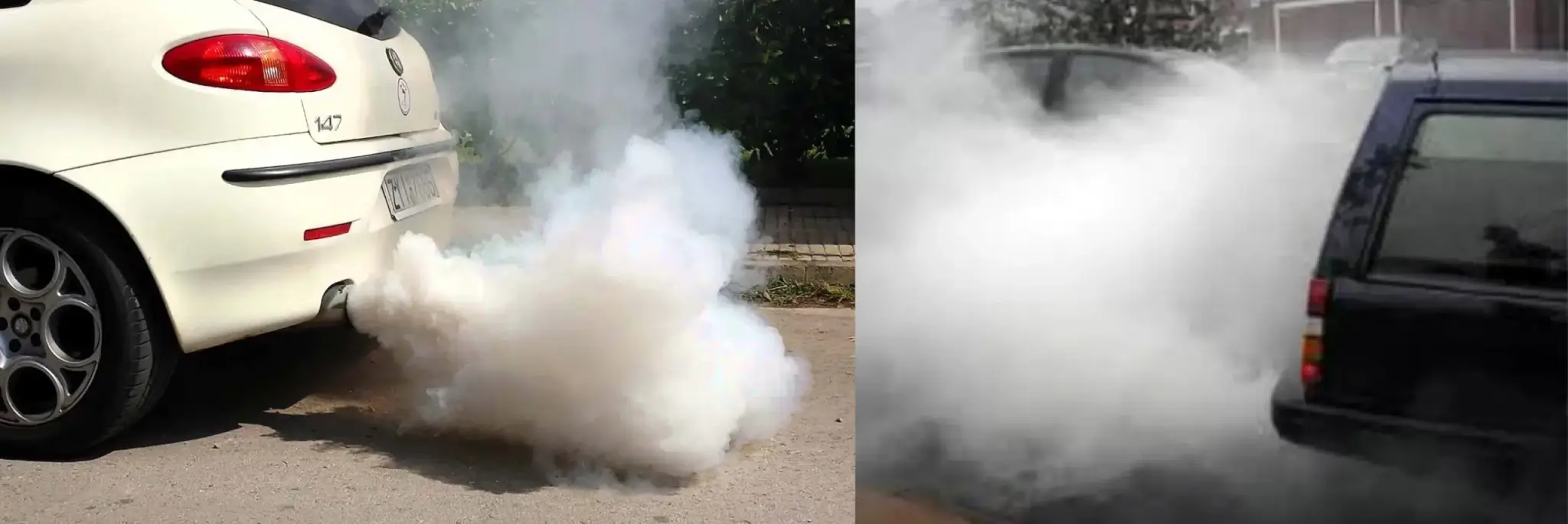
Excessive white smoke from the tail pipe that doesn’t go away after the engine reaches operating temperature is the sign of a head gasket failure
• Coolant in the oil— The coolant and oil passages are always separated. So, if the coolant and oil mix in the crankcase, it’s a sign of a head gasket failure between a cooling passage and an oil passage.
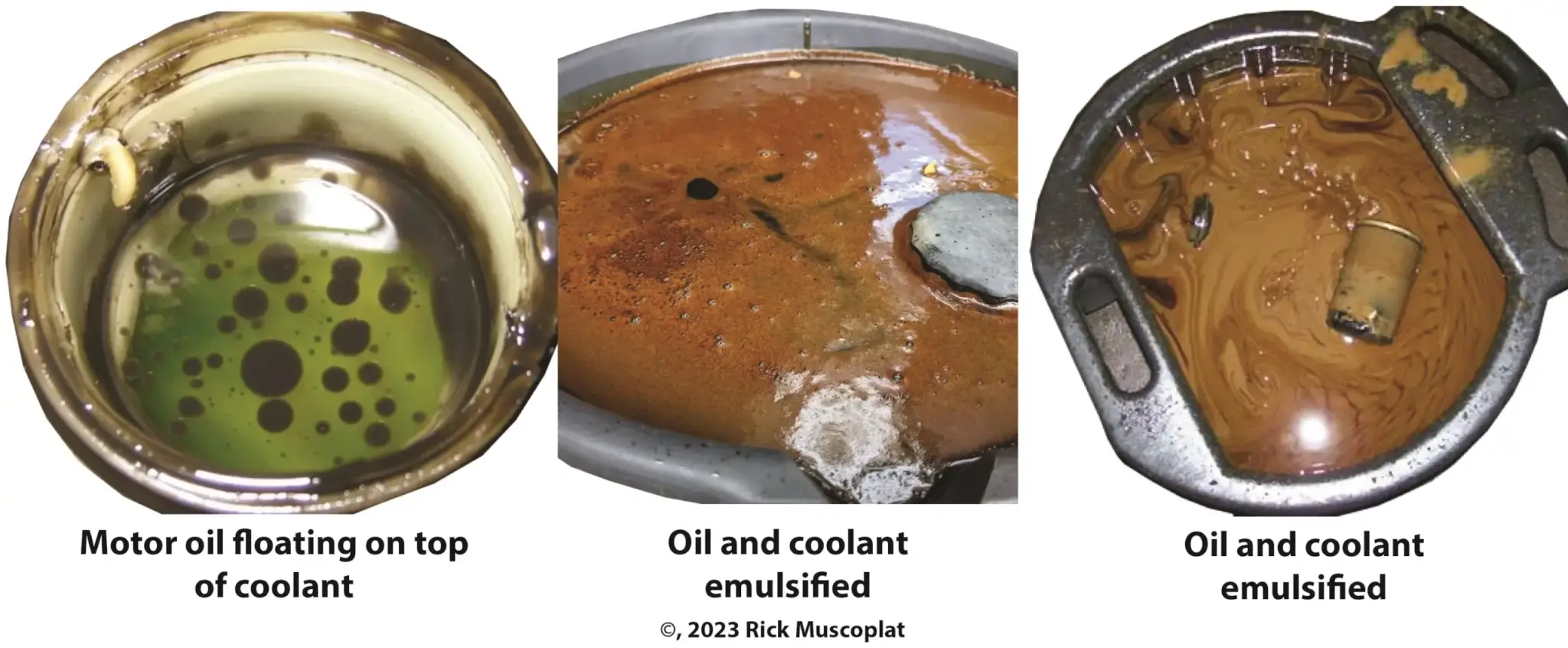
The first image on the left shows oil droplets in the coolant when draining the coolant. This is the first sign of a head gasket failure. The other two images show the full extent of oil and coolant mixing that appears like a chocolate milkshake.
• Oil in the radiator or coolant reservoir— This can indicate early head gasket failure. However, it can also be a sign of a leaking transmission oil cooler located inside the radiator. If the transmission cooler is leaking, the oil floating on the coolant will be red or brown.
• Over pressurization and rapid engine overheating— This is an indication of a gasket breach between the cylinder and coolant passage where combustion gasses are being pushed into the cooling system. This causes rapid bubbling in the coolant reservoir and causes the radiator hoses to become hard and coolant to vent from the reservoir
• Overheating indicating that hot combustion gasses from the breached head gasket are superheating the coolant
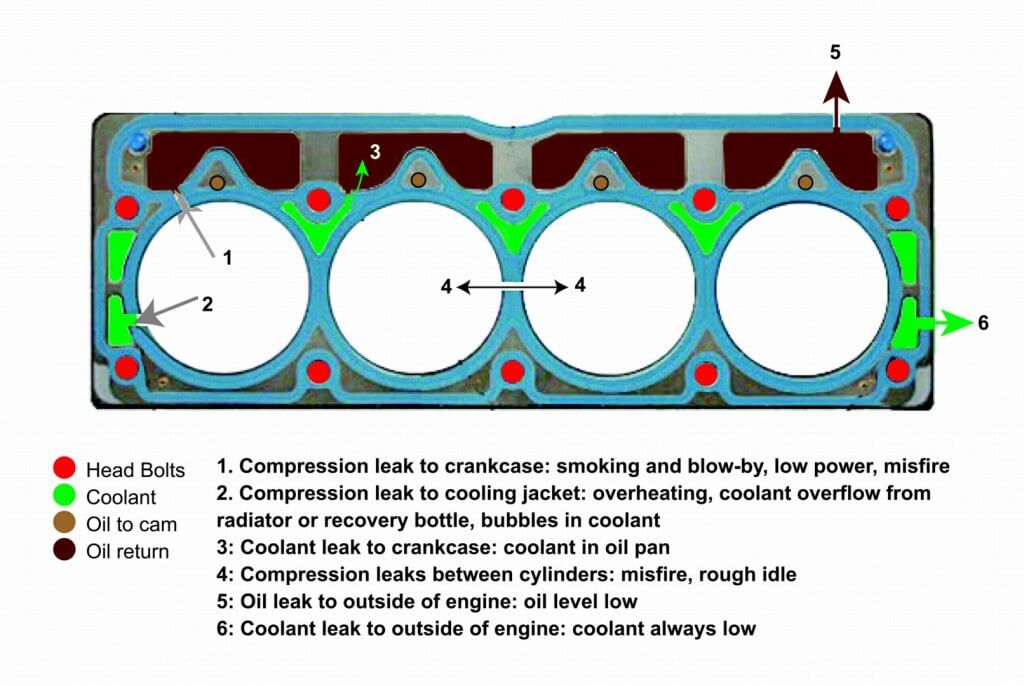
Typical head gasket
Before jumping to the conclusion that your engine has a blown head gasket, ask yourself these questions:
Does your engine have a turbocharger and oil cooler?
Because modern turbochargers run up to 300,000 RPM and are in constant contact with hot exhaust, car makers circulate coolant around the bearings. In addition to coolant, the bearings are lubricated with engine oil. Coolant can enter the combustion chamber if the seals fail, where it burns and creates white smoke in the exhaust.
Turbocharged engines also have an oil cooler to remove the high heat. The engine oil cooler receives coolant from the radiator and circulates the coolant around an oil cooler. If you’ve neglected coolant maintenance, the oil cooler can corrode, and coolant can mix with the oil in the cooler, and vice versa.

This is an example of a Hyundai oil cooler used in a turbocharged engine. The top portion of the oil cooler bolts to the engine, and that’s where the oil flows into and out of the cooler.
Does your vehicle have an automatic transmission?
Automatic transmissions generate a lot of heat, which is removed by a transmission cooler located inside the radiator. If you’ve neglected coolant changes, corrosion can eat through the transmission cooler, resulting in transmission fluid and coolant entering the transmission.

This image shows where a transmission oil cooler sits inside of a radiator
©, 2020 Rick Muscoplat
Posted on by Rick Muscoplat