
Understanding the P0012 Code: What it Means and how to FIx It
Troubleshooting the P0012 Code: Exhaust Camshaft Position Timing
The P0012 code “Intake Camshaft Position Timing – Over-Retarded (Bank 1).” Bank 1 is the bank containing cylinder #1. A P0012 trouble code is part of a family of trouble codes that can be set if there’s a problem with the engine’s variable valve timing (VVT) system.
The following trouble codes also relate to the VVT system:
P0010 Intake Camshaft Position Actuator Circuit / Open (Bank 1)
P0011 Intake Camshaft Position Timing – Over-Advanced (Bank 1)
P0012 Intake Camshaft Position Timing – Over-Retarded (Bank 1)
P0013 Exhaust Camshaft Position Actuator Circuit / Open (Bank 1)
P0014 Exhaust Camshaft Position Timing – Over-Advanced (Bank 1)
P0015 Exhaust Camshaft Position Timing – Over-Retarded (Bank 1)
The Most Common Causes of the P0012 Code
VVT systems rely on the proper oil viscosity, proper oil level, proper oil pressure, and a good oil control valve or VVT solenoid. The computer determines the proper camshaft angle and orders a change to either advance or retard the camshaft. The VVT solenoid or oil control valve pulses pressurized oil into the chambers of a camshaft phaser to advance or retard camshaft timing. After commanding the VVT solenoid, the ECM monitors the camshaft position sensors to determine if the camshaft phaser moved the camshaft by the right amount. If it doesn’t, the ECM sets a P0012 code.
Several factors can contribute to the P0012 code, including:
• Faulty VVT Solenoid— The VVT solenoid, also known as the oil control valve, regulates oil flow to the camshaft actuators. A malfunctioning solenoid can cause improper timing adjustments.
• Clogged filter screens in the VVT Solenoid— The VVT solenoids rely on clean pressurized oil to do their job. If you have metallic debris in the oil or sludge that clogs the filter screens, the VVT solenoid won’t dispense the commanded amount of oil.
• Oil Quality and Level— Poor or low oil quality can affect the VVT system’s performance, as oil pressure is critical for proper camshaft timing.
• Timing Chain/Belt Issues— A stretched or damaged timing chain/belt can cause incorrect camshaft timing, leading to the P0012 code.
• Worn or Damaged Camshaft Phasers— These components adjust the position of the camshaft. If they are faulty or stuck in the retarded position, the ECM will detect the issue.
• Electrical Problems— Wiring issues, such as damaged or corroded connectors, can interfere with the signals sent to the ECM, leading to erroneous timing adjustments.
• ECM Software Issues— Sometimes, a software update or reprogramming of the ECM is required to correct timing issues.
Symptoms of the P0012 Code
When the P0012 code is triggered, the vehicle may exhibit several symptoms, including:
• Poor Engine Performance: The engine may run rough, lack power, or have reduced acceleration due to improper camshaft timing.
• Decreased Fuel Efficiency: Incorrect camshaft timing can lead to inefficient combustion, resulting in higher fuel consumption.
• Rough Idling: The engine may idle roughly or even stall when the camshaft timing is not within the specified range.
• Increased Emissions: Emissions levels may rise due to incomplete combustion and poor engine performance.
• Rattling noise: A lack of oil can cause the phaser to emit a rattling sound
Diagnosing a P0012 Code
1) Always start by checking the oil level and condition. If your oil hasn’t been

A low oil level can cause a trouble code
changed for a while, is dark black, or has metallic flakes in it; change your oil before proceeding with the diagnosis.
2) Check the VVT Solenoid using a multimeter to test resistance. Remove the solenoid and check for a clogged filter screen.
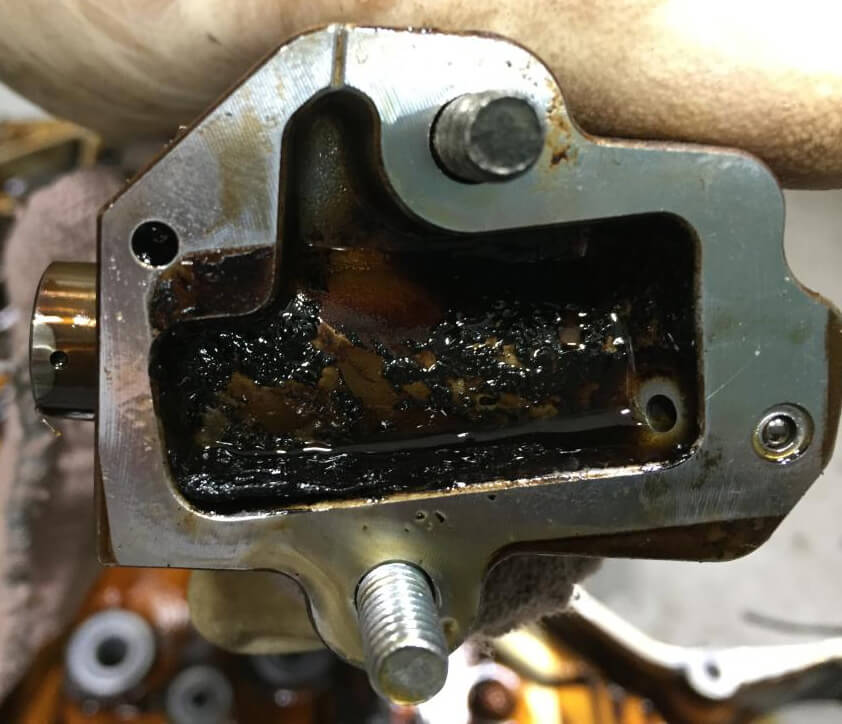
Notice the sludge in the VVT oil control solenoid screen.
3) Visual Inspection: Check the wiring and connectors related to the VVT system for any signs of damage, corrosion, or disconnection.
4) Camshaft Phasers and Timing Chain/Belt: Inspect the camshaft Phasers and timing chain/belt for wear or damage. Replace them if necessary.
5) ECM and Sensor Testing: Check the signals from the camshaft position sensors and ensure the ECM is functioning correctly. Update or reprogram the ECM if required.
The wrong oil viscosity can cause a P0012 trouble code
The computer assumes you’ve used the recommended oil viscosity. Based on that viscosity, the computer knows how often to pulse the oil control valve to achieve camshaft movement. If you use a different viscosity oil you can cause a P0012 trouble code. Change the oil and filter using the recommended viscosity, clear the code and drive the vehicle. If the code doesn’t return, you’ve found the root cause.
The wrong oil filter can cause a P0012 trouble code
Some engines are especially particular about the oil filter used. Some aftermarket oil filters reduce oil flow and reduce oil pressure to the point where it causes a substantial enough drop in pressure to result in improper VVT operation which then sets a P0012 trouble code.
If your engine was working properly until you did an oil and filter change and the code set shortly after that, suspect the oil filter.
A bad or clogged oil control valve or phaser can cause a P0012 trouble code
Running too long on an oil change can cause sludge buildup
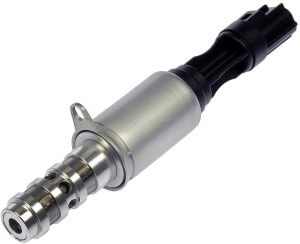
New cam phaser
in the filter screen of the oil control valve and that can cause it to malfunction and set a trouble code. If you’ve performed the fixes listed above, check the inlet screen on the oil control valve or phaser.
©, 2019 Rick Muscoplat