
Unveiling the Culprits: What Causes Low Oil Pressure?
What Causes Low Oil Pressure and How to Fix Them
Adequate oil pressure ensures that all moving parts within the engine are properly lubricated, reducing friction, minimizing wear, and helping to keep the engine running smoothly. When oil pressure drops below normal levels, it can lead to serious engine damage if not addressed promptly. Understanding what causes low oil pressure is essential for diagnosing and resolving issues before they lead to costly repairs or engine failure.
Oil pressure is measured in pounds per square inch (PSI), and most vehicles have a gauge or warning light on the dashboard to alert drivers if the pressure drops below a certain level. The exact normal operating pressure can vary between different engines, but it generally falls within the range of 20-40 PSI when the engine is at operating temperature and idling. The low oil pressure light comes on when oil pressure drops below 7 psi on most engines.
Exploring the most common causes of low oil pressure
1) Low oil level
Running your engine when it’s low on oil causes low oil pressure because the oil pump is pulling in air instead of oil. Unfortunately, this condition is becoming more common as oil change intervals extend to 10,000 miles, and owners neglect to check and top up their oil levels between changes. Shops report that it’s not uncommon to perform an oil change after a 10,000-mile interval to discover that only one or two quarts of oil drain out. Running your engine when it’s low on oil is also a major contributor to accelerated engine wear.
Symptoms of a low oil level:
The oil light is on
The engine makes a ticking or knocking sound
The level on your dipstick is below the minimum mark
2) A faulty or leaking oil pressure sensor
An oil pressure sensor is built with a diaphragm 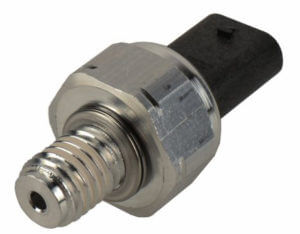 and electrical contacts. Over time, the diaphragm can degrade and leak, causing the sensor to report a false warning when the pressure is within specs.
To test for a faulty oil pressure sensor, either replace the sensor with a new unit or install a mechanical oil pressure gauge in place of the sensor to determine if the sensor it reporting accurately.
3) A stuck oil pressure relief valve or worn oil pump
The oil pump is responsible for circulating oil throughout the engine. If the pump is malfunctioning, it may not be able to generate sufficient pressure to properly lubricate the engine. Common causes of oil pump failure include wear and tear, or contamination.
In addition, most oil pumps have a pressure relief valve to bleed off excess pressure at higher RPMS. If the pressure relief valve sticks open, it will constantly bleed off pressure, causing low oil pressure and resulting in the oil light coming on.
4) A clogged oil pickup screen due to sludge
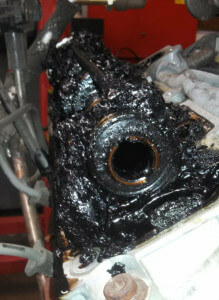
Sludge in an engine can clog the oil pump pickup screen so it can’t pump oil
If you’ve neglected oil changes and developed a sludge problem in the oil pan, the sludge buildup can restrict the oil pickup screen, causing oil starvation and an oil warning light. Cleaning the oil pickup can sometimes solve the problem.
5) Worn engine bearings
The engine’s bearings play a crucial role in maintaining oil pressure. Over time, bearings can wear out, causing low oil pressure and engine damage due to insufficient lubrication. When the bearings wear out, the clearance between the bearings and the crankshaft increases, allowing oil to escape more easily and reducing overall oil pressure.
Signs of Worn Engine Bearings:
Knocking or tapping noises from the engine, especially under load
Consistently low oil pressure readings
Metal shavings in the oil
6) A clogged or damaged oil filter
Many oil filters contain a bypass valve to keep oil flowing around the filtration element if the filter gets clogged. If your oil filter has a faulty bypass valve, it will starve the oil pump and cause low oil pressure.
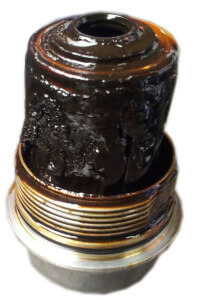
A clogged oil filter can’t filter oil
Symptoms of low oil pressure
Oil light on
A ticking, knocking, or clunking noise from the engine
Burned oil smell due to engine overheating
Poor engine performance
Engine overheating
©, 2020 Rick Muscoplat
Posted on by Rick Muscoplat