
What Gets Damaged When You Hit a Curb?
The Most Common Damage From Hitting a Curb
Quick Summary
Hitting a curb usually damages:
• Tire and wheel damage — When you hit a curb, the sidewall takes a sideways force it was never built to absorb. The impact often breaks a belt, causing an air leak (a bubble on the sidewall is the clue), and can easily bend the wheel.
• Control arm — Just about any curb hit can bend the control arm
• Tie rod — If you hit the curb at a severe angle, chances are you’ll bend the inner tie rod
• Strut — A curb hit at a high speed will often bend the strut
• Steering knuckle — Bending the knuckle is rare since it’s made out of pretty heavy metal, but a good hit at high speed can damage it
• Wheel bearing — It doesn’t take much of a hit to cause brinelling in your wheel bearing. The noise won’t show up right away, but you’ll be buying a wheel bearing in the near future.
Any off-center steering wheel, pulling, noise, or vibration means immediate damage from hitting a curb—do NOT keep driving.
Article
As a technician who has inspected hundreds of vehicles after curb impacts, I can tell you that even a low-speed curb hit can cause far more damage than most drivers expect. Modern vehicles use lightweight aluminum and thin-wall steel components designed for fuel efficiency—not curb strikes. That means damage from hitting a curb can affect the tires, wheels, steering, suspension, and even the transmission. In this guide, I’ll explain exactly what breaks, how to assess the damage, and the realistic cost to repair curb damage based on what I see in the shop every week.
The Most Common Damage From Hitting a Curb
When you hit a curb, the entire force of the impact transfers directly into the wheel assembly. Depending on speed and angle, the damage from hitting a curb typically includes:
1. Tire Damage — A curb hit can slice a sidewall, create a deep gouge that reaches structural plies, or cause a hidden bubble. Any of these requires immediate tire replacement.
2. Bent Wheels — A bent steel wheel can sometimes be straightened, but most drivers replace it because the cost to repair curb damage to steel wheels often exceeds the cost of a new one.
Alloy wheels almost always need replacement—the aluminum permanently weakens when bent.
3. Damaged Steering Components — At 20–30 mph, you will almost always bend the tie rod. A hard enough hit a curb impact can also crack the steering knuckle. If your steering wheel sits off-center afterward, assume you have steering damage.
4. Bent Suspension Parts — Control arms and struts frequently bend during curb impacts. Lightweight aluminum arms take the hit first.
5. Transmission or Final Drive Damage — A severe curb strike can shove the control arm backward, forcing the axle into the transmission case and damaging gears or bearings. When that happens, the cost to repair curb damage skyrockets.
6. Undercarriage Damage — Exhaust hangers, splash shields, and plastic aerodynamic panels often get pushed out of alignment or torn off.
What to Check Immediately After You Hit a Curb
When drivers ask me what to do after they hit a curb, I tell them to stop and evaluate the vehicle before continuing. Continuing to drive can make the damage from hitting a curb far worse.
1. Is the steering wheel off-center? If so, the tie rod or control arm is bent. Driving further will destroy the tire in a matter of miles.
2. Does the car pull, vibrate, or wander? Misalignment from bent steering or suspension parts is the most likely cause.
3. Do you hear clicking, grinding, or rubbing noises? That indicates metal-to-metal contact—usually a bent knuckle, strut, or control arm.
4. Does the transmission shift smoothly? If gear changes feel delayed, harsh, or inconsistent, the axle may have been forced into the transmission. Stop driving immediately.
5. Is anything leaking underneath? Leaking axle grease, transmission fluid, or engine oil increases the cost to repair curb damage dramatically.
If you experience any of these symptoms after hitting a curb, have the vehicle towed—not driven—to a repair facility.
Typical Cost to Repair Curb Damage
Drivers are often shocked by the cost to repair curb damage because the force can travel through so many interconnected components.
Example: 2018 Honda Civic
• Control arm: $325 for the part — Labor + alignment: about $605
• If the tie rod is bent, you’ll need a full rack replacement ~$3,187
• If the strut is bent, add $414
Example: 2018 Toyota Highlander
• Control arm part $325 Labor + alignment: ~$1,669
• Bent tie rod = full rack replacement ~$2,300
• Bent strut: add $469
• Steering Knuckle damage — A cracked knuckle (common in hard curb hits) costs about $1,000 after parts and labor.
Does Insurance Cover Curb Damage?
Yes. Collision insurance typically covers the cost to repair curb damage, but your deductible applies. The claim counts as an at-fault accident, which may increase your premium.
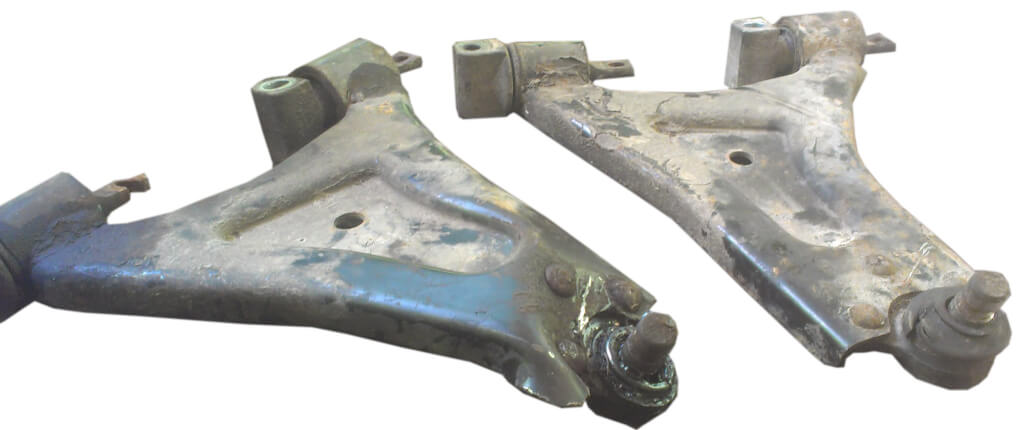
Bent control arm
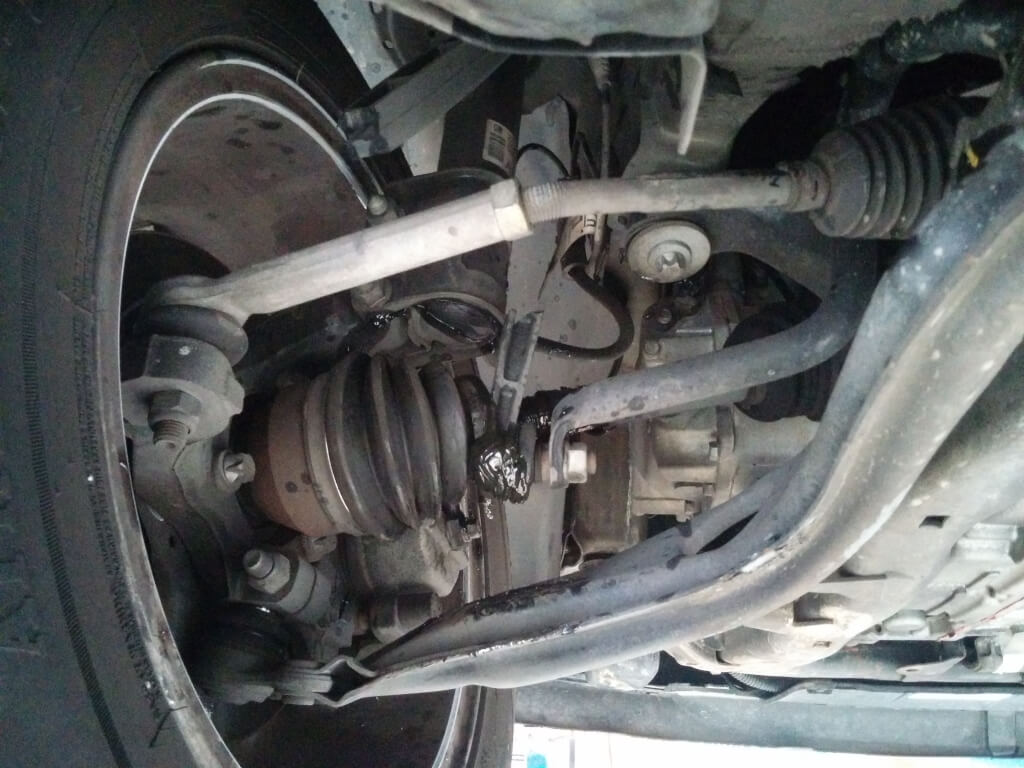
This curb impact bent the control arm and tie rod
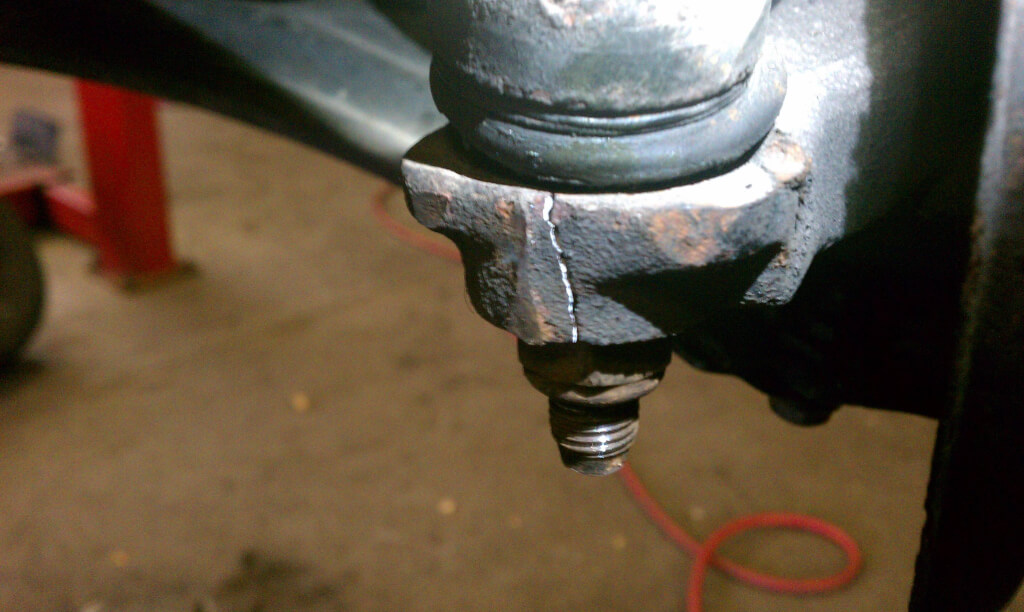
This severe curb impact cracked the steering knuckle. A genuine Honda steering knuckle replacement costs about $450 plus installation and alignment, for a total cost of about $1,000
©, 2015 Rick Muscoplat
Posted on by Rick Muscoplat