
What sway bar end links do and how they fail
Learn what a sway bar link is, what it does, and how it fails
Sway bar end links are small but crucial components in a vehicle’s suspension system. They connect the sway bar (also known as the anti-roll bar) to the suspension components, playing a significant role in vehicle stability and handling. Understanding their function and the signs of their failure is essential for maintaining a smooth and safe driving experience. This article explores what sway bar end links is, how it contributes to vehicle performance, and the common ways they can fail.
What Sway Bar End Links Do
• Reduce Body Roll— During cornering, the vehicle’s body tends to lean towards the outside of the turn. The sway bar, through the end links, transfers some of the load from the outer suspension to the inner suspension, reducing body roll and enhancing stability.
• Improving Handling— By minimizing body roll, sway bar end links help maintain better tire contact with the road, improving traction and handling. This is particularly important during high-speed maneuvers or sudden changes in direction.
• Enhancing Ride Comfort— While the primary purpose is to improve handling, properly functioning sway bar end links also contribute to a smoother ride by stabilizing the vehicle during everyday driving conditions.
Here’s how the sway bar and end links reduce body roll
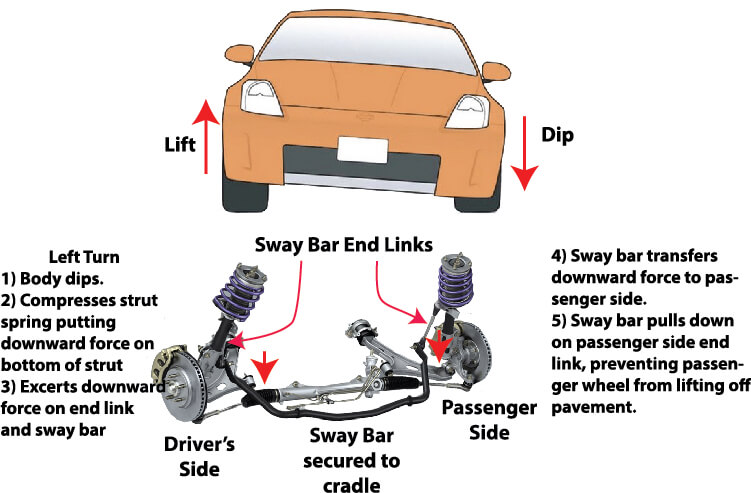
Sway bar operation and how it reduces body roll in turns
Here’s how sway bar bushings and end links wear
The bushings secure the sway bar to the car frame or engine cradle yet allow the bar to rotate slightly. The bushing also cushions the impact when hitting road bumps and potholes. Over time, the rubber bushings harden, crack and wear in an elliptical pattern.
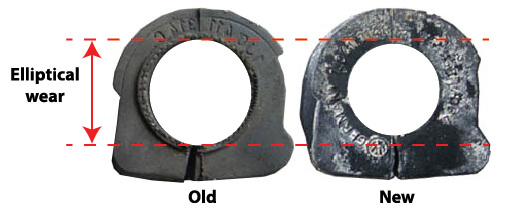
Old and new sway bar bushings. Notice the elliptical wear pattern in the old bushing. This wear allows the sway bar to move up and down in the mounting bracket
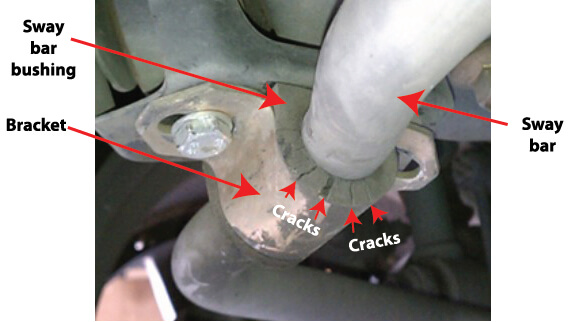
Sway bar bushings showing age related cracks
What goes wrong with them?
• Wear and Tear— The end links consist of bushings or ball joints, which can wear out over time. As they wear, they lose their ability to provide a solid connection between the sway bar and the suspension, leading to increased body roll and reduced handling performance.
• Corrosion and Rust— Sway bar end links are often exposed to the elements, making them susceptible to rust and corrosion. This is especially true in regions with harsh winters or salty road conditions. Rust can weaken the metal components, leading to premature failure.
• Broken or Loose Components— The end links can break due to extreme forces experienced during aggressive driving or off-roading. Additionally, bolts or nuts securing the end links can loosen over time, leading to a rattling noise and diminished performance.
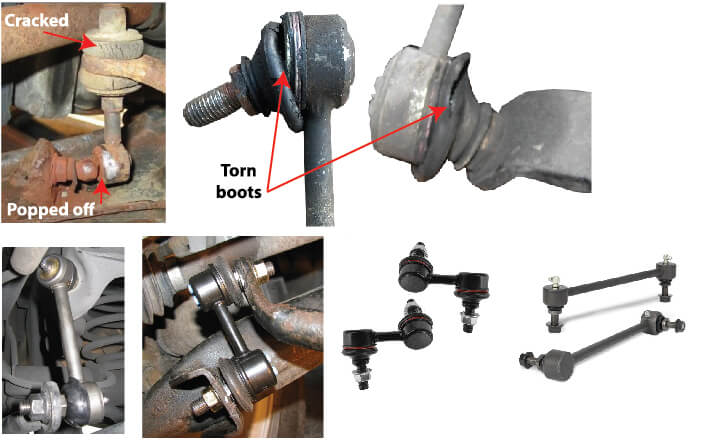
Old and damaged sway bar end links and new units
Symptoms of worn or damaged bushings and links
• Clunking noise when going over bumps. Worn link noise is most noticeable as when turning into a driveway when body weight shifts on one wheel.
• Excessive body roll in turns— If the link has a rubber boot and the boot is intact, the end link may still be worn enough to make noise, even though there’s no play when trying to move the joint.
• Worn links can make the same sound as a worn strut mount. To eliminate the end link as the source of the noise, remove the end link and drive over the same bumps.
©, 2017 Rick Muscoplat
Posted on by Rick Muscoplat