
What the P0110 Code Means and How to Fix It
Diagnosing the P0110 Code Like a Pro
Quick Summary
The P0110 code indicates a fault in the intake air temperature sensor circuit, a critical input the engine computer uses to calculate fuel delivery and ignition timing. In most cases, the problem is not the sensor itself but damaged wiring, connector corrosion, or a poor electrical reference. Diagnosing the P0110 code requires basic electrical testing, not guesswork. Catching and fixing an intake air temperature sensor circuit issue early can prevent drivability problems, poor fuel economy, and unnecessary parts replacement.
Article
What the P0110 Code Means
When I see a P0110 code, I know the engine control module (ECM) has detected a malfunction in the intake air temperature sensor circuit. The intake air temperature (IAT) sensor measures the temperature of incoming air, enabling the ECM to calculate air density. Cold air is denser and requires more fuel; warm air is less dense and requires less.
The IAT sensor is a thermistor whose resistance varies with temperature. As the intake air temperature changes, the voltage signal sent to the ECM changes. If 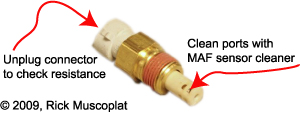 that signal is missing, implausible, or outside its expected range, the ECM sets the P0110 code.
On many vehicles, the IAT sensor is built into the mass air flow (MAF) sensor. On others, it’s a standalone sensor mounted in the intake duct or manifold. Either way, the intake air temperature sensor circuit must provide a clean, accurate signal for proper engine operation.
Common Symptoms Associated With the P0110 Code
A P0110 code doesn’t always cause immediate drivability problems, but when it does, the symptoms are fairly consistent. I often see hard starting, a rough idle, acceleration hesitation, and noticeably poor fuel economy. Some vehicles may run excessively rich or lean because the ECM estimates air temperature rather than measuring it.
In colder climates, a failed intake air temperature sensor circuit can cause extended crank times or stumbling right after startup. The check engine light will almost always be illuminated, even if the engine seems to run “okay.”
The sensor is a variable-resistance device that modulates the voltage applied to it based on the temperature of the incoming air. These are usually two-wire sensors with one wire providing a reference voltage and the other wire as ground. The PCM monitors the voltage on the reference wire.
Most Common Causes of a P0110 Code
Despite what parts stores may suggest, the sensor itself is not always the main culprit. In my experience, the most common causes of a P0110 code include wiring damage near the intake duct, corroded connectors, and broken reference or ground circuits.
Heat, vibration, and oil contamination are brutal on intake wiring. A cracked wire within the insulation can intermittently open, triggering a fault in the intake air temperature sensor circuit under certain conditions. I also frequently find bent or spread terminals inside the connector that prevent proper contact.
Of course, the IAT sensor can fail internally, especially if it’s contaminated with oil vapor or dirt. Less commonly, the problem can be traced to a faulty ECM, but that’s the last thing I suspect after ruling out everything else.
How the Intake Air Temperature Sensor Circuit Works
The ECM supplies a reference voltage, usually 5 volts, to the sensor. The sensor’s resistance changes with temperature, altering the return voltage signal.
When the intake air is cold, the resistance is high, and the voltage is higher. When the air is warm, the resistance drops and the voltage decreases. If the ECM detects 0 V, the full reference voltage, or a signal that doesn’t match engine conditions, it sets the P0110 code.
How I Diagnose a P0110 Code
Diagnosis always starts with a scan tool. I monitor live intake air temperature and compare it to ambient temperature when the engine is cold. If the scan tool shows -40°F or an implausibly high number, that’s a dead giveaway of an intake air temperature s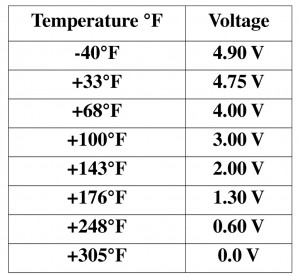 ensor circuit problem.
Next, I visually inspect the wiring and connectors, especially near the intake tube, where movement and heat can cause damage. If nothing is obvious, I move on to electrical testing. I check for a proper 5-volt reference, a good ground, and a signal voltage that varies with temperature. A heat gun or compressed air can help confirm sensor response.
If the wiring checks out and the sensor doesn’t respond correctly, replacement is justified. If the sensor responds but the ECM data doesn’t change, the issue is in the circuit, not the sensor.
To test the sensor, remove the electrical connector and connect a digital multimeter to measure the resistance. This is a typical resistance/temperature chart for a GM vehicle. Check a service manual to get the chart for your particular vehicle. Compare your reading to the under-hood temperature taken another thermometer. If the resistance reading is off, remove the sensor and check the airflow ports to make sure they are not clogged. You can also try cleaning the sensor with an MAF sensor cleaner spray. If it still doesn’t check out, replace it.
How to Fix the P0110 Code
Fixing a P0110 code depends entirely on what you find during diagnosis. Many repairs involve cleaning or replacing a damaged connector, repairing broken wiring, or rerouting harnesses away from heat sources. When the sensor itself has failed, replacement is usually straightforward and inexpensive.
After repairs, I always clear the code and verify that the intake air temperature sensor circuit data responds correctly under different driving conditions. A proper fix will prevent the P0110 code from returning and restore normal fuel calculations.
Why Ignoring the P0110 Code Is a Bad Idea
While a P0110 code won’t usually leave you stranded, ignoring it can cause long-term issues. Incorrect air temperature data affects fuel trim, emissions, and catalytic converter life. Over time, operating rich or lean due to a faulty intake air temperature sensor circuit can lead to larger, more expensive problems.
A P0110 code indicates that the PCM cannot read the intake air temperature sensor. This is the type of code that usually means a wiring fault, rather than a bad sensor. However, check the sensor first.
© 2012 Rick Muscoplat
Posted on by Rick Muscoplat