
What the P0109 Code Means and How to Fix It
Diagnosing the P0109 Code Like a Pro
Quick Summary
The P0109 code indicates an intermittent or erratic signal problem in the Manifold Absolute Pressure sensor circuit and/or the Barometric Pressure sensor circuit. These sensors provide critical load and altitude data to the engine computer. When their signals drop out or conflict, fuel delivery and ignition timing suffer. In most cases, the root cause of a P0109 code is wiring damage, poor electrical connections, or a shared reference or ground issue—not a bad sensor. Proper diagnosis focuses on live data, wiring integrity, and signal stability rather than parts swapping.
Article
What the P0109 Code Means
When the engine control module (ECM) sets a P0109 code, it’s telling you that it’s seeing an intermittent fault in the Manifold Absolute Pressure sensor circuit, the Barometric Pressure sensor circuit, or the relationship between the two. Unlike hard faults that persist, this code indicates a signal that drops out, spikes, or becomes implausible during operation.
The ECM constantly compares manifold pressure to barometric pressure to determine engine load. The Manifold Absolute Pressure sensor circuit reports intake manifold vacuum or pressure, while the Barometric Pressure sensor circuit provides a baseline reference for atmospheric pressure. If either signal becomes erratic—or if they no longer correlate—the ECM flags the P0109 code.
Why the MAP and BARO Signals Matter
From a diagnostic standpoint, the Manifold Absolute Pressure sensor circuit is one of the most important inputs to the ECM. It tells the computer how hard the engine is working. High vacuum means light load; low vacuum means heavy load. The Barom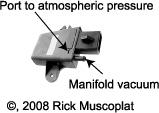 etric Pressure sensor circuit provides the ECM with altitude information, enabling it to adjust fueling and timing for elevation changes.
On some vehicles, the BARO sensor is built into the MAP sensor. On others, it’s integrated into the ECM or mounted separately. Either way, the ECM expects these two signals to be consistent with each other. When they don’t, the P0109 code appears.
Common Symptoms of a P0109 Code
Vehicles with a P0109 code often exhibit inconsistent drivability complaints. I commonly see hesitation on acceleration, surging at steady speeds, rough idle, and poor fuel economy. Because the fault is intermittent, the symptoms may come and go, making the problem especially frustrating.
In some cases, the engine may stall during deceleration or feel weak under load. The check engine light may flicker on and off as the Manifold Absolute Pressure sensor circuit or the Barometric Pressure sensor circuit signal drops out and then returns.
Most Common Causes of the P0109 Code
Despite what you might hear at a parts counter, failed sensors are not the most common cause of a P0109 code. In real-world diagnostics, wiring and connection problems top the list.
Heat, vibration, and oil contamination can damage the wiring near the intake manifold or throttle body, leading to intermittent opens or shorts in the Manifold Absolute Pressure sensor circuit. Corrosion or loose terminals at the connector can cause momentary signal loss that triggers the code.
Shared reference voltage or ground issues are another frequent culprit. Because the Barometric Pressure sensor circuit and MAP sensor often share a 5-volt reference or ground, a problem in one circuit can affect the other. Vacuum leaks can also skew MAP readings, causing the ECM to indicate a sensor fault when the actual issue is unmetered air.
How the Manifold Absolute Pressure Sensor Circuit Works
The Manifold Absolute Pressure sensor circuit operates on a simple principle. The ECM supplies a 5-volt reference and ground to the sensor. Inside the sensor, a pressure-sensitive element converts manifold pressure into a variable voltage signal. High vacuum produces a low voltage; low vacuum produces a higher voltage.
The Barometric Pressure sensor circuit operates similarly but measures atmospheric pressure rather than manifold pressure. The ECM compares these values constantly. If the MAP signal exhibits erratic jumps or no longer aligns with BARO data, the P0109 code is set.
How I Diagnose a P0109 Code
Diagnosis always starts with a scan tool. I look at live data for both MAP and BARO readings. With the key on and engine off, the Manifold Absolute Pressure sensor circuit reading should closely match the Barometric Pressure sensor circuit value. If they don’t, I already know where to focus.
Next, I monitor the data while driving, or gently tap and flex the wiring harness. If the readings spike or drop out, that confirms an intermittent wiring or connector issue. I then inspect the harness near heat sources and check terminal tension at the connectors.
If wiring checks out, I test the 5-volt reference and ground for stability. Only after confirming that the circuits are solid do I consider replacing the sensor. Replacing sensors without verifying the integrity of the Manifold Absolute Pressure and Barometric Pressure sensor circuits is a common—and expensive—mistake.
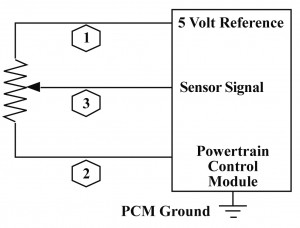 The sensor receives a reference voltage from the computer and ground.
Depending on the type of MAP sensor, it can alter the returning voltage or generate a digital square wave back to the computer.
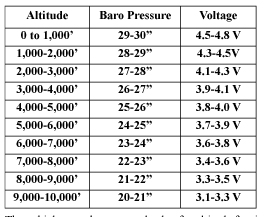
You can test a MAP sensor for correct barometric pressure readings with a digital multimeter. This is a typical voltage chart for a GM sensor, based on the altitude at your testing location.
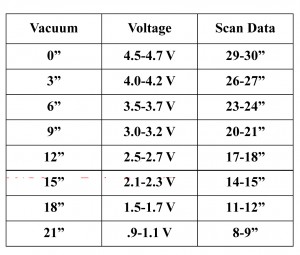
You can also test the MAP while it is running. Connect a vacuum gauge to the intake manifold and compare the gauge reading to the voltage output from the MAP sensor.
How to Fix the P0109 Code
Fixing a P0109 code usually involves repairing wiring, cleaning or replacing corroded connectors, or correcting shared ground or reference issues. If a vacuum leak is present, repairing it often restores proper MAP readings and resolves the code.
When a sensor is proven faulty, replacement is straightforward. After repairs, I always clear the code and confirm that both the Manifold Absolute Pressure sensor circuit and Barometric Pressure sensor circuit data remain stable under all driving conditions.
Why You Shouldn’t Ignore a P0109 Code
While a P0109 code may not immediately strand you, ignoring it can lead to long-term issues. Incorrect load calculations affect fuel trim, emissions, and catalytic converter life. Addressing the Manifold Absolute Pressure sensor circuit and Barometric Pressure sensor circuit problems early prevents larger, more costly failures down the road.
© 2012 Rick Muscoplat
Posted on by Rick Muscoplat