
What the P0108 Code Means and How to Fix It
P0108 Code Explained: What It Means, Common Causes, and How to Fix It
Quick Summary
The P0108 code indicates the engine computer is detecting a MAP sensor signal voltage higher than expected. In plain English, the PCM thinks the engine is under heavy load or wide-open throttle even when it isn’t. That false reading can cause rough idle, black smoke, poor fuel economy, hesitation, hard starting, and even catalytic converter damage if ignored.
In my experience, the most common causes of a P0108 code are:
• A faulty MAP sensor
• Damaged wiring or connector corrosion
• A poor ground or 5-volt reference problem
• Vacuum hose leaks or restrictions
• Oil contamination inside the MAP sensor
• A short-to-voltage in the signal wire
The biggest mistake I see is replacing the MAP sensor without testing the circuit first. Proper diagnosis always starts with live scan data, voltage testing, and vacuum verification
What the P0108 Code Means
When I diagnose a P0108 code, I immediately know the PCM has detected a high input condition in the Manifold Absolute Pressure (MAP) sensor circuit. On some vehicles, the fault may also involve the barometric pressure reading.
The MAP sensor measures intake manifold pressure and sends that information to the engine computer. The PCM uses that signal to calculate:
• Engine load
• Fuel delivery
• Ignition timing
• Transmission shift strategy
• Turbocharger boost control
When the PCM detects a voltage signal that remains too high under current operating conditions, it stores the P0108 code and illuminates the check engine light.
In simple terms, the computer thinks the engine is under heavy acceleration all the time.
That creates serious drivability problems because the PCM commands excessive fuel delivery and alters ignition timing based on false information.
Why High MAP or BARO Input Causes Problems
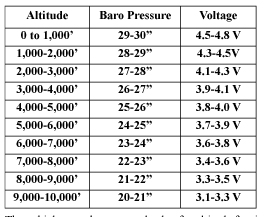
The Manifold Absolute Pressure high input condition signals 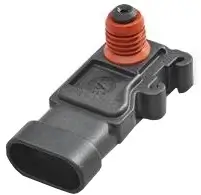 to the PCM that intake pressure is near atmospheric or boosted—conditions that should only occur at wide-open throttle or on turbocharged engines under boost. A high Barometric Pressure input suggests altitude data that doesn’t match reality. When either input is incorrect, the PCM enriches the mixture and adjusts timing, often resulting in poor fuel economy, hesitation, or rough running.
Accurate pressure data is foundational. When the PCM believes pressure is high at all times, it overfuels, mismanages spark advance, and can even damage the catalytic converter over time.
Common Symptoms of a P0108 Code
The symptoms of a P0108 code can vary depending on how severe the fault is, but these are the problems I see most often.
Rough Idle — A false MAP reading causes incorrect fuel calculations, leading to an unstable idle.
Black Smoke From the Exhaust — When the PCM detects a high engine load, it enriches the mixture excessively.
Poor Fuel Economy — This is one of the most common complaints associated with a P0108 MAP sensor problem.
Hesitation or Bogging — The engine may stumble badly during acceleration because the air-fuel mixture is far too rich.
Hard Starting — Some engines become difficult to start because the cylinders are flooded with excess fuel.
Reduced Power — Turbocharged vehicles may enter fail-safe mode and reduce boost pressure.
Check Engine Light — The CEL usually remains illuminated continuously with a stored P0108 code.
The Most Common Causes of the P0108 Code
Over the years, I’ve learned that the sensor itself is not always the problem. In fact, wiring faults are often more common than an actual failed MAP sensor.
Faulty MAP Sensor — Internal sensor failure can lock the output voltage high.
Damaged Wiring — A short-to-voltage in the signal wire can cause the PCM to read a consistently high MAP value.
Bad Ground Circuit — Poor grounds can distort sensor voltage readings and create false data.
Vacuum Hose Problems — A disconnected or cracked vacuum hose can cause the sensor to read atmospheric pressure continuously.
Connector Corrosion — Corrosion inside the MAP connector can increase resistance and alter the signal.
Oil Contamination — Some MAP sensors become contaminated with oil vapor from the intake system.
PCM Problems —
Actual PCM failures are rare, but they can happen.
How the MAP and BARO Systems Work
Understanding how the MAP system works makes diagnosing a P0108 code much easier.
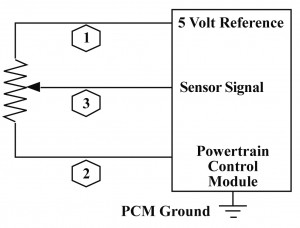
Most MAP sensors use three wires:
• A 5-volt reference from the PCM
• A ground circuit
• A signal wire back to the PCM
The sensor converts pressure changes into voltage changes.
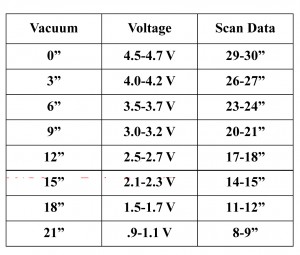
At idle, engine vacuum is high, so MAP voltage is low. At wide-open throttle, vacuum drops and manifold pressure rises, so voltage increases. A normal MAP sensor signal usually falls somewhere around:
• 1 to 1.5 volts at idle
• 4 to 4.5 volts at wide-open throttle
If the PCM sees high voltage continuously, it interprets this as a MAP sensor high-input condition, triggering the P0108 code.
On many vehicles, the MAP sensor also helps calculate barometric pressure during key-on engine-off conditions. That’s why some manufacturers describe this as a barometric pressure high input fault as well
How I Diagnose a P0108 Code
When I troubleshoot a P0108 code, I always follow a logical testing process instead of guessing. That prevents unnecessary parts replacement.
Step 1: Check Freeze Frame and Live Data
• I start with a scan tool — With the key on and engine off, MAP and BARO readings should usually be nearly identical. If the MAP value is pegged unusually high, I know something is wrong immediately.
• Then I start the engine — At idle, the MAP reading should drop significantly because engine vacuum increases.
If it stays high, I suspect:
• A vacuum leak
• A wiring fault
• A stuck MAP sensor signal
Step 2: Inspect the Vacuum Hose
On older systems with a vacuum hose connected to the MAP sensor, I inspect for:
• Cracks
• Restrictions
• Oil saturation
• Disconnections
A damaged hose alone can trigger a P0108 code.
Step 3: Test the 5-Volt Reference
• I use a digital multimeter to verify the PCM is supplying a clean 5-volt reference signal. If reference voltage is missing, multiple sensors may be affected.
Step 4: Verify Ground Integrity
A poor sensor ground can create false high-voltage readings.
Voltage drop testing is critical here.
Step 5: Test the Signal Wire
If the signal wire shows a near-reference voltage constantly, I look for:
• A short-to-voltage
• Damaged insulation
• Harness rubbing
Step 6: Unplug the MAP Sensor
This is a quick trick I use often. If unplugging the sensor changes the voltage reading dramatically, the sensor itself is likely faulty.
If the reading remains high with the sensor disconnected, the problem is probably in the wiring or PCM.With the key on and engine off, MAP and BARO readings should usually be nearly identical. If the MAP value is pegged unusually high, I know something is wrong immediately. Then I start the engine. At idle, the MAP reading should drop significantly because engine vacuum increases.
If it stays high, I suspect:
• A vacuum leak
• A wiring fault
• A stuck MAP sensor signal
How to Fix a P0108 Code
The repair depends entirely on what testing reveals.
Common fixes include:
• Replacing a faulty MAP sensor
• Repairing damaged wiring
• Cleaning corroded connectors
• Replacing cracked vacuum hoses
• Restoring a proper ground connection
• Repairing shorted signal circuits
After repairs, I clear the code and verify that MAP readings respond correctly during idle, acceleration, and cruise conditions.
I also road-tested the vehicle while monitoring live scan data to ensure the problem was completely resolved.
Why You Shouldn’t Ignore a P0108 Code
Ignoring a P0108 code allows the engine to run with incorrect load calculations. Over time, that can foul spark plugs, dilute oil with fuel, and overheat the catalytic converter. Addressing Manifold Absolute Pressure high input and Barometric Pressure high input issues early prevents far more expensive damage later.
© 2012 Rick Muscoplat
Posted on by Rick Muscoplat