
What to Do When You Get a P0420 Catalytic Converter Code
What to check when you get a P0420 or P0430 code
Quick Summary:
If your check engine light shows a P0420 catalytic converter code or a P0430 trouble code, don’t assume the oxygen sensor is bad. These codes almost always mean your catalytic converter isn’t doing its job efficiently — but the root cause is usually elsewhere. Before spending money, I’ll walk you through how I diagnose and confirm what’s really wrong so you don’t replace the wrong parts.
Why a P0420 or P0430 Code Rarely Means a Bad Oxygen Sensor
After years in the shop, I can tell you with confidence — when a car sets a P0420 catalytic converter code or P0430 code, the oxygen sensor is rarely the problem.
Here’s how the system actually works.
Once the engine warms up, the computer performs a catalyst efficiency test. It commands the engine to switch between rich and lean fuel conditions. The upstream oxygen sensor should show a rapid rich-lean response, proving it’s functioning. The downstream sensor, located after the catalytic converter, should show a slow, steady signal if the converter is working properly.
If the downstream signal starts mimicking the upstream signal, it means the converter isn’t cleaning up emissions — that’s when the computer triggers a P0420 or P0430 code.
In short: if the computer can run this test at all, the upstream O₂ sensor is already working. A bad oxygen sensor would set a different code entirely, not P0420 or P0430.
Step-by-Step Diagnostic Guide for a P0420 or P0430 Code
Step 1: Check for Physical Damage— Start with a visual inspection. Crawl under the car and inspect the catalytic converter for dents, scrapes, or impact damage. Tap the converter lightly with a rubber mallet. If you hear rattling, the internal ceramic substrate is shattered — replacement is your only option. No amount of cleaning or sensor swapping will fix that.
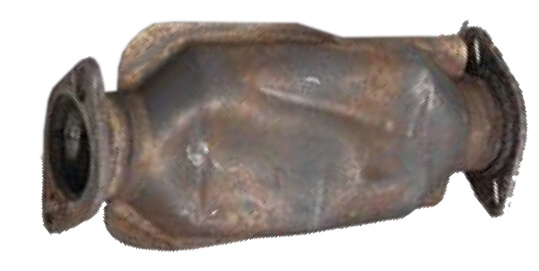
Step 2: Look for Discoloration or Overheating— A converter with a blue or reddish tint has overheated internally. This usually happens when the engine runs too rich or burns oil. Overheating melts the ceramic substrate and ruins the converter. You’ll often hear a dull rattle when you tap it. If that’s the case, the converter is finished — but you also need to fix the underlying cause before replacing it.
Step 3: Inspect the Heat Shields— Most people ignore missing or rusted-off heat shields, thinking they’re just noise dampers. They’re wrong. Heat shields help the converter retain heat, which is critical for proper operation. Without them, the converter runs too cool to “light off” properly, triggering a P0420 catalytic converter code.

A typical broken off heat shiled
Step 4: Check for Exhaust Leaks— Even a small exhaust leak upstream of the catalytic converter can cause a false P0420 or P0430 code by allowing outside air to mix with exhaust gases. Look for black soot around joints and flanges. To confirm, use a shop vacuum to pressurize the exhaust and spray joints with soapy water — bubbles indicate a leak that must be repaired before any further diagnosis.
Step 5: Check Long-Term Fuel Trim (LTFT) Values— Connect a scan tool and review fuel trim data. LTFT values above +10% indicate a lean condition — meaning the engine’s pulling in unmetered air, usually through a vacuum leak or intake duct crack. When the air-fuel ratio is wrong for long periods, it overloads the converter and sets a P0420 or P0430 code. Fixing that air leak often eliminates the problem without replacing the converter.
Step 6: Check for Technical Service Bulletins (TSBs)— I can’t stress this enough — always check for manufacturer service bulletins. Automakers often release software updates to correct false converter codes. A short subscription to eautorepair.net or alldatadiy.com can save you hundreds by revealing that the fix may be a simple ECM reflash, not a new catalytic converter.
Step 7: Inspect for Oil or Coolant Consumption— If your engine burns oil or leaks coolant into the cylinders, the by-products contaminate the converter’s catalyst and ruin its efficiency. Replacing the converter without fixing the root cause will only destroy the new one. Pull your spark plugs — if they’re oil-fouled, you’ve found part of the problem.
Step 8: Test for Excessive Backpressure— You can test for a restricted converter using a simple vacuum gauge.
Connect the gauge to a port on the intake manifold.
Warm up the engine.
Perform a quick “snap throttle” test.
Vacuum should drop to zero during the rev and recover to normal (18–22 in-Hg) within three seconds. If it takes longer, your exhaust is partially clogged — often by a melted converter core. Disconnect the muffler to isolate whether the blockage is in the converter or further downstream.
Why Catalytic Converters Fail Prematurely
Catalytic converters are designed to last the life of the vehicle. When one fails early, it’s always due to another problem: misfire, fuel contamination, oil burning, or physical damage. Simply replacing the converter won’t solve the issue unless you address the root cause. That’s why I always check:
• Fuel quality and injector performance
• Misfire counts in Mode $06 data
• O₂ sensor switching rates
• Signs of coolant or oil entry into the exhaust
Only once those are corrected do I install a new converter.
What to Do If the Converter Must Be Replaced
If testing confirms that the catalytic converter has failed, here’s my advice:
Always buy an OEM or premium aftermarket converter (Walker, Bosal, or OEM supplier). Cheap “universal” converters rarely meet the required efficiency standards and often set another P0420 code within months.
Make sure the engine tune is correct before installation.
Clear codes and perform a drive cycle to confirm the repair.
Replacing a converter is expensive, but replacing the wrong part costs even more.
Final Thoughts — Don’t Guess, Test
A P0420 catalytic converter code or P0430 code doesn’t automatically mean your converter’s bad. In my shop, I’ve seen countless people waste money on oxygen sensors and exhaust work that didn’t need to be done. Follow the diagnostic path I’ve outlined — inspect for physical damage, check fuel trims, confirm there are no exhaust leaks, and verify with service data. Only then should you decide whether to replace the converter.
If you take your time and use data instead of guesses, you’ll save yourself hundreds — and keep your car running clean and efficient.
©, 2020 Rick Muscoplat
Posted on by Rick Muscoplat