
Recognizing Bad Catalytic Converter Symptoms
Bad Catalytic Converter Symptoms: How to Identify and Correct the Problem
The catalytic converter reduces harmful emissions by converting toxic gases into less harmful substances before they are released into the atmosphere. However, like any part of a car, catalytic converters can fail over time, leading to a variety of performance issues and potential environmental hazards. Recognizing the symptoms of a failing catalytic converter is essential for maintaining your vehicle’s performance and ensuring it meets emission standards. This article explores the most common bad catalytic converter symptoms and what steps you should take if you suspect an issue.
Common Symptoms of a Bad Catalytic Converter
When a catalytic converter begins to fail, it can cause a range of issues that affect your vehicle’s performance, fuel efficiency, and emission levels. Here are some of the most common symptoms to watch out for:
1) Check Engine Light
The P0420 and P0420 trouble codes mean that your catalytic converter has failed the efficiency test. The test consists of rapidly changing the air/fuel mixture from lean to rich and back again while simultaneously tracking the results using the upstream and downstream oxygen sensors.
A rapidly changing upstream sensor confirms that the sensor is tracking all the rich/lean fuel changes commanded by the ECM. If the catalytic converter is doing its job, the downstream sensor should show very little movement, confirming that the catalytic converter converted the extra fuel into CO and CO2 and stored the extra oxygen. If the downstream oxygen sensor varies in frequency or amplitude like the upstream sensor, the ECM will set a P0420 or P0439 trouble code.
2) Decreased Engine Performance And Hard Starting
A noticeable drop in engine performance is one of the earliest signs of a failing catalytic converter. A clogged converter restricts exhaust gas flow, leading to increased backpressure in the engine. This backpressure can cause the engine to work harder, resulting in a loss of power, sluggish acceleration, and reduced overall performance. You might notice this issue more when accelerating quickly or driving uphill.
3. Reduced Fuel Efficiency
A bad catalytic converter can also negatively impact your vehicle’s fuel efficiency. When the converter is not functioning properly, the engine may not be able to operate at its optimal level, leading to an increase in fuel consumption. If you fill up your gas tank more frequently than usual, or if your vehicle’s miles per gallon (MPG) have dropped significantly, a failing catalytic converter could be the culprit.
4. Rattling Noises

The image on the left shows a clogged catalytic converter while the image on the right shows a broken substrate that rattles.
A damaged catalytic converter substrate can break apart, causing unusual noises, particularly a rattling sound coming from underneath the vehicle. The catalytic converter contains a honeycomb structure coated with precious metals like platinum, palladium, and rhodium, facilitating the chemical reactions needed to reduce emissions. Over time, the constant exposure to high temperatures and exhaust gases can cause this structure to deteriorate, leading to pieces breaking off and creating a rattling noise, especially when starting the engine or accelerating.
5. Rotten Egg Smell
Another telltale sign of a failing catalytic converter is a strong odor of rotten eggs or sulfur coming from the exhaust. This smell is caused by hydrogen sulfide, a byproduct of the combustion process in the engine. Normally, the catalytic converter converts this compound into odorless sulfur dioxide. However, when the converter is not working properly, it may not be able to process the hydrogen sulfide effectively, leading to the noticeable rotten egg smell. If you detect this odor, it’s a clear indication that something is wrong with the catalytic converter or another component of the exhaust system.
6. Emissions Test Failure
If your vehicle fails an emissions test, it could be a sign that the catalytic converter is no longer effectively reducing harmful pollutants. In many regions, passing an emissions test is a legal requirement for vehicle registration, and a failing catalytic converter can cause your vehicle to exceed the allowable limits for pollutants. Failing an emissions test is often one of the final indicators that the catalytic converter needs to be repaired or replaced.
Hard starting and poor acceleration
When a converter overheats, the ceramic honeycomb and precious metals can melt and obstruct exhaust flow. In addition, excess fuel oil, or engine coolant coat the cells of the converter and restricts exhaust flow. That prevents the engine from breathing properly and that makes it much harder for the engine to start. You would experience this as the engine cranking but not firing up.
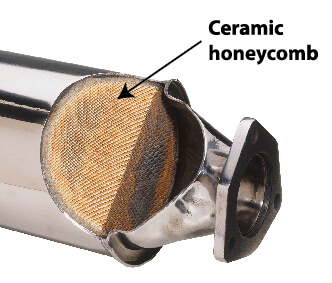
The ceramic substrate is a honeycomb structure that can melt at high heat or break apart due to impact.
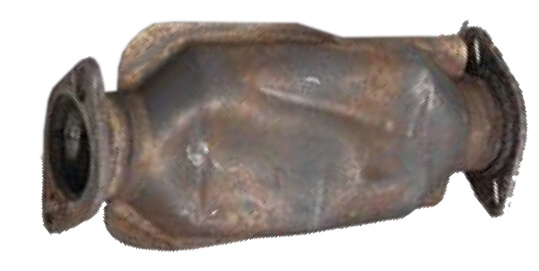
Impact damage on catalytic converter from road debris or parking lot curbs
The exhaust smells like rotten eggs
A dead converter no longer works to convert exhaust into non-polluting gasses. A sulfur or rotten eggs smell is a symptom of a bad catalytic converter.
If you suspect your converter is the cause, see this post on how to test a catalytic converter
See this post on how to clean a converter
©, 2020 Rick Muscoplat
Posted on by Rick Muscoplat