
Why Shops Push Fuel Induction Services—and When You Should Say No
Should You Get a Fuel Induction Service? Here’s the Truth
Shops have been aggressively promoting air induction, fuel induction, fuel injection, and fuel system cleaning services as necessary routine services to keep your car running smoothly. In fact, shops tend to recommend these services to every customer, every time they walk in the door. It’s a huge profit maker for the shop, and most of the time it’s an unneeded service. Shops promote it as good routine maintenance. Carmakers disagree because these services are expensive and usually unnecessary for most late-model domestic and Asian vehicles. I’ll walk you through each service, explaining what it does and whether your engine is a candidate for any of them.
Carbon on intake valves is most common on European vehicles
BMW, Audi, and VW vehicles tend to experience the most frequent and severe episodes of misfires, often caused by carbon buildup. Engines from GM and Ford rarely have complaints about carbon buildup.
Carbon buildup has forced carmakers to change the direct injection operation
To combat buildup, engineers have altered GDI spray patterns, spray timing, and, in some cases, even intake valve design. Car makers have also made significant changes to the positive crankcase ventilation (PCV) system to prevent oil and fuel vapors from depositing in the intake manifold and the intake valves. Plus, they’ve had to change piston ring tension to reduce blow-by in the first place (retreating on their campaign to reduce ring tension to improve fuel economy).
GM reduces carbon buildup and the need for fuel induction cleaning services
GM has addressed the buildup problem by altering fuel injection timing and valve opening timing. If too much fuel is injected during the intake phase when the intake valve is open, the high cylinder temperature can cause the fuel to contact the intake valve and form soot. Once soot accumulation starts, it builds rapidly. Therefore, GM modified the valve and GDI injector timing to reduce contact time and prevent soot formation.
The industry reports that GM and Ford’s engines are among the least affected by carbon buildup problems in their gasoline direct injection (GDI) engines.
On other brands, the amount and severity of buildup is directly related to the quality of the fuel, driving habits and engine operating temperatures. GDI engines that encounter lots of short trips and cold starts tend to have more problems with carbon buildup.
What is an air induction service?
Air induction is a two-part service. The first part is Throttle Body Cleaning, which involves removing the electronic throttle body from the intake manifold, allowing it to be cleaned by hand to remove stubborn carbon buildup deposits from the throttle plate and body.
Throttle body carbon buildup occurs on every engine, and it can cause problems if the buildup reaches a critical point when it blocks airflow. However, shops often recommend this service way too often and as a preventative measure. No carmaker lists this as a routine service if you’re not having any idle issues, so NO to throttle body cleaning.
The second part of the service involves Cleaning the Intake Valves by injecting a strong cleaning solvent into a running engine to saturate any carbon buildup on the back side of the intake valves. Carbon buildup on the backside of intake valves in engines equipped with gasoline direct injection can become a problem in some cases and on some European engines. In most cases, this service is oversold by shops and recommended way too often. Scroll down to learn more about carbon buildup on intake valves and which vehicles are more prone to experiencing it as a problem.
What is Fuel induction?
Fuel induction is a fancy term for fuel injector cleaning. To clean fuel injectors, the technician connects a pressurized container to the fuel rail of the engine. The container is filled with a strong flammable cleaning solvent, that’s used instead of gasoline to run the engine.
Fuel injector cleaning is rarely, if ever, needed on vehicles made after the 2000 model year. Most carmakers have issued service bulletins warning their dealers not to recommend fuel injector cleaning as a routine service. It’s only to be used if the vehicle is experiencing performance issues that have been diagnosed as a fuel injector clogging issue.
Fuel system cleaning
In most shops, this service involves pouring a one-pint bottle of cleaning solvent into the gas tank. Like fuel injector cleaning, no carmakers recommend this as a routine procedure.
What causes carbon buildup in intake valves?
Late-model engines have gasoline direct injection (GDI), where 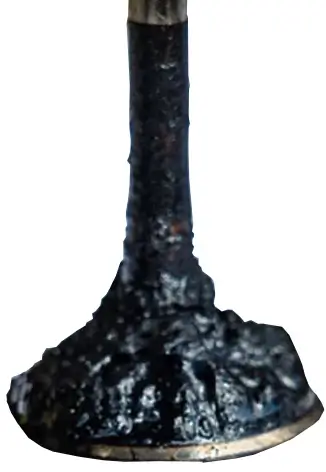 the fuel is injected directly into the cylinder. That’s a huge change from port injection, where the fuel and its detergent additives constantly washed the backside of intake valves. Because the valves are no longer being washed with fuel and detergent, some vehicles are accumulating large deposits of carbon buildup on the intake valves. Lack of fuel contact is the #1 cause of carbon buildup. Yet some vehicles are more prone to it than others.
Many carmakers have responded to the problem by adding port injection back into their engines to help prevent intake valve carbon buildup. If your has GDI and port injection, you don’t need any of these service.s
Two additional reasons carbon buildup on intake valves has become a new problem
• Lean burn misfires — To maximize fuel economy, carmakers command much leaner air/fuel mixtures that teeter on the edge between maximum fuel efficiency and misfire. The lean mixtures burn hotter, wearing out spark plugs faster than most owners think. A wider spark plug gap means a shorter and cooler spark, and on a lean-burning engine, that causes misfires.
When the cylinder misfires, the intake and exhaust valves come in contact with unburned fuel. The exhaust valve is hot enough to burn off the fuel, but the intake valve isn’t, and it accumulates deposits that stick to the neck of the valve.
• Variable valve timing and valve overlap – Most late-model engines employ variable valve timing mechanisms to shorten the valve overlap time, but they can’t eliminate it completely. During valve overlap, a small amount of combustion byproducts and exhaust gas stays in the chamber and comes in contact with the backside of the intake valve, causing deposits.
What are the symptoms of carbon buildup?
• Lower power due to decreased airflow past the buildup on the intake valves.
• Lower MPG due to lower airflow efficiency
• Poor acceleration power.
How to clean your intake valves yourself.
Once the buildup has reached the point where it affects engine performance, a fuel induction service or decarbonization service is required. In severe cases, the cylinder head must be removed, and manual cleaning is required.
Fuel induction service involves the 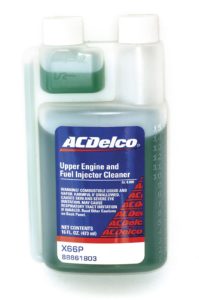 introduction of a solvent vapor through the air intake system with the engine running. The solvent attacks the buildup on the back face of the intake valves.
Two cleaners can be used, and a DIYer can apply both. One cleaner is GM’s Top Engine cleaner (ACDelco Upper Engine & Fuel Injector Cleaner 88861803 –CLEANER). The cleaner is available as a liquid or spray can. The other is CRC’s Intake Valve and Turbo Cleaner.
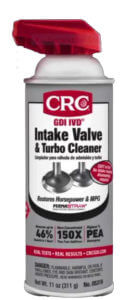
DIYers can perform this service on their own. In conventional parlance, DIYers often refer to this procedure as Seafoaming their engine. The typical Seafoam procedure involves pouring Seafoam directly into the vacuum line to the vacuum brake booster. Because Seafoam contains combustible solvents, that is NO LONGER recommended by car makers because it allows unmetered air into the engine.
The instant you disconnect a vacuum line, you introduce unmetered air into the engine. The PCM/ECM immediately responds to the unmetered air by boosting fuel trim, resulting is excessive dumping of unburned fuel and Seafoam combustible solvents directly into the catalytic converter. That excess fuel can result in cat converter temperatures in excess of 2,000°F, causing catastrophic converter meltdown failure.
The GM and CRC cleaners should be injected into the air intake duct past the MAF sensor in short bursts, with a lag time between bursts, with the engine running at 2,000 RPM. After you empty the container, turn off the engine at let it heat soak for at least one hour. Heat soaking is VERY important to the success of the cleaning. After an hour, drive the vehicle at highway speeds for at least ten minutes, and drive the vehicle every day for approximately six more days.
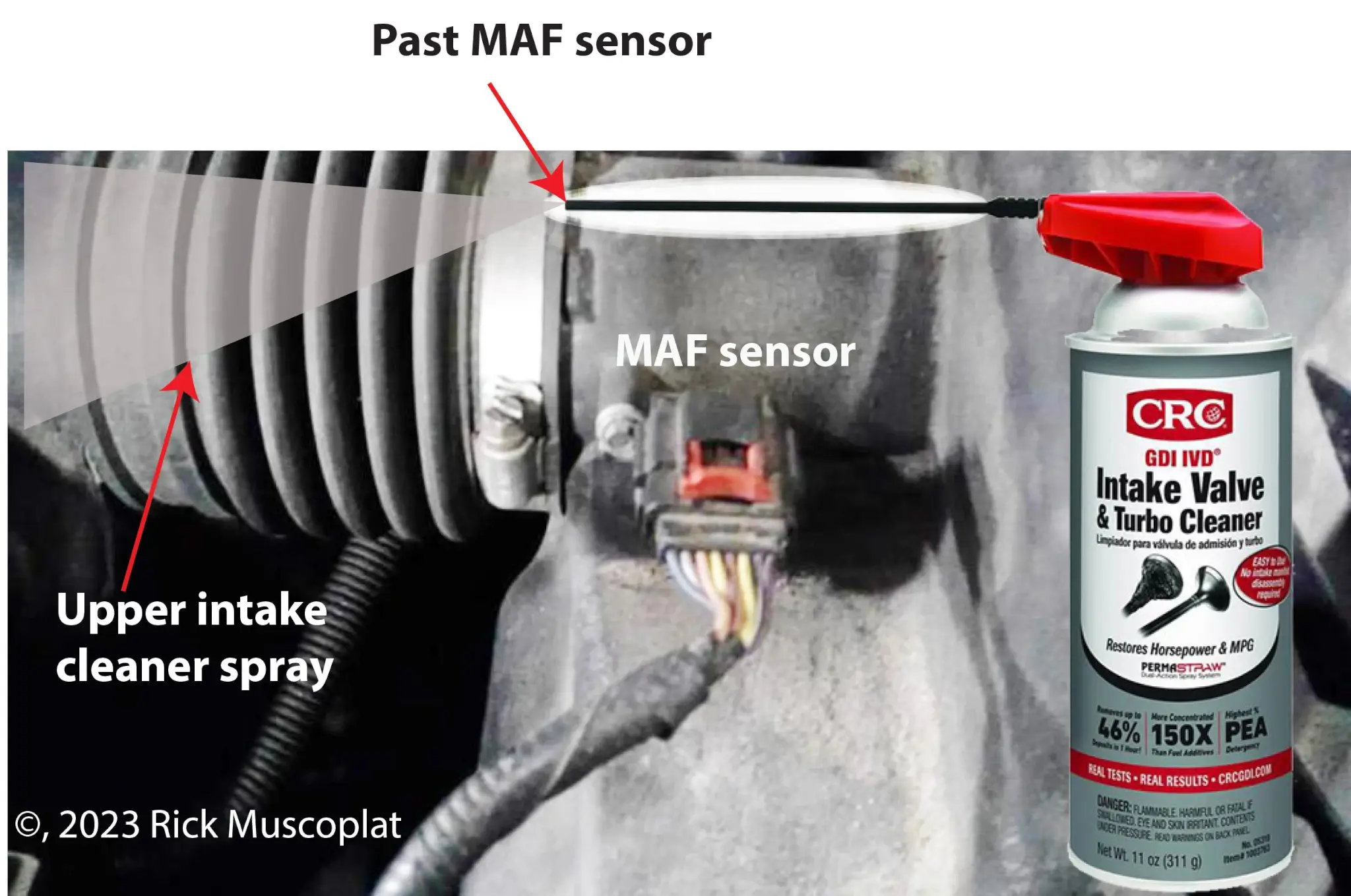
Notice how the straw is spraying the cleaner past the MAF sensor sensing element. This does two things: it prevents the spray from getting on the MAF sensor and giving the computer the wrong mass airflow readings, and 2) it prevents the computer from getting unmetered air.
Should you agree to the routine air Induction Service?
Most car makers do NOT recommend routine fuel induction service. In fact, their factory service bulletins warn dealers not to perform these cleaning services as a routine “recommended service.” In the car repair industry, these “dealer recommended” services are referring to was “wallet flushing services,” since they benefit only the dealer.
Fuel induction cleaning should be performed only on certain engines where buildup is diagnosed as the cause of engine performance issues. Then, fuel induction cleaning is justified to remove the carbon buildup and restore the engine to its original performance.
See this post for more information on fuel induction cleaning.
See this post for more information on fuel injector cleaning
©, 2018 Rick Muscoplat
Posted on by Rick Muscoplat