
Why Your Blower Motor Resistor Keeps Burning Out
How to Stop Repeat Blower Motor Resistor Failures
Quick Summary
If you’ve replaced your blower motor resistor multiple times and it keeps failing, you’re not alone. The most common reason a blower motor resistor keeps burning out is excessive current draw from a worn-out blower motor. Other causes include poor electrical connections, corrosion at the resistor connector, and even water or debris entering the HVAC ducts.
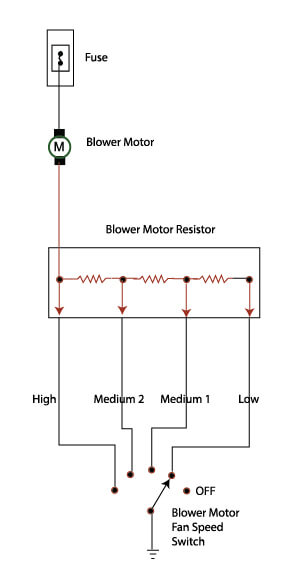
Blower motor wiring diagram
Article
As a former ASE-certified technician, I’ve seen countless cases where drivers replaced the blower motor resistor multiple times, only for it to fail again within weeks. The truth is, a blower motor resistor keeps burning out not because of bad parts, but because something else in the circuit is overloading it.
The resistor is part of the blower motor’s speed-control circuit. It works by adding resistance to the circuit to limit current flow. That resistance converts electrical energy into heat—lots of it—which is why automakers mount the resistor pack inside the HVAC air duct. The moving air cools the resistor coils during operation.
But when cooling airflow is reduced, or the motor draws too much current, that heat has nowhere to go. The result? Repeat blower motor resistor failures.
How the Blower Motor Resistor Works
A blower motor resistor is essentially a set of wire coils with fixed resistance values. Depending on your fan speed setting, current flows through one, two, or all of those coils before reaching the blower motor.
Here’s what happens in each setting:
• Low speed: Current flows through all resistor coils—maximum resistance, lowest current, slowest fan.
• Medium speed: The circuit bypasses one or more coils—less resistance, more current, faster fan.
• High speed: The resistor is bypassed entirely, sending full battery voltage to the motor.
When you look at blower motor wiring diagrams, you’ll see that some automakers route power through the resistor before it reaches the motor, while others ground the resistor through the speed switch. Either way, the resistor handles the current and converts it into heat whenever you use a speed below “high.”
Why the Blower Motor Resistor Keeps Burning Out
1. Excessive Current Draw from a Worn Blower Motor — This is by far the most common cause of repeat blower motor resistor failures. As blower motors age, the bearings dry out, and internal friction increases. That forces the motor to draw more current than it did when new. The resistor isn’t designed to handle that extra current, so it overheats and fails.
If you’ve replaced the blower motor resistor multiple times, you need to check the motor’s current draw. Using a digital multimeter or clamp meter, measure current draw at each speed setting. Compare your readings to the manufacturer’s specification.
• If amperage exceeds spec by even 10–15%, the motor must be replaced.
• Continuing to run an over-amperage motor will cause repeat blower motor resistor failures, no matter how many new resistors you install.
2. Melted or Corroded Electrical Connectors — A corroded connector increases resistance at the terminals, which in turn generates heat. That heat can melt the connector body or the resistor plug. Once that happens, resistance increases further—a vicious cycle that ends in another failure.
If you discover a burned or melted connector, do not reuse it. Many late-model GM vehicles suffer from this issue. The proper repair is to install a new, upgraded connector pigtail along with the resistor, and splice it using heat-shrink butt connectors. I’ve seen many DIYers try to “clean up” the terminals, only to have the blower motor resistor keep burning out again within months.
3. Water or Debris in the HVAC Airflow— Moisture intrusion or debris buildup can also cause repeat blower motor resistor failures. The resistor coils run extremely hot when in use. If cold water spray or melted snow enters the ductwork, the sudden temperature change can crack or break the resistor coils.
I’ve personally diagnosed blower resistors that failed immediately after a driver went through a car wash or heavy rain. In these cases, water entering through a poorly sealed cowl vent quenched the resistor, causing it to snap.
If your resistor fails right after wet weather, inspect the HVAC intake area
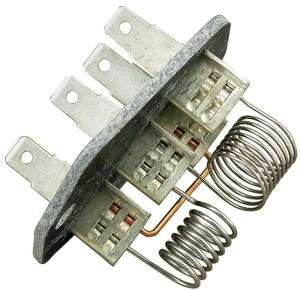
Actual Blower motor resistor
for blocked drains, leaves, or debris that divert water into the system.
4. Restricted Airflow Through the HVAC Ducts— Another overlooked cause of repeat blower motor resistor failures is restricted airflow. Since the resistor depends on moving air to cool it, a clogged cabin air filter or blocked duct will reduce airflow and increase operating temperature.
Whenever I replace a blower resistor, I always check and replace the cabin air filter if needed. It’s a simple step that can prevent future resistor burnouts.
5. Poor Ground or Loose Wiring — A poor ground or intermittent connection in the blower circuit can cause voltage spikes and intermittent arcing at the resistor terminals. These voltage irregularities rapidly increase heat and can destroy the resistor. Always verify the blower motor ground with a voltage drop test—anything over 0.2 volts drop on the ground side indicates a problem.
How to Prevent Repeat Blower Motor Resistor Failures
• Test the blower motor current draw before replacing the resistor.
• Inspect and replace the connector if it shows signs of heat damage or corrosion.
• Check for airflow restrictions — including cabin filters and debris in the ducts.
• Keep moisture out by cleaning the cowl drains and checking for water leaks.
• Replace the blower motor if the current draw is above spec, even slightly.
When you’ve replaced the blower motor resistor multiple times, the resistor itself is almost never the root cause. The real culprit is a failing motor or electrical issue that’s overloading it.
Final Thoughts
A blower motor resistor keeps burning out because something else in the circuit is wrong. The resistor is just the victim. If you take the time to test amperage draw, check for corrosion, ensure good airflow, and verify wiring integrity, you can stop repeat blower motor resistor failures for good.
After replacing countless HVAC resistors over the years, I’ve learned one hard truth: until you fix the underlying problem, you’ll keep replacing the same part — and wondering why your blower motor resistor keeps burning out again.
©, 2018 Rick Muscoplat
Posted on by Rick Muscoplat