
Why Your Car Battery Won’t Stay Charged
Car Battery Won’t Hold a Charge? Here’s the Real Cause
Quick Summary
When your car battery won’t hold a charge, it’s usually due to physical internal damage, chemical failures, parasitic drain, charging-system faults, or aging components. Understanding why helps you avoid unnecessary part replacements and gets you back to reliable starts.
Article
Why Your Car Battery Won’t Hold a Charge — The Expert Truth
Few automotive problems are more frustrating than discovering your car battery won’t hold a charge. I’ve worked with batteries for decades, and I’ve seen the same scenario over and over: you charge the battery, the car starts, everything looks good — then the next morning, the battery is dead again. When a car battery won’t charge or stay charged, the answer lies in the chemical reactions happening inside the case, not on the surface where we usually look.
Let me walk you through what’s really going on inside that black box under the hood.
1. Sulfation—The Silent Battery Killer Nobody Sees Coming
Sulfation is the leading cause of lead-acid

Notice the white sulfate crystals on this lead plate. They prevent the battery from holding a charge
battery failure. Any time a battery is discharged or left sitting unused for too long, lead sulfate forms on the plates. When the battery is new, the sulfate dissolves back into the electrolyte during recharging. However, as the battery ages, a portion of the sulfate hardens into a crystalline coating that impedes the chemical reactions needed to create power. r
The deeper the discharges and the longer the battery remains undercharged, the faster crystallization happens. As the sulfation layer thickens, it reduces plate surface area, lowers electrolyte efficiency, restricts current flow, and eventually prevents the battery from accepting or holding a charge.
Here’s What Causes Sulfation—
• Letting the battery sit for too long without being charged. We all experienced this during the pandemic, and it was the #1 killer of otherwise good batteries.
• Consistently driving short distances that don’t allow for a full recharge.
• Undercharging due to a weak alternator or poor connections.
• Extreme temperatures, which accelerate the sulfation process.
2. Internal Short Circuits—When the Battery Self-Destructs
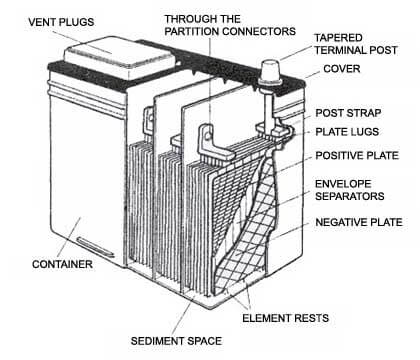
A battery is made of stacks of lead plates separated by insulating material. Over time, that insulation breaks down. If the positive and negative plates touch, they create a short that quickly drains the battery and prevents recharging.
This kind of failure often happens suddenly. The battery that cranked perfectly yesterday is completely dead today. Overcharging, excess vibration, and simple aging can all trigger it. Once it happens, that battery is beyond saving.
What Causes an Internal Short—
• Age and wear – The materials inside the battery degrade over time.
• Overcharging – Generates excessive heat, which warps the plates and weakens the separators.
• Excessive vibration – Loose battery mounts or rough driving conditions can physically damage the internals.
3. Plate Shedding—The Hidden Breakdown Beneath the Surface
Lead plates inside the battery slowly shed material as they age. Those particles fall to the bottom of the case. Over time, the pile grows until it bridges the plates and shorts the cell internally. I’ve seen countless batteries die this way — one last start, then nothing.
The alternator may be working perfectly, but the car battery won’t charge because the internal structure that stores energy is literally failing.
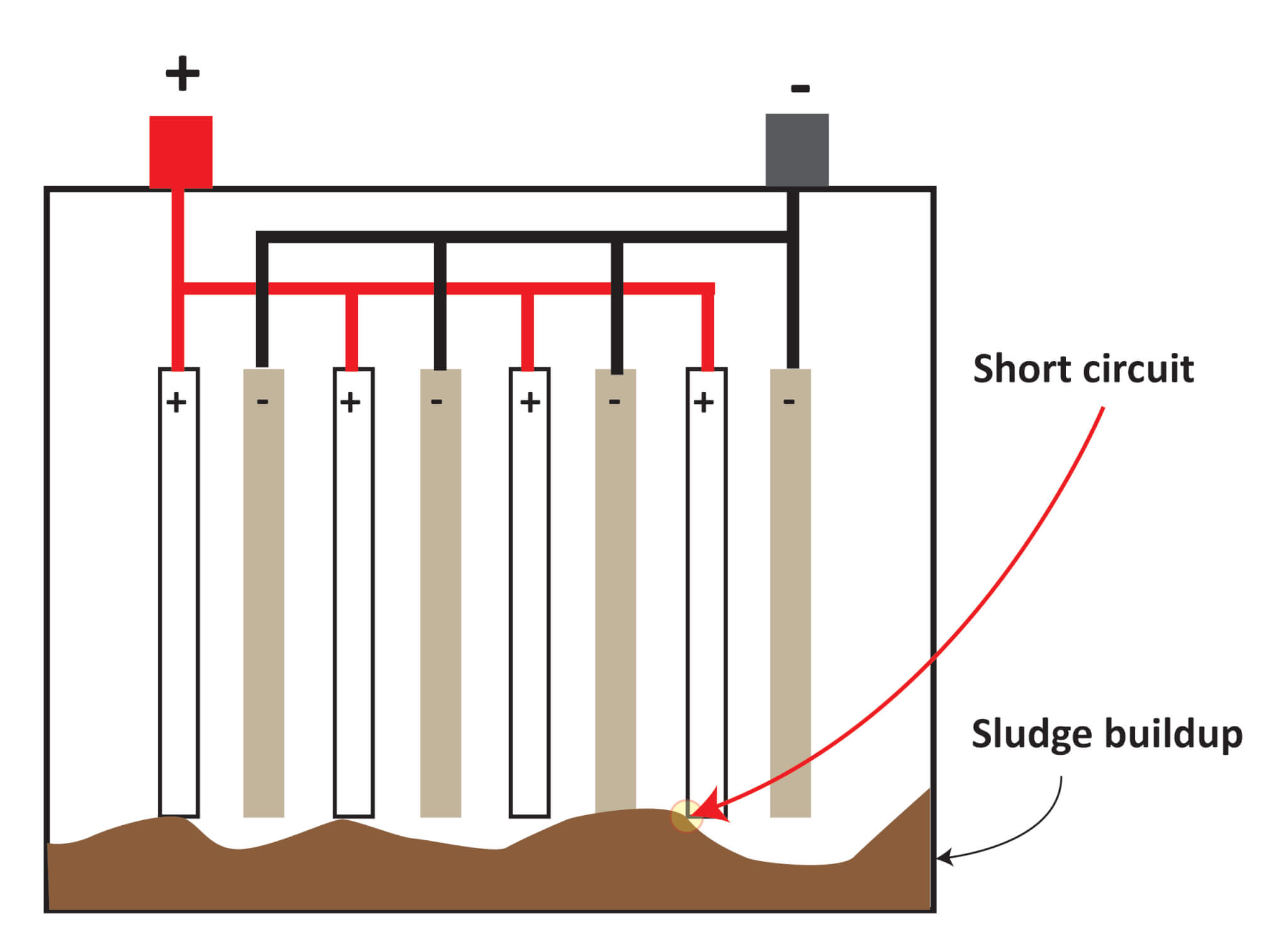
A short circuit caused by the battery plate shedding
What Causes Plate Shedding—
Acid Stratification — Battery electrolyte is a mix of sulfuric acid and water. When a battery sits unused for long periods, the acid separates and settles at the bottom, causing an over-concentration. When that happens, the top half of the plates is bathing in a weak electrolyte and can’t take a charge. The bottom half corrodes faster at higher acid concentrations. It’s a double-whammy that shortens battery life and ensures the car battery won’t hold a charge for long.
4. Loss of Electrolyte—When Your Battery Runs Dry
The lead plates must be continuously submerged in the electrolyte for the chemical reactions to occur. If a battery overheats or the case cracks from vibration or corrosion, the electrolyte level drops. Without enough fluid, the battery’s capacity nosedives. Once the metal plates are exposed to air, they’re permanently damaged.
What Causes Electrolyte Loss?
• Overcharging – Leads to excessive water evaporation.
• Extreme heat – Causes faster evaporation of the electrolyte.
• Cracked battery case – Allows fluid to leak out.
4. Repeated Deep Discharges—Capacity Loss That Never Comes Back
A car’s starting battery isn’t meant to be drained flat. Repeatedly letting it drop below 50% physically changes the chemistry. Every deep discharge permanently reduces capacity. Eventually, the car battery won’t charge high enough to crank the engine.
Causes include:
• Leaving the lights on
• Leaving the car unused for weeks
• A weak alternator that isn’t keeping up
• Parasitic drains from faulty electronics — Modern vehicles have 30+ computers — if just one stays awake, you’ll have a mystery drain that guarantees the car battery won’t hold a charge overnight.
• Aftermarket electronics – Poorly installed alarms, remote starters, or stereo systems often cause parasitic drain.
What You Should Do When a Car Battery Won’t Hold a Charge
Before replacing the battery, check:
✔ The alternator output (13.8–14.6 volts while running)
✔ Battery cable corrosion and tightness
✔ Parasitic draw (less than 50mA on most vehicles)
✔ Battery age — at 4–6 years old, replacement is expected
If sulfation is caught early, a smart charger with a reconditioning mode may help restore capacity. But if the battery is internally short-circuited, dried out, or physically degraded, no amount of charging will restore it.
And remember: When your car battery won’t charge, jump-starting and driving won’t fix the root cause — it only masks it until the next no-start.
Final Word From Experience
Whenever a car battery won’t stay charged, it’s trying to warn you that something deeper is wrong. It might be the battery itself, the charging system, or a hidden electrical drain. The key is diagnosing the cause, not treating the symptom. Get ahead of the failure now — before you get stranded again.
©, 2025 Rick Muscoplat
Posted on by Rick Muscoplat