
Why Your Engine Has a Rough Idle and How to Fix It for Good
The Real Causes of Rough Idle and High Idle
Quick Summary
When I diagnose a rough idle, I start with airflow. In my experience, most rough idle problems come down to vacuum leaks, carbon buildup in the throttle body, or idle air control issues. If those check out, I move to ignition and fuel problems like worn spark plugs or clogged injectors. Fixing the root airflow issue first saves the most time and money—and it solves the majority of cases
Why a Rough Idle Happens
Over the years, I’ve diagnosed more rough idle complaints than I can count, and I can tell you this: a rough idle is rarely random. It follows a pattern, and once you understand that pattern, diagnosis becomes straightforward.
A modern engine doesn’t just “idle.” The engine computer is constantly balancing airflow and fuel to keep the engine stable. When that balance is disrupted—even slightly—you’ll feel it as a rough idle, engine shaking at idle, or unstable RPMs.
Most people jump straight to spark plugs or sensors. That’s a mistake. I always start with airflow—and here’s why.
The Most Common Cause of Rough Idle: Unmetered Air
When I see a rough idle, my first thought is always unmetered air—air getting into the engine that the computer doesn’t know about.
Here’s what happens:
• Extra air enters the engine after the mass airflow sensor
• The exhaust mixture goes lean
• Oxygen sensors report the lean condition
• The computer adds fuel to compensate
• Engine speed fluctuates, and you wind up with a rough idle or surging idle
This is exactly why vacuum leaks are the number one cause of a rough idle.
Vacuum Leaks: The #1 Cause of Rough Idle
I always inspect these first:
• Vacuum hoses (cracked, brittle, disconnected)
• PCV lines
• Brake booster hose
• Intake duct between the air filter and the throttle body
• Intake manifold gaskets
At idle, the engine is extremely sensitive to air leaks. A small leak that you’d never notice at highway speed will cause a noticeable rough idle at a stoplight.
How I Find Vacuum Leaks Fast
I use a simple but effective method:
• Spray carb cleaner or brake cleaner around suspected leak points
• Watch for RPM changes
• If idle speed changes, you’ve found your leak.
Carbon Buildup: The Hidden Cause of Rough Idle
Once I rule out vacuum leaks, I move to carbon buildup—another major cause of rough idle.
Carbon Buildup and Idle Air Control Problems
When carbon builds up on the throttle plate or inside the idle air passages, airflow becomes unpredictable. That leads to unstable idle speed, stalling, rough idle complaints, and sometimes a high idle on cold starts.
If the engine uses an idle air control valve, I remove it and
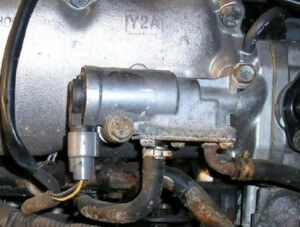
Honda idle air control valve
inspect it for carbon buildup and electrical failure. A sticking idle air control valve can’t respond quickly enough to computer commands, causing idle instability.
On electronic throttle body systems, cleaning usually requires removing the throttle body from the intake manifold to ensure it is done correctly. Simply spraying cleaner through the intake doesn’t remove carbon from the throttle plate edges, where it causes the most trouble.
Why Throttle Body Cleaning Often Fixes High Idle
A high idle is especially common after years of carbon buildup. The throttle plate no longer closes to its calibrated resting position, allowing more air than intended. The computer tries to compensate, but mechanical airflow always wins.
After a proper throttle body cleaning, the engine often needs an idle relearn procedure so the computer can recalibrate airflow values. Skipping that step can leave you chasing your tail, thinking the serious idle problem isn’t fixed when it actually is.
When Rough Idle Isn’t an Air Leak
If there are no vacuum leaks and the idle control system is clean and functioning, I move on to combustion and fuel delivery issues. A rough idle can also come from uneven cylinder output.
To clean the electronic throttle body on a late model car, remove it from the intake manifold. See this article on how to clean an electronic throttle body
To see how an idle air control valve works, read this post
To learn how to clean an idle air control valve, read this post
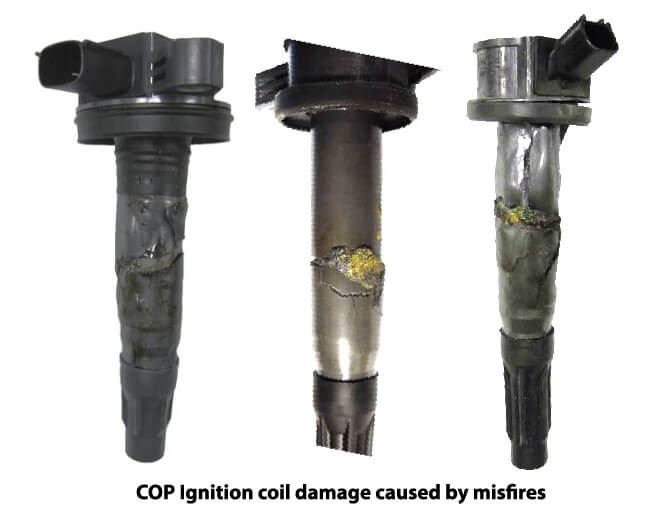
Worn spark plugs are high on my list, especially if they’ve gone past their service interval. Weak spark shows up at idle before it shows up under load. Worn spark plug wires, deteriorated coil-on-plug boots, or failing ignition coils can all cause intermittent misfires that feel like a rough idle.
Fuel delivery matters just as much. A clogged fuel injector can lean out one cylinder, creating a shake at idle that smooths out as RPM increases. Incorrect fuel pressure—either too high or too low—can also destabilize idle quality.
Mechanical Issues That Can Cause Rough Idle
Although less common, I’ve seen mechanical wear cause persistent rough idle complaints. Improper valve adjustment, worn cam lobes, leaking valves, or worn piston rings can all reduce cylinder efficiency at idle. These problems usually come with other symptoms, but they’re worth keeping in mind if all basic diagnostics check out.
Once vacuum leaks are fixed, here are the remaining possibilities
If there are no vacuum leaks, a rough idle can be caused by:
Worn spark plugs
Worn spark plug wires
Worn boots on COP ignition coils
Clogged fuel injector(s)
Incorrect fuel pressure
Improper valve adjustment
Worn camshaft, piston rings
My Step-By-Step Approach to Fixing Rough Idle and High Idle
Whenever I’m faced with a rough idle or high idle, I work from simple to complex. I fix airflow issues first, clean what needs cleaning, and only then move on to ignition, fuel, and mechanical checks. Skipping steps almost always leads to wasted time and unnecessary parts replacement.
Most of the time, correcting vacuum leaks and restoring proper idle airflow resolve both rough and high idle complaints.
Final Thoughts: Don’t Let Idle Problems Turn Into Expensive Repairs
A rough idle or high idle is more than just an annoyance—it’s your engine telling you something isn’t right. The key is understanding that idle problems are usually airflow problems first, sensor or fuel problems second, and mechanical problems last.
Diagnose logically, fix the basics, and you’ll solve most rough idle and high idle issues without emptying your wallet.
© 2012 Rick Muscoplat
Posted on by Rick Muscoplat