
Why Your Power Steering Is Noisy: Fixes From a Pro
Common Causes of Noisy Power Steering You Shouldn’t Ignore
Quick Summary
If you’re dealing with noisy power steering, here’s what to check right away:
1) Check the fluid level — Low fluid is one of the most common causes of noisy power steering. Top it off immediately.
2) Look for aerated or foamy fluid — Foam means air is entering the system through a bad O-ring, cracked hose, or worn pump shaft seal.
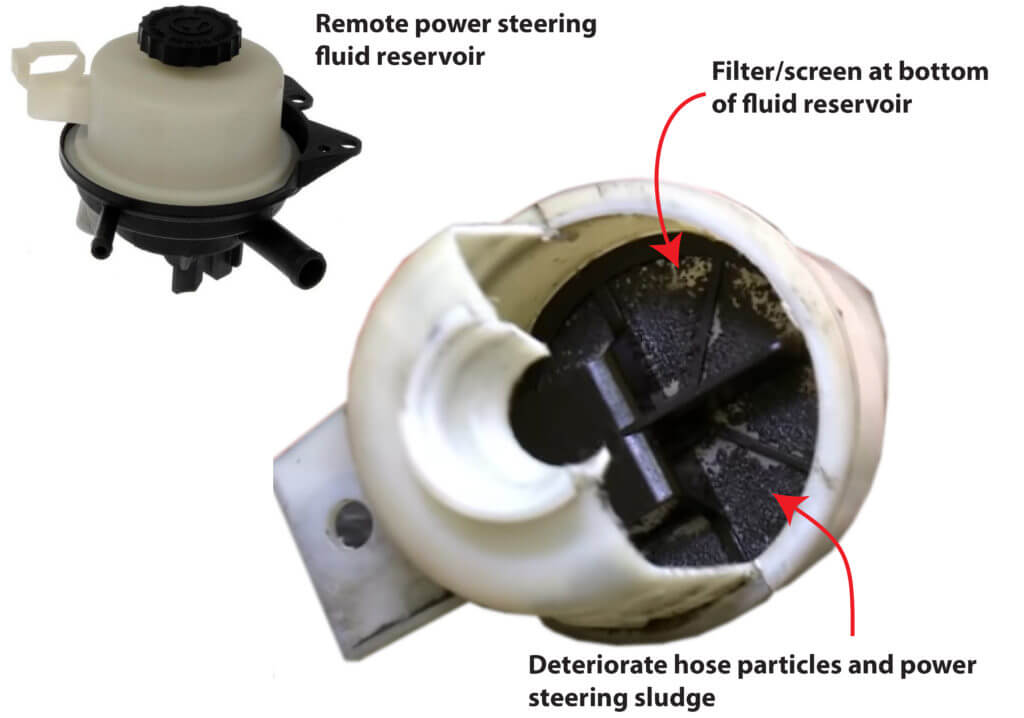
3) Check the reservoir screen — A clogged filter screen starves the pump and creates whine or moan noises.
4) Inspect the belt — A slipping drive belt causes squealing when turning.
5) Bleed the system — After repairs or refills, bleed the steering system to eliminate trapped air.
Do those things first, and you’ll fix noisy power steering in most cases.
Article
When drivers ask me about noisy power steering, they usually describe one of three sounds: a whine or moan, a growl, or a squeal during turning. After years of diagnosing these systems, I can tell you that what causes noisy power steering almost always boils down to air in the system, low fluid, a clogged reservoir screen, or a slipping drive belt. If you understand how a hydraulic steering system works, you can fix noisy power steering before it leads to pump damage or a catastrophic steering failure.
Most Common Power Steering Noises and What They Mean
• Whine or moan at idle or while turning — Usually caused by air in the system or a restricted reservoir screen that starves the pump.
• Growl or buzzing during turning — Almost always cavitation from air entering through the pump shaft seal or suction hose.
• Squeal when turning the wheel — A loose or glazed drive belt slipping under load.
Click on the play button to hear a typical whining/ moaning sound
Click on the play button to hear a growl buzzing sound
Troubleshoot a whine or moan
A power steering noise that sounds like a whine or moan is caused by:
1) Air in the system
2) A low power steering fluid level
3) A restriction in the fluid suction line.
Air is the number one cause of hydraulic pump noise. When air bubbles travel through the pump, they compress and explode, creating the unmistakable whine.
How to check for air in your power steering system
1) Remove the reservoir cap while the engine is idling. Shine a light into the fluid. If you see foam, the system is ingesting air.
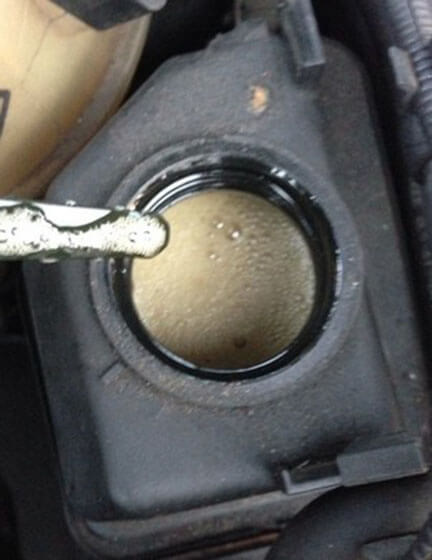
When air enters the power steering system, it forms air bubbles. Remove the reservoir cap and check for foam. If you see it, you’ve got a leak.
If you recently replaced a hose, pump, or rack, you may need to bleed the system. If you haven’t done any repairs, you almost certainly leak on the suction side.
Most Common Suction Side Air Leak Locations
• O-ring seals on the suction line — They shrink with age and heat or leak when over-tightened.
• Teflon seals — Teflon seals typically don’t leak over time. But they leak right away if they’re overtightened. If you’ve recently had power steering work done where a line was removed, you may have a damaged O-ring or Teflon seal.

The Teflon seal and the O-ring seal can be damaged easily by over-tightening the fitting.
• Pump shaft seal — Under constant suction; when worn, it pulls air in.
• Rack seals — When badly worn, they leak fluid out and sometimes pull air in. Check the inner tie-rod boots for trapped fluid.
Fixing a Low Power Steering Fluid Condition
A low fluid level is one of the most straightforward explanations for noisy power steering, and it’s easy to check.
1) Pull the dipstick cap or shine a light on the translucent reservoir.
2) Look for the HOT and COLD marks.
3) If the level is low, top it off immediately using the manufacturer-recommended fluid.
Low fluid levels indicate a leak. Common leak points include:
• Return hose clamps
• Pump body seals
• High-pressure line fittings
• Rack and pinion end seals

Power steering lines usually leak near the crimp connectors shown in this image
Running a pump low on fluid causes cavitation and rapid wear. That’s why topping off promptly helps fix noisy power steering before the pump is destroyed.
Check Power Steering Fluid Level
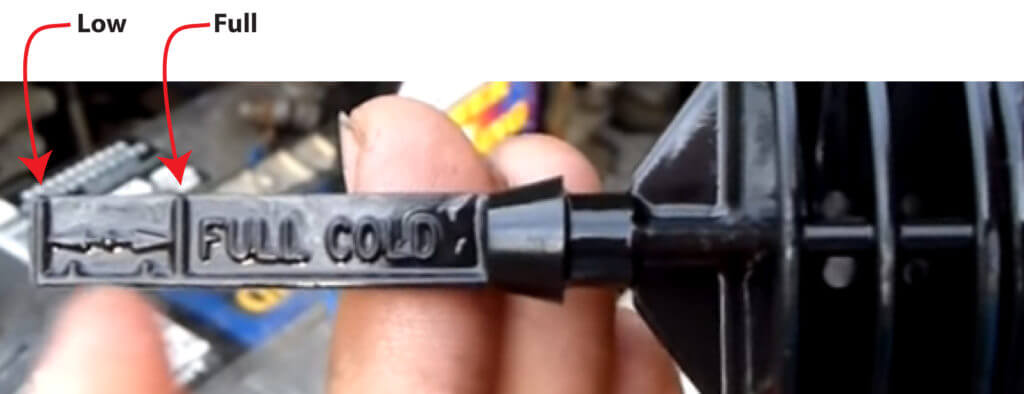
Pull the power steering dipstick and check the level. If it’s low, you’ve got a leak. But first, refill the fluid, because running a pump when it’s low can cause severe damage.
If your vehicle has a translucent reservoir, shine a flashlight into it to see the fluid level. You’ll see HOT and COLD markings on the plastic reservoir. Note the level. If the fluid level is low, it’s due to a leak. Top off the reservoir using the recommended fluid. Then inspect the power steering hoses, pump, and steering gear for signs of fluid leaks.
If the pump has a dipstick, it’s usually built into the cap. Remove the cap and check the fluid level on the power steering dipstick
Locate and fix a return fluid restriction
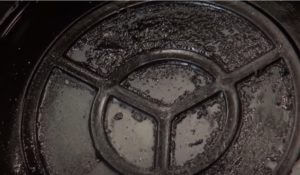
Clogged reservoir screen
Over time, that screen clogs and restricts flow. The result? The pump is starved for fluid and whines loudly.
Growling or Buzzing Noises — Classic Pump Damage
When you hear a growl, that’s usually the sound of a pump that has already been damaged.
The main reason? Running the pump with low fluid or a clogged reservoir screen.
How a Vane-Style Pump Fails
Some power steering pumps use sliding vanes that spin inside an eccentric housing. As they wear, high-pressure fluid escapes around the edges instead of moving through the hydraulic circuit. The pump loses efficiency and becomes extremely noisy.
Once a vane pump is worn enough to growl, the only way to fix noisy power steering is to replace the pump.
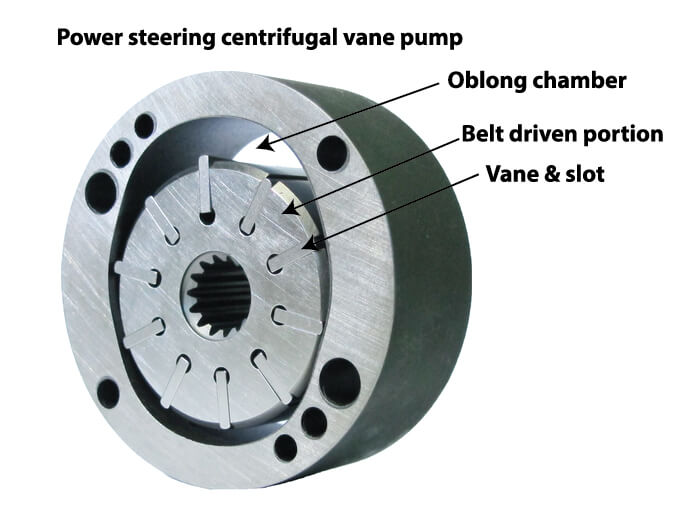
But what’s actually causing the noise? Cavitation.
Cavitation is the real villain in most noisy power steering cases.
When fluid flow is restricted, suction increases. That suction lowers the fluid’s boiling point, creating vapor bubbles. When those bubbles are pressurized inside the pump, they implode.
Those implosions are what you hear as whine, growl, or moan.
Over time, cavitation erodes the vanes and housing, permanently damaging the pump. If you want to fix noisy power steering, restoring proper fluid flow is critical.
Bleeding a power steering system after a repair
After replacing a hose, pump, reservoir, or O-ring, always bleed the system.
There are two ways to bleed a power steering system: by turning the wheel or by using a hand held vacuum pump
Bleed by turning the wheel (not always recommended by the carmaker)
• Wheels off the ground.
• Engine off (This is often misunderstood. Many DIYers turn the wheel lock to lock with the engine running. At the lock position, the pump can output more than 2,000 psi, potentially damaging old seals or the pump. Turning the wheel with the engine off accomplishes the same thing, but without the risk
• Turn the wheel lock-to-lock 20–30 times.
• Re-check the fluid.
• Start the engine and repeat until bubbles disappear.
This single step prevents repeat failures and ensures you truly fix noisy power steering rather than just masking the symptoms.
Bleed with a handheld vacuum pump
Buy or rent a handheld vacuum bleeder kit. Attach the vacuum cap to the reservoir and pull a vacuum on the entire power steering system. Leave the system under vacuum for a few minutes. That will pull air pockets out of every small space
©, 2015 Rick Muscoplat
Posted on by Rick Muscoplat